




Pearl Locket Pendant
A pearl locket pendant combines the intimate function of a keepsake container with the quiet lustre of pearls across Victorian, Edwardian, and Georgian designs.
Pearl Locket Pendant
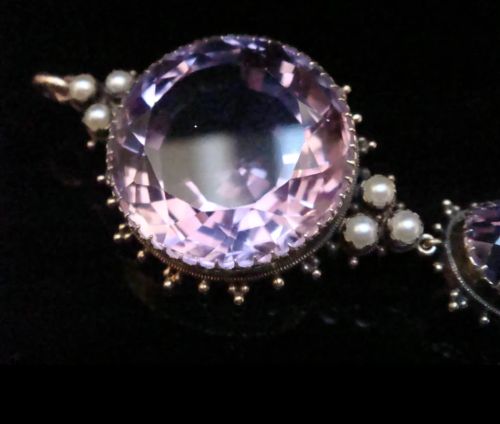
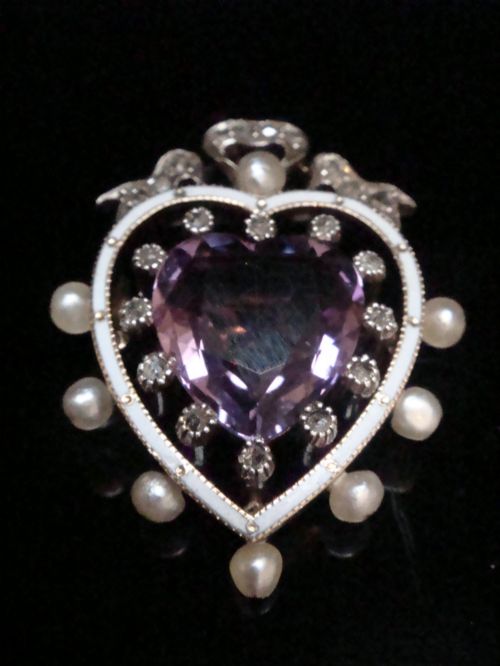
A pearl locket pendant serves as both a wearable ornament and a miniature reliquary, holding hair, portraits, or photographs inside gold or silver housings. The pieces appearing in this category span Georgian, Victorian, and Edwardian periods, taking forms that range from simple oval boxes to puffed hearts and intricate star motifs.
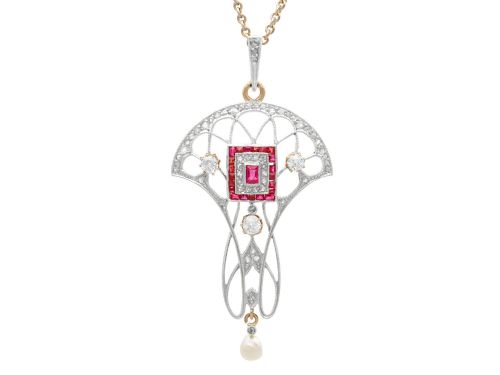
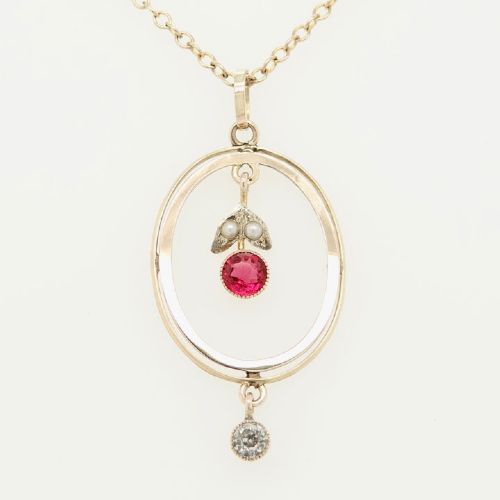
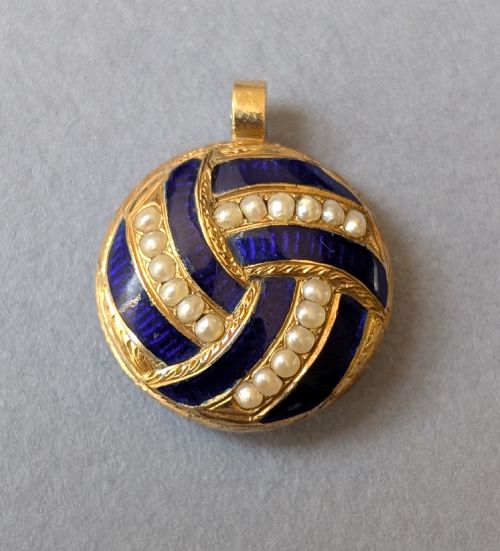
Victorian examples frequently pair pearls with blue enamel, amethyst, or garnet, sometimes incorporating glazed memorial compartments at the back. Edwardian and Belle Epoque variations lean towards lighter openwork designs in yellow gold or rose gold, often featuring seed pearls set alongside diamonds, rubies, or sapphires.
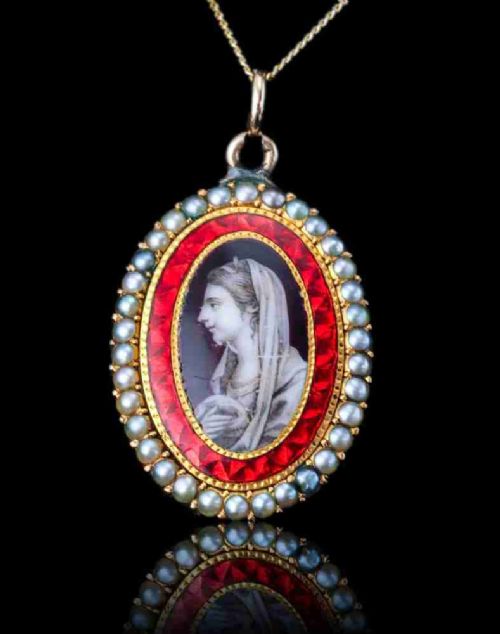
Georgian iterations present miniatures and sepia portraits framed in gold, while later 1910 designs introduce plique-à-jour enamel and silver filigree. Buyers encounter everything from French double-photo lockets to heart-shaped puff pendants intended to rest close against the wearer.
Materials and Construction
Metals employed in these pieces span nine-carat, fifteen-carat, and eighteen-carat yellow and rose gold, alongside silver and silver-gilt settings. Goldsmiths of the nineteenth and early twentieth centuries mounted pearls individually into collet settings or integrated seed pearls into star and floral motifs using fine wirework.
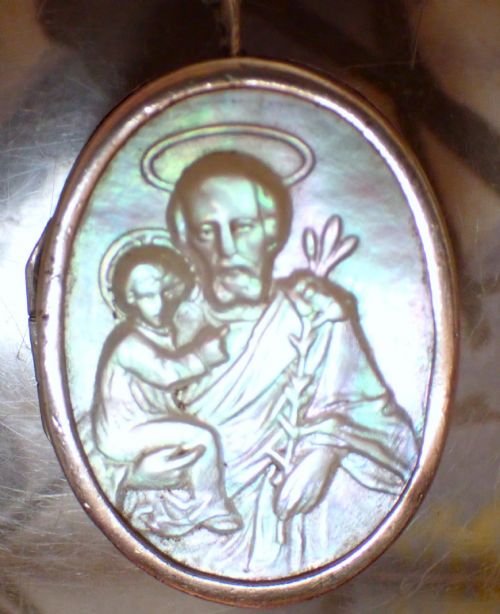
Enamelling techniques such as guilloché and blue champlevé provide rich background colour for pearl and diamond arrangements, while plique-à-jour creates stained-glass effects without solid backs. Mother-of-pearl, shagreen, and carved rock crystal also appear as structural bases or decorative panels.
Hinges, glass glazed interior frames, and miniature portrait paintings demand precision miniature carpentry within metal. Internal bezels secure photographs or woven hair behind glass panels that clip or hinge shut inside the outer gold or silver shell.
Pearl Locket Pendant Retail Price Guide 2026
Typical asking prices for pearl locket pendant among the pieces listed under this phrase on Sellingantiques today, from the lower quarter to the upper quarter. They describe what is for sale here now, not the wider market.
Listings feature yellow gold, rose gold, and silver alongside seed pearls, enamel, turquoise, amethyst, and diamonds across Victorian, Edwardian, and Georgian periods.
Distinctions in Quality
The standard of a pearl locket pendant depends largely on the integrity of its hinge mechanism, the snugness of the internal glass bezel, and the uniformity of the pearls. Higher-quality items retain original components, including undamaged enamel work and secure clasp closures that shut with a crisp click.
The refinement of the metalwork, whether hand-chiseled foliate engraving on a Victorian gold case or delicate silver filigree, separates standard production from superior craftsmanship. The choice of materials also elevates a piece, with natural pearls and higher carat gold frames demonstrating greater original investment.
The preservation of internal glazed compartments and hand-painted miniature portraits adds considerable depth to an object. Pieces that retain their original fitted boxes or integrated components show careful custodianship over generations.
Theodor Fahrner
The Pearl Locket Pendant Glossary
- Seed pearl
- Very small, naturally formed or cultured pearls, often drilled and threaded onto silk or set closely together in pavé arrangements. They provide delicate white accents in Victorian and Edwardian cluster designs.
- Guilloché
- A decorative technique where a precise, intricate pattern is mechanically engraved into a metal surface beneath a translucent layer of enamel. This creates a shimmering, patterned background behind pearl and diamond motifs.
- Plique-à-jour
- An enamelling technique similar to cloisonné, but with no backing metal, allowing light to shine through the transparent or translucent enamel. It resembles miniature stained glass.
- Glazed compartment
- A small recessed frame inside a locket, fitted with thin glass to protect a photograph, lock of hair, or painted miniature. These compartments often occupy the reverse side of a pendant.
- Puff pendant
- A hollow, three-dimensional pendant, frequently shaped like a heart or a star, constructed from front and back gold stampings joined at a seam. They offer volume without heavy weight.
Pearl Locket Pendant: Frequently Asked Questions
What goes inside a locket pendant?
These compartments were traditionally used to store woven locks of human hair, miniature painted portraits, or small paper photographs of loved ones. Memorial pieces often dedicated the interior to remembering family members who had passed away.
Owners today continue this tradition by placing tiny photographs or handwritten notes inside the glazed or solid frames. The internal space remains functional on hinged double-photo versions.
How do I date a gold locket?
Dating relies on a combination of stylistic clues, such as the use of black enamel and sepia portraits in Georgian and early Victorian pieces, versus the lighter openwork filigree of the Edwardian era. Hallmarks stamped inside the bail or rim provide specific town, maker, and metal purity indicators.
Design motifs also offer guidance, as starburst patterns and heart-shaped puff cases gained particular popularity during the later Victorian decades. Comparing the clasp type and hinge construction helps narrow the production window further.
Are seed pearls fragile?
Seed pearls require careful handling because organic gems are softer than precious stones and sensitive to acids, perfumes, and moisture. Historic settings often thread them onto silk or wire, which can weaken over long periods.
Wearers should avoid submerging antique pearl jewellery in water or chemical cleaning solutions. Storing them away from harder metals prevents scratching the delicate nacre surface.