

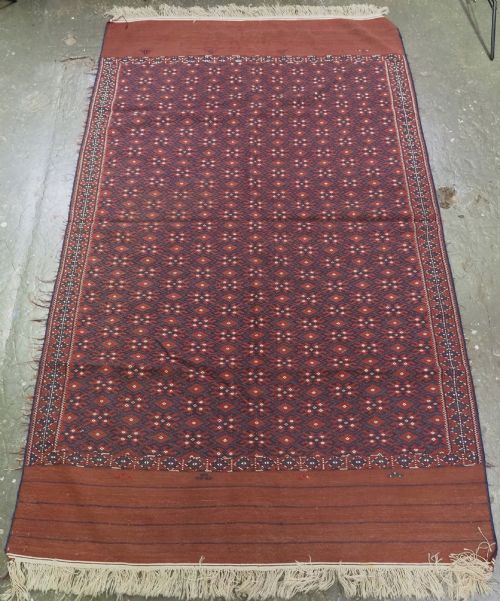
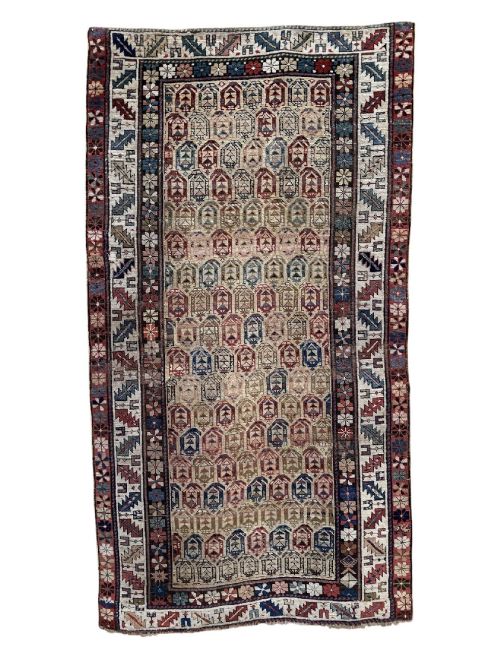
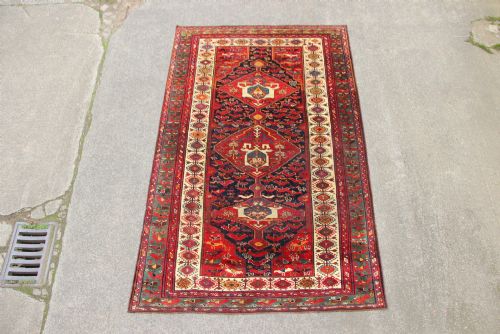
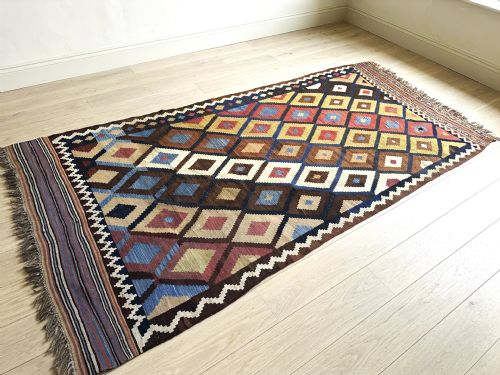
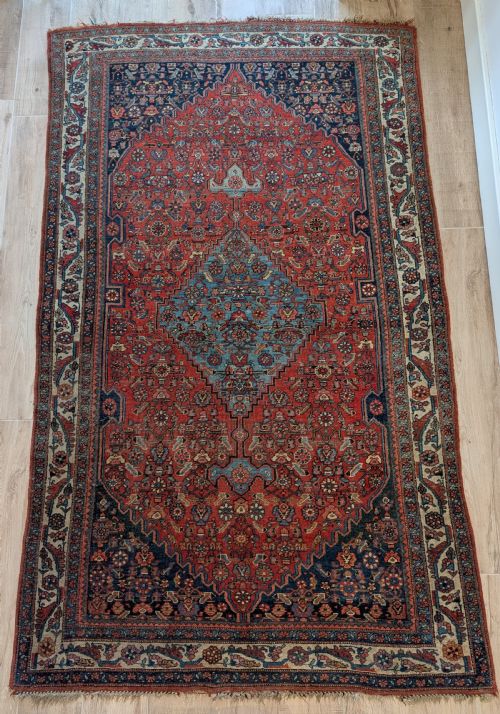
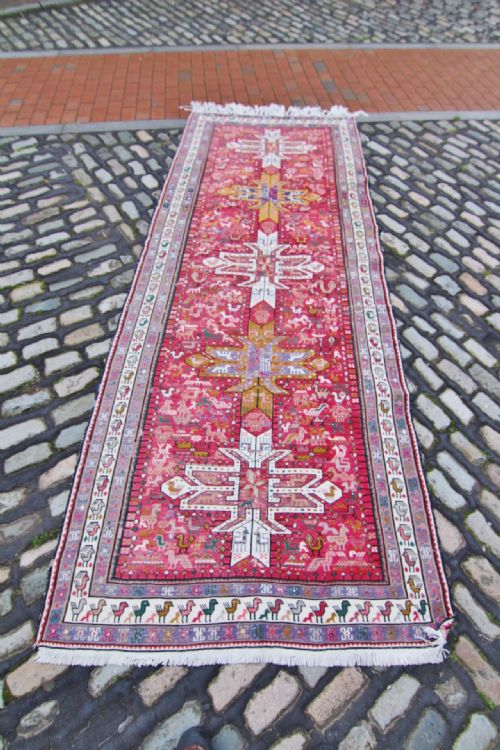

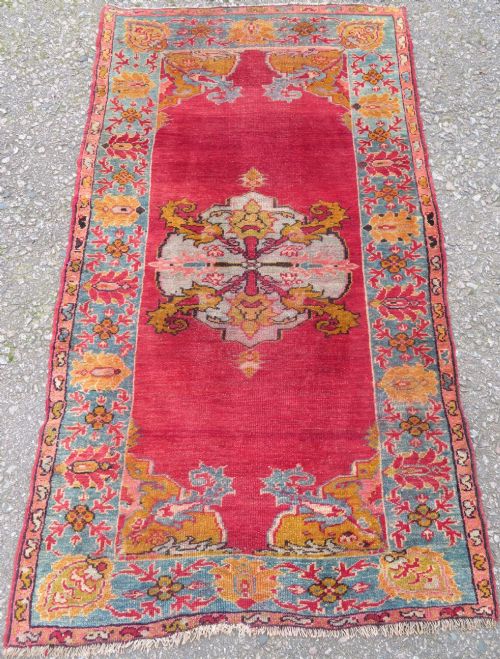
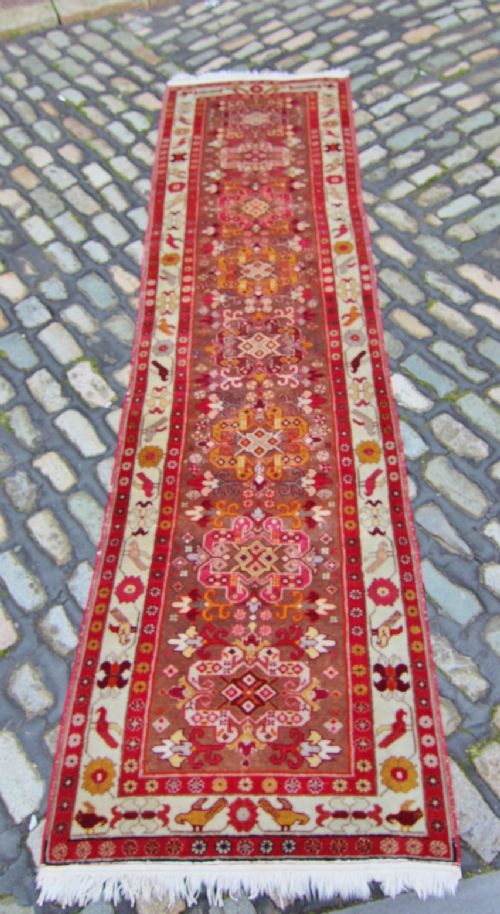

Patterned Wool Runner Rug
These patterned wool runner rug selections bring durable floor coverings into long spaces using traditional village and tribal weaving methods.
Patterned Wool Runner Rug
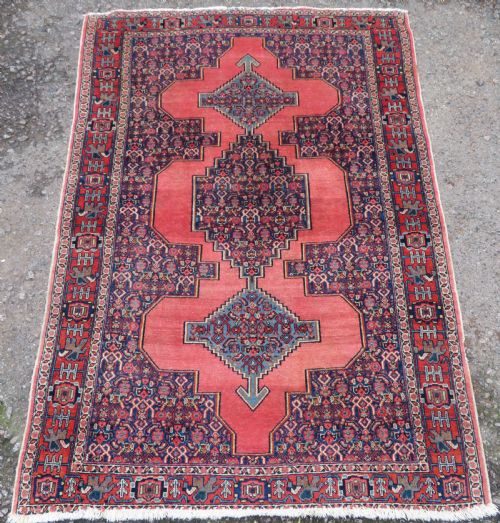
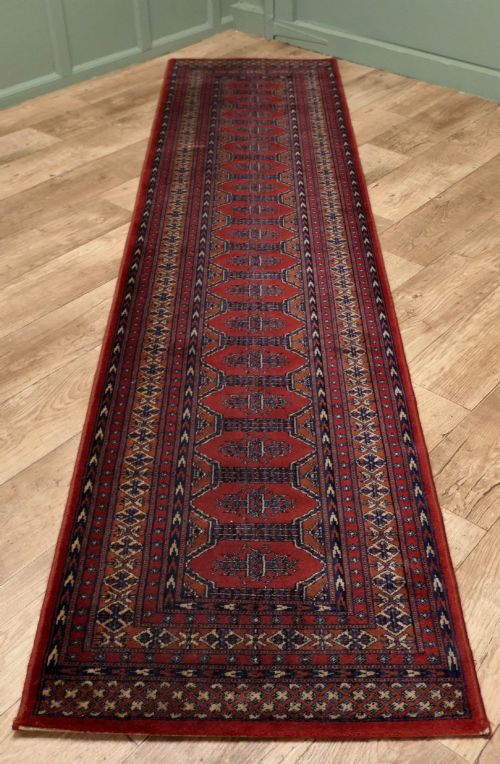
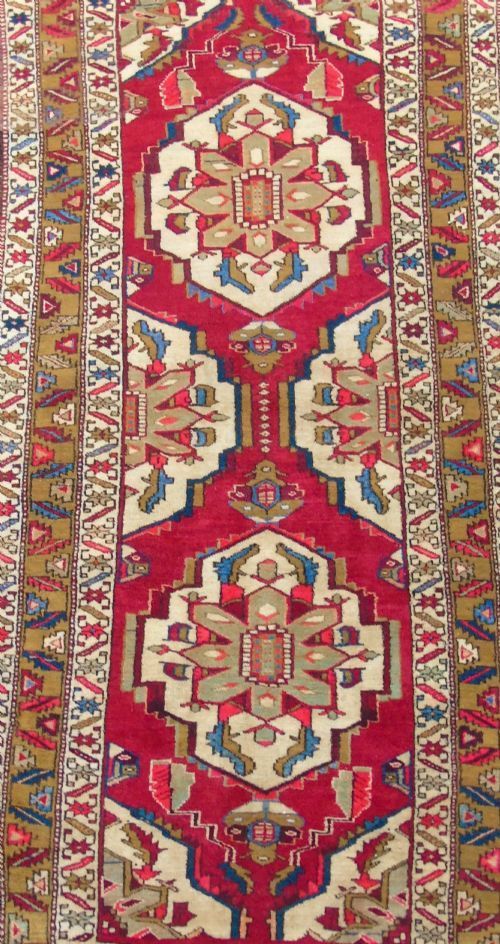
A patterned wool runner rug fills narrow hallways and long corridors with geometric motifs, tribal symbols, and botanical designs originating from Persian, Caucasian, and Anatolian regions. Buyers find floor coverings spanning from the nineteenth century through the early twentieth century, reflecting village and nomadic traditions.
The most common formats on this page are hand-knotted and flat-woven long runners from Persian and Caucasian workshops. These pieces utilise traditional wool construction designed to handle heavy foot traffic in domestic settings.
Judging the work
Knot density and the consistency of the wool pile separate standard village production from finer workshop execution. Tighter knotting allows for sharper delineation of intricate lattice, boteh, and tribal medallion motifs.
The purity and saturation of natural dyes heavily influence the visual depth of a runner. Subtle variations in tone resulting from hand-dyeing processes distinguish superior pieces from more uniform examples.
Patterned Wool Runner Rug Retail Price Guide 2026
Typical asking prices for patterned wool runner rug among the pieces listed under this phrase on Sellingantiques today, from the lower quarter to the upper quarter. They describe what is for sale here now, not the wider market.
Listings feature wool, cotton, and natural dyes applied across nineteenth and early twentieth-century runner formats.
The Patterned Wool Runner Rug Glossary
- Boteh
- A stylised almond or paisley motif representing a floral spray, cypress tree, or flame. This ancient pattern appears frequently across Persian and Caucasian weaving.
- Kilim
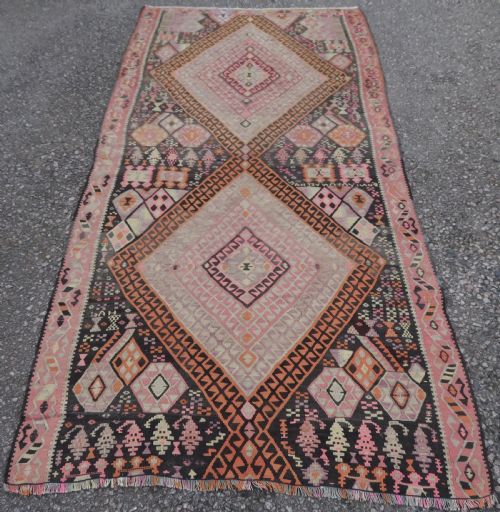
- A flat-woven carpet or rug produced without a pile by tightly interweaving warp and weft strands. These textiles often feature sharp geometric designs.
- Runner
- A long, narrow carpet format specifically designed for hallways, corridors, and staircases. Proportions typically emphasise length over width.
- Pile
- The upright wool surface of a rug formed by individual knots tied to the warp threads. Shorter pile height often indicates older or more densely knotted pieces.
Patterned Wool Runner Rug: Frequently Asked Questions
Where should I place a runner rug?
These long carpets suit hallways, corridors, entryways, and narrow galley spaces where traditional square rugs do not fit. Their elongated proportions draw the eye down a passage while protecting wooden or tiled flooring.
Placing a suitable underlay beneath the wool structure prevents slipping on smooth surfaces. This adds cushioning and extends the lifespan of older textiles subjected to daily foot traffic.
How do I clean a wool runner?
Regular gentle vacuuming without a rotating brush roll removes dust from the wool pile without damaging the hand-knotted foundation. Professional textile cleaning is recommended for deep maintenance.
Avoid harsh chemical treatments or excessive water, which can affect natural dyes and cotton foundations. Prompt blotting of spills preserves the integrity of the wool fibres.
Are these runners made with natural dyes?
Many older pieces utilise natural dye stuffs derived from plants, roots, and insects to achieve rich reds, indigos, and golds. These colorants age gracefully and develop subtle tonal variations over time.
Subtle shifts in shade, known as abrash, indicate changes in dye batches during the hand-dyeing process. This characteristic is valued by collectors as a sign of traditional production.