

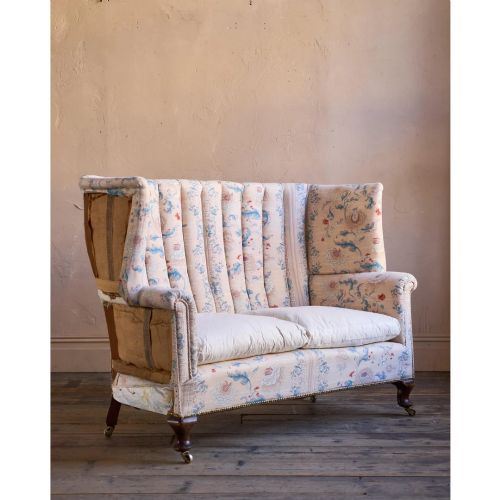
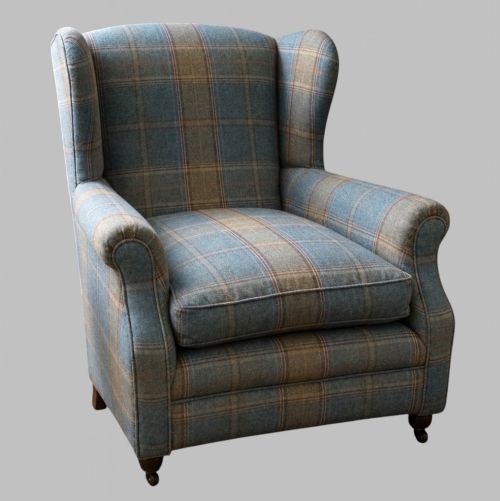
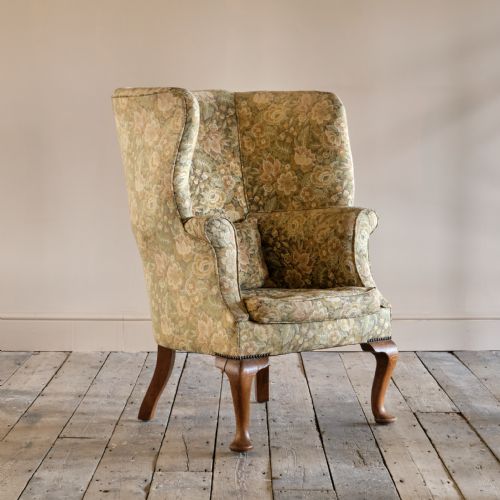


Patterned Wing Chair
A patterned wing chair brings period form and decorative textile together to anchor a traditional room with character.
Patterned Wing Chair
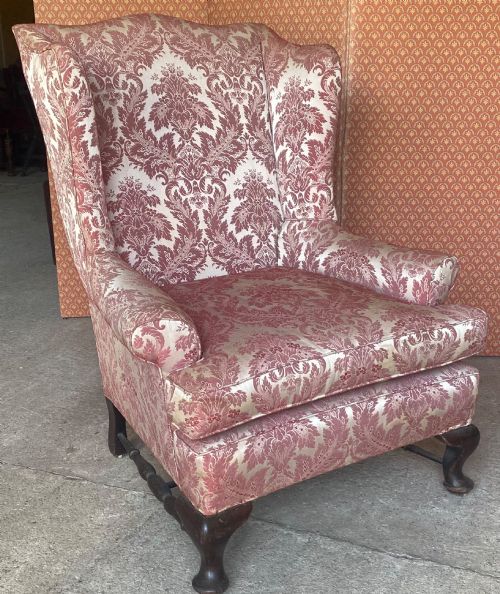
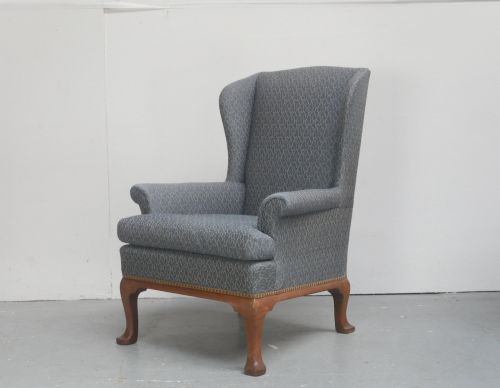
A patterned wing chair is a high-backed seating form designed to shield the sitter from draughts, supported by prominent side panels known as wings. These chairs span periods from the nineteenth century through the Edwardian era and the nineteen-twenties, incorporating revival styles that look back to Queen Anne and Georgian precedents.
The most common examples on this page date from the Edwardian period and the early decades of the twentieth century, alongside Victorian and nineteenth-century pieces. They appear in variations such as barrel-backed shapes, fireside chairs, and library armchairs framed in mahogany, walnut, oak, or hardwood.
Materials and Construction
Frames are constructed from timbers such as mahogany, walnut, oak, and general hardwood, often carrying visible woodwork on legs and arms. Interior cushioning incorporates traditional filling methods, with specific listings noting feather filling for seat comfort.
Upholstery relies on a range of textiles including tapestry fabric, woven plaid, recycled cotton, and patterned fabrics. Brass details occasionally appear on castors or structural hardware supporting the wooden frames.
Patterned Wing Chair Retail Price Guide 2026
Typical asking prices for patterned wing chair among the pieces listed under this phrase on Sellingantiques today, from the lower quarter to the upper quarter. They describe what is for sale here now, not the wider market.
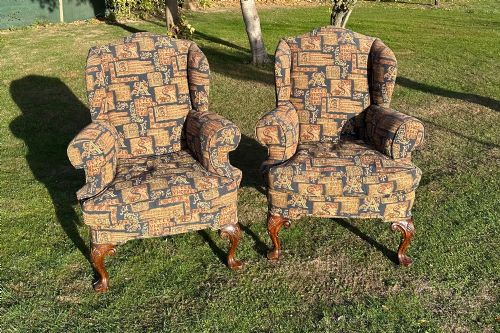
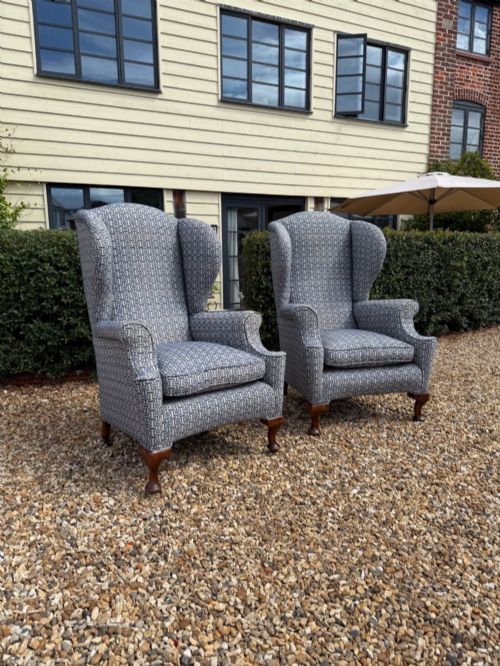
One pair of armchairs carries the forest design associated with William Morris, bringing woodland foliage straight into the parlour.
Judging Quality
Quality rests in the sculptural balance of the wooden frame, the proportions of the wings relative to the seat, and the integrity of the underlying joinery. Subtleties in the carving of the legs and the heft of the hardwood frame distinguish standard production from finer workshop pieces.
The standard of upholstery and the selection of textile also shape the hierarchy. Pieces retaining maker attribution or distinguished retail provenance carry greater distinction through their documented heritage.
Whytock & Reid·Howard & Sons·William Morris
The Patterned Wing Chair Glossary
- Wingback
- A high-backed armchair featuring flanking side panels designed to trap heat and block draughts. This signature silhouette defines the entire category.
- Bergère
- An enclosed armchair with upholstered sides and back, frequently constructed with exposed wooden framing. It represents a lighter variation of the standard upholstered seat.
- Barrel Back
- A seating form where the back rail curves continuously around to form the armrests in a single semicircular sweep. This design provides an enveloping sit.
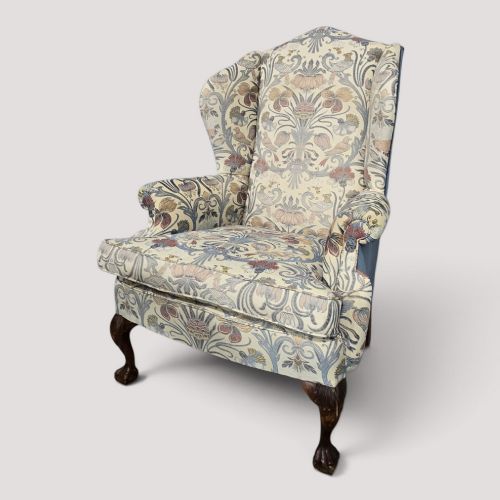
- Claw and Ball
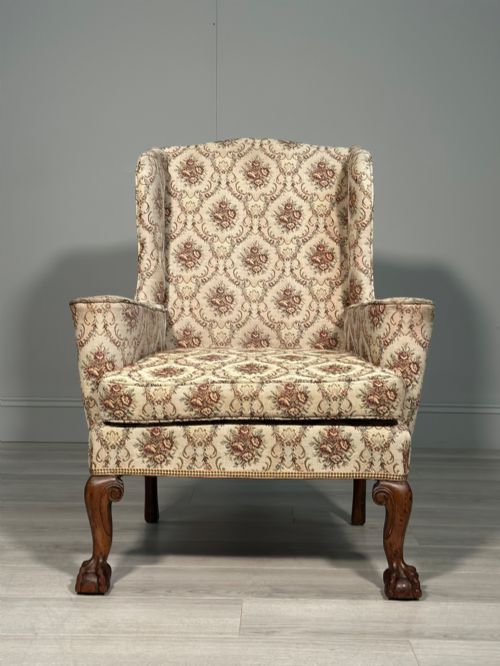
- A traditional furniture foot carved to represent a bird's talon gripping a spherical ball. It appears on period revival legs.
- Feather Filled
- Cushion interiors stuffed with natural plumage rather than synthetic foam. This method provides a softer, yielding seat.
Patterned Wing Chair: Frequently Asked Questions
How do I identify an Edwardian wing chair?
Edwardian examples usually display lighter timber frames, often in mahogany or oak, combined with early twentieth-century upholstery treatments.
They frequently reflect revival tastes while maintaining a more domestic scale than their heavy Victorian predecessors.
Are these chairs comfortable for daily use?
Many listings emphasise traditional stuffing methods, such as feather-filled cushions, intended to provide a soft and supportive sit.
Upholstered construction varies by era, so checking the specific stuffing and spring details in each listing helps determine the feel.
How do I care for patterned upholstery?
Maintenance depends on the specific textile used, ranging from heavy wool plaids and tapestry fabrics to printed cottons.
Gentle vacuuming and professional cleaning suited to the particular fabric composition help preserve the textile.