




Patterned Wing Armchair
A patterned wing armchair offers deep comfort alongside classic proportions, bringing traditional seating into modern rooms with distinct character.
Patterned Wing Armchair
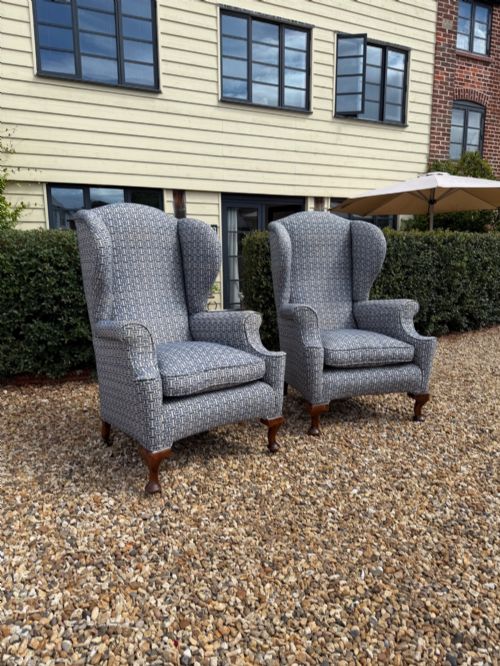
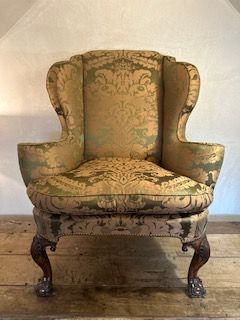
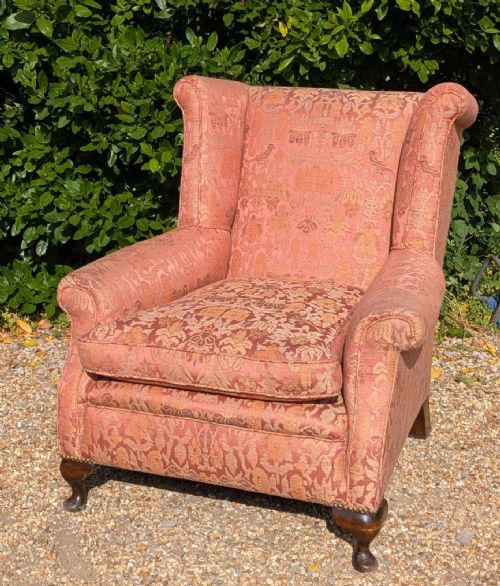
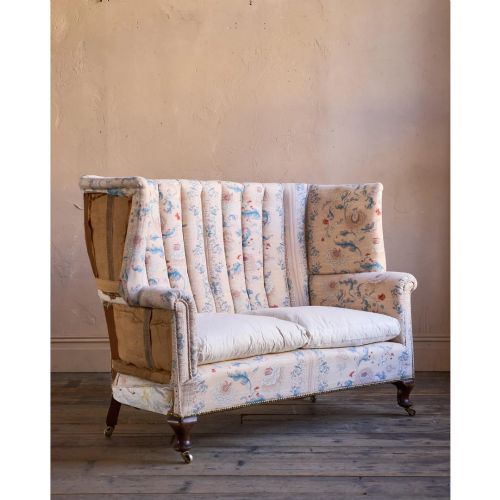
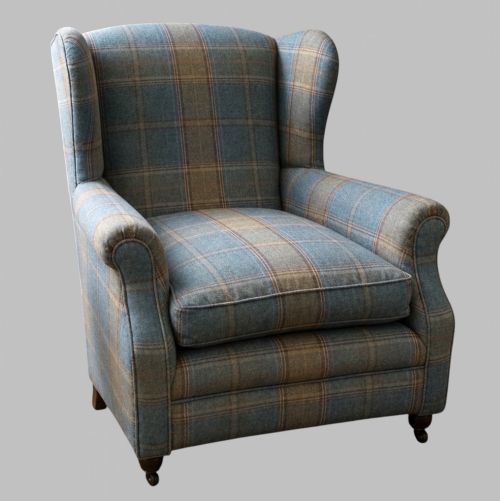
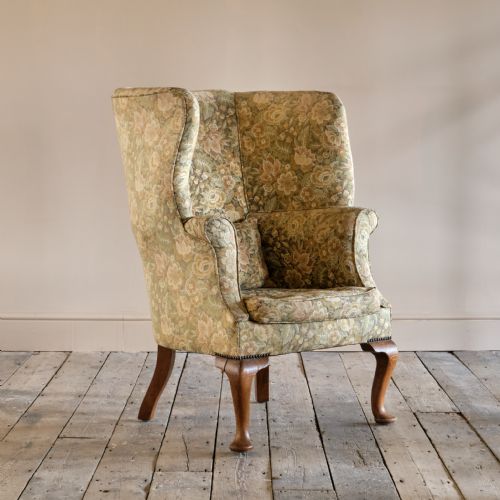
A patterned wing armchair is a substantial seating form featuring protective side panels designed to shield the sitter from drafts, found in variations spanning the 18th century through the Edwardian period. The selections visible here include distinct styles such as Queen Anne, Georgian, Victorian, and Edwardian interpretations, alongside related forms like sofas and barrel-backed chairs.
Makers and workshops utilised various frames, from George II walnut and mahogany to oak and general wood structures, paired with extensive upholstery. Examples range from simple fireside seating to grand library armchairs and matched pairs.
The aesthetic reaches from early period designs to revival movements, incorporating specific influences such as Art Nouveau alongside traditional English country house sensibilities.
How they were made
Upholstery defines the exterior presence, utilising textiles ranging from damask and tapestry fabric to wool plaids, cotton, and patterned fabrics. Interior stuffing frequently includes traditional materials such as feathers to achieve deep cushioning.
Listings span periods from the 18th century through the Edwardian era, incorporating mahogany, walnut, oak, and brass.
What varies in quality
Quality rests in the fidelity of the period style and the integrity of the underlying woodwork, where authentic period joinery outclasses later revivals. The sharpness of carved details on elements like walnut or mahogany frames separates standard workshop production from finer pieces.
The choice and execution of the textile upholstery dictate visual success, with complex weaves like damask, tapestry, or specific wool plaids offering distinct tactile and aesthetic depth. Structural proportions and the preservation of original form lines maintain the integrity of the silhouette.
Whytock And Reid·Howard And Sons·William Morris
The Patterned Wing Armchair Glossary
- Wingback
- A chair style featuring high side panels attached to the arms to deflect drafts. This form developed during earlier centuries for fireside warmth.
- Bergère
- An enclosed upholstered armchair with wooden framing exposed around the sides and back. This French-influenced form appears in various Edwardian interpretations.
- Barrel back
- A seating design where the back and arms form a continuous semi-circular curve. This configuration surrounds the sitter for enhanced enclosure.
- Damask
- A reversible figured fabric traditionally woven on a jacquard loom with patterns set into the warp and weft. It provides a formal texture for period upholstery.
- Tapestry fabric
- A heavy, intricate textile featuring woven pictorial or geometric designs. It adds dense colour and pattern to traditional chair upholstery.
Patterned Wing Armchair: Frequently Asked Questions
How do I identify a genuine period piece?
Examine the timber construction beneath the upholstery and check the joinery methods used in the frame. Early pieces display hand-tooling and wood choices consistent with 18th or 19th-century cabinetmaking.
Compare the silhouette and proportions against established revival styles like Queen Anne or Georgian. Minor irregularities in the frame often point to genuine age rather than modern replication.
What rooms suit a high back wing armchair?
These large chairs anchor living rooms, studies, and traditional libraries where their high profiles create intimate seating zones. They work particularly well beside fireplaces or reading corners.
Pair them with complementary wooden tables or position them to balance open floor plans. The patterned upholstery allows them to serve as focal points within neutral spaces.
How should I care for vintage upholstery?
Vacuum the fabric regularly using a low-suction attachment to remove dust from crevices and tufted areas. Protect textiles from direct sunlight to prevent fading of patterned damasks, wools, or tapestries.
Consult professional conservators for deep cleaning rather than using standard domestic wet extraction methods. This preserves both the outer textile and the internal stuffing.
Are pairs harder to find than singles?
Matched pairs survive in smaller numbers because furniture pieces were often separated or replaced over centuries of domestic use. Finding matching armchairs from the Victorian or Edwardian eras requires searching specialised collections.
Singles offer flexible placement options as accent seating, whereas pairs provide symmetry for formal room layouts. Both single items and pairs appear across the listed inventory.