

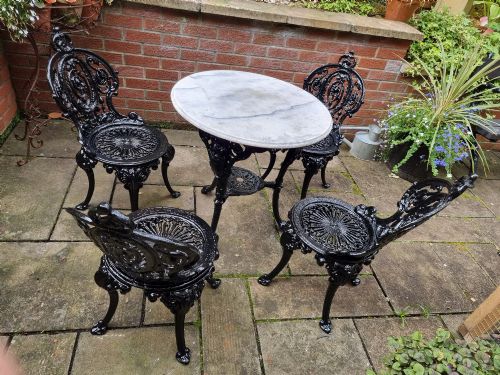
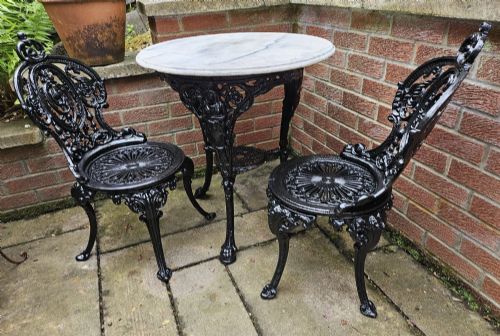
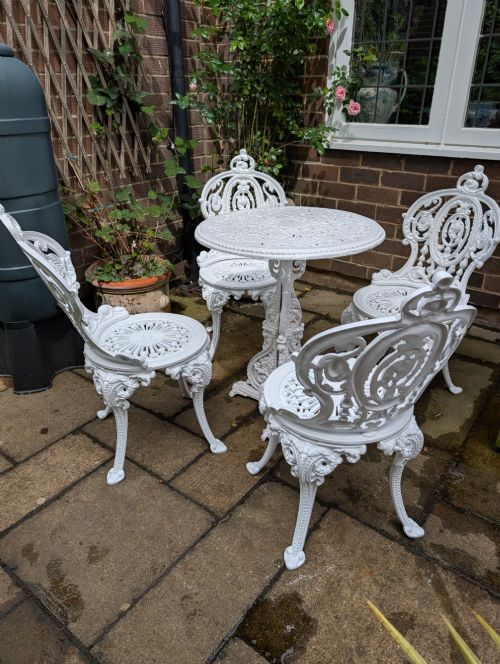


Patio Dining Table
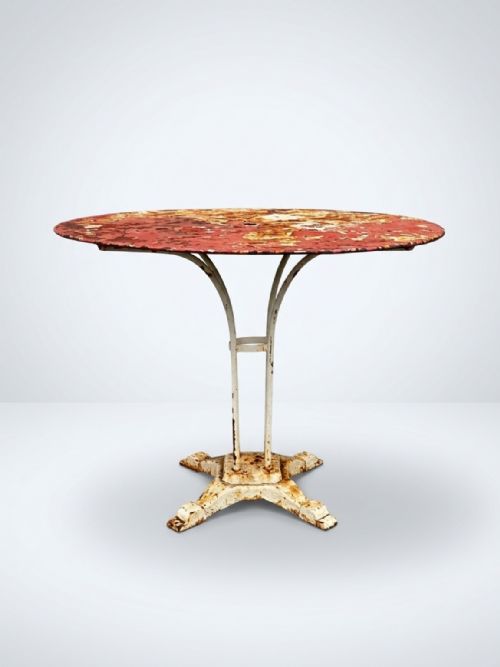
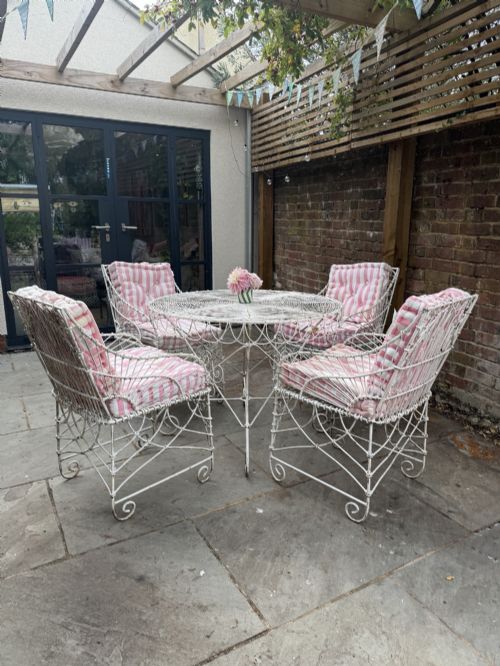
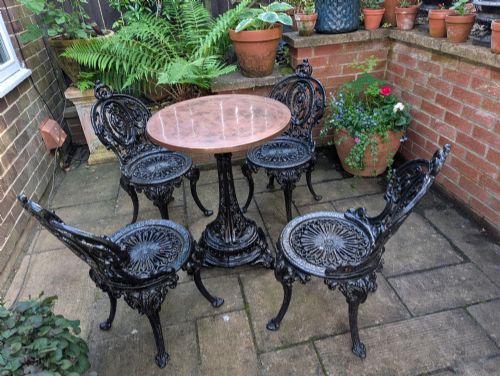
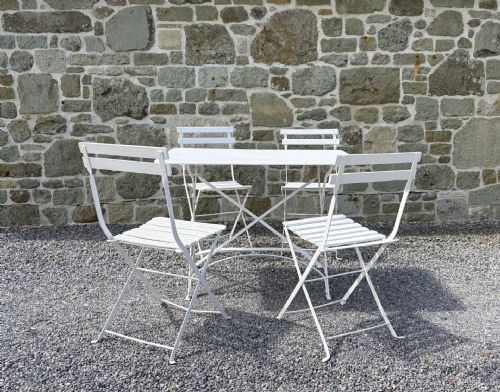
A patio dining table brings structure to the garden, and these examples combine heavy cast iron, French style and practical timber.
Patio Dining Table
When you search for a patio dining table, you find a range of outdoor furniture designed for sitting and eating in the open air. The pieces on this page span the nineteenth century, the Victorian era, and the 1900s through to the 1930s, taking forms such as bistro sets, garden dining sets, and large tables with matching chairs.
You are most likely to meet French country and industrial models, alongside Victorian wirework and Art Deco designs. Many listings pair a heavy cast-iron table with four chairs, while others offer zinc tops, marble surfaces, or combinations of iron and wood.
Origins heavily lean towards French workshops from the 1920s, alongside British Victorian pieces. Forms vary from compact bistro tables to expansive garden sets intended for larger outdoor spaces.
How they were made
Makers built these tables using robust metals like cast iron and wrought iron, frequently shaping bases with intricate openwork patterns and sturdy pedestals. Sheet metal, copper, and brass also appear in the construction, adding variety to the framework.
Table surfaces rely on contrasting materials, utilising white marble, timber, and zinc paired directly with metal frames. Paint finishes provide protection against the weather while defining the exterior look of the ironwork.
Patio Dining Table Retail Price Guide 2026
Typical asking prices for patio dining table among the pieces listed under this phrase on Sellingantiques today, from the lower quarter to the upper quarter. They describe what is for sale here now, not the wider market.
Christopher Dresser brought avant-garde design principles to garden furniture, proving that even a humble outdoor table deserved industrial elegance.
What varies in quality
Quality rests on the integrity of the metal casting and the choice of top material. Finer examples feature crisply moulded iron decoration and substantial marble or zinc tops that outlast simpler wooden boards.
The degree of preservation in the original paint and the harmony between table and chairs dictate the overall standard. Sets that retain their original matched seating demonstrate a higher level of historical completeness.
Christopher Dresser
The Patio Dining Table Glossary
- Cast iron
- A strong, heavy alloy poured into moulds to create rigid furniture frames with ornate decorative detail. It forms the structural base for many period garden sets.
- Bistro set
- A small table accompanied by two or four matching chairs designed for compact spaces. These sets originated in France for use outside pavement cafés.
- Zinc top
- A sheet metal surface applied to a wooden or iron table base, offering a smooth and weather-resistant eating area. It develops a distinctive grey patina over time.
- Wirework
- Metal strands bent and welded into intricate open-patterned garden furniture. This style gained popularity during the Victorian period for light yet durable outdoor pieces.
- French country
- A rustic aesthetic associated with rural French properties, combining utilitarian iron bases with simple wooden planks. It prioritises practical outdoor durability alongside traditional domestic style.
Patio Dining Table: Frequently Asked Questions
What is a patio dining table?
A patio dining table is an outdoor furnishing designed for eating and gathering in gardens, terraces, and courtyards. These period examples combine metal bases with timber, marble, or zinc tops.
They often come as complete sets paired with matching iron chairs. Their construction allows them to withstand outdoor exposure while providing a formal place to dine outside.
How do I date a cast iron table?
Dating relies on stylistic clues, manufacturing techniques, and recorded design registrations from periods like the Victorian era or the 1920s and 1930s. Heavy sand-cast frames and specific decorative motifs point to these eras.
Comparing the bolt fixings, foundry marks, and overall wear helps establish whether a piece originates from the nineteenth century or the early twentieth century.
Are these tables weatherproof?
Period metal tables utilise cast iron and wrought iron that naturally endure outdoor conditions, though they benefit from protective paint coatings. Iron and zinc are resilient against rain when properly maintained.
Wooden elements and marble tops require more careful placement or seasonal covering to prevent moisture damage. Protecting vulnerable surfaces preserves the materials over decades of use.
How many people do they seat?
Many of these garden sets accommodate four diners around a central circular or rectangular table. Larger French models and extended configurations can seat six or more people.
Compact bistro variants typically suit two diners for smaller garden spaces or balconies. Choosing the right size depends on your available patio area and dining needs.