



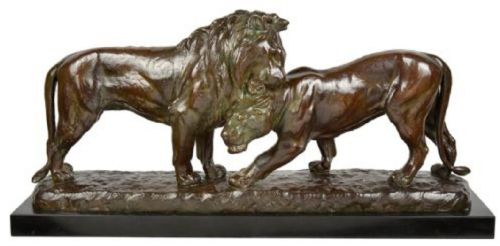


Patinated Metal Lion
A patinated metal lion brings presence to a room, cast in bronze, iron or pewter across centuries of foundry work.
Patinated Metal Lion
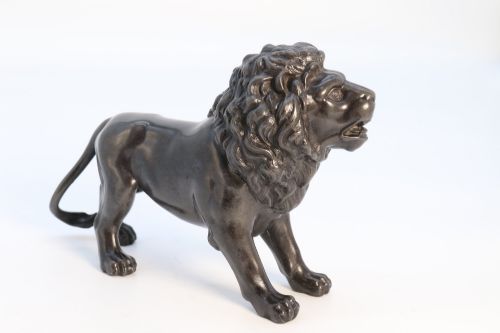
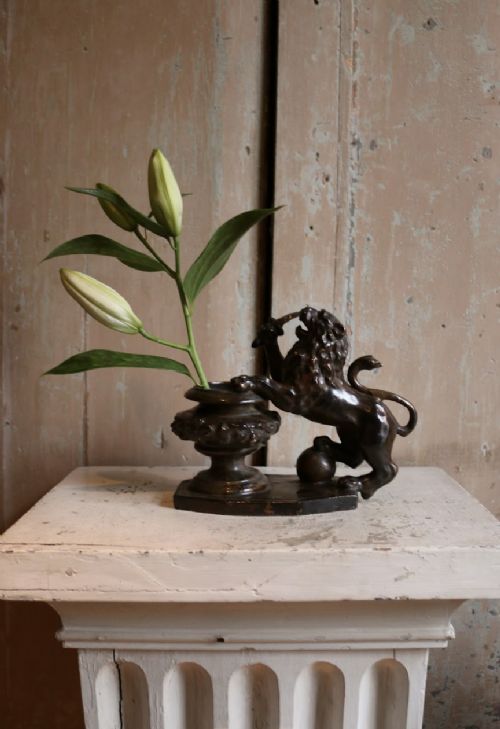
When you search for a patinated metal lion, you encounter cast animal figures and functional objects shaped as beasts, spanning centuries from seventeenth-century inkwells to twentieth-century bookends. These pieces emerge from diverse traditions, including European neoclassical sculpture, Victorian door hardware, and Asian temple bronzes.
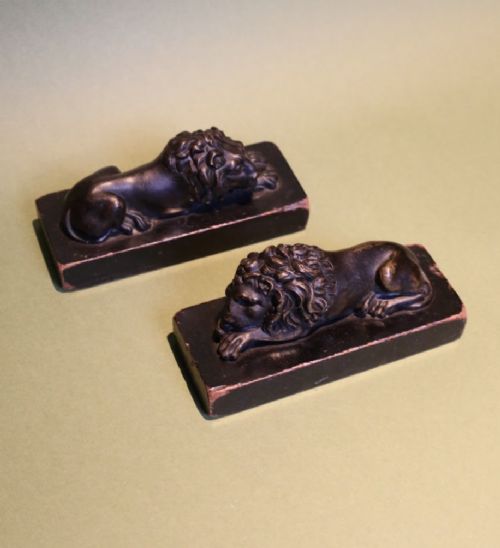
On this page, you are most likely to meet nineteenth-century bronze studies and pairs of resting figures, alongside utilitarian items like doorstops, knockers, and censer finials. The selection draws on Western revival styles and traditional Eastern foundry work, uniting them through dark or weathered metallic finishes.
How they were made
Foundries shaped these pieces primarily through casting, pouring molten bronze, brass, iron, or pewter into moulds to capture muscular detail and facial expression. Artisans then applied chemical treatments or natural ageing to create the characteristic patination, ranging from deep brown and green oxidation to dark industrial iron surfaces.
Some items incorporate secondary techniques such as gold inlay or mounting on marble bases to elevate the decorative scheme. Chiselling and hand-finishing after the cast set the sharper contours of the mane and paws before the final surface colour settled.
Patinated Metal Lion Retail Price Guide 2026
Typical asking prices for patinated metal lion among the pieces listed under this phrase on Sellingantiques today, from the lower quarter to the upper quarter. They describe what is for sale here now, not the wider market.
Listings feature items cast in bronze, pewter, iron, and brass, spanning the seventeenth to the twentieth centuries.
What varies in quality
The distinction between ordinary utility castings and superior artistic works lies in the sharpness of the modelling and the depth of the metal finish. Better examples display careful attention to anatomy and expression, whereas lesser items rely on softer lines from worn moulds.
The integrity and nuance of the patination dictate visual success, with subtle tonal variations marking superior age and handling over flat, uniform paint or chemical washes. Weight and stability also indicate the substance of the casting, separating hollow, thin items from substantial figures.
Unno Shomin·Louis Riche
The Patinated Metal Lion Glossary
- Patinated
- Covered with a surface sheen or chemical oxidation resulting from age or deliberate treatment. This finish alters the raw metallic look to shades of brown, green, or black.
- Okimono
- A Japanese freestanding ornamental object designed for display on a shelf or in a tokonoma alcove. These small sculptures often depict animals or figures with high narrative detail.
- Foo Dog
- A traditional guardian lion figure originating in Chinese art, commonly shown protecting sacred spaces. They appear on this page as censers, door plates, and finials.
- Canova Lions
- Sculptural feline figures derived from the neoclassical monuments designed by Antonio Canova. They frequently appear in nineteenth-century bronze reductions intended for European interiors.
- Censer
- A vessel used for burning incense, often featuring a decorative animal finial on the lid. Bronze examples from East Asian traditions incorporate detailed casting work.
Patinated Metal Lion: Frequently Asked Questions
How do I clean a patinated metal lion?
Dust the surface gently with a dry, soft cloth to remove everyday particles without disturbing the underlying chemical finish.
Avoid commercial metal polishes or water, as abrasive liquids strip away the historical oxidation that gives the metal its character.
Where should I place a bronze lion in my home?
Position heavier desk items like inkwells or bookends away from direct edge hazards on sturdy wooden surfaces.
Larger sculptures and pairs of resting beasts suit mantelpieces or entrance consoles where their weight provides secure balance.
How can I tell a nineteenth-century casting from a later copy?
Examine the underside and seams for tool marks, casting methods, and the natural wear patterns associated with older metal use.
Nineteenth-century pieces often display heavier foundational bronze or iron work compared to lighter modern reproductions.
What is the difference between a temple lion and a western desk lion?
Temple lions from Asian traditions carry specific symbolic roles as guardians, often featuring stylized curls and wider stances on ritual vessels.
Western desk figures and bookends follow classical or naturalistic European sculpture traditions derived from grand tour models.