







Patinated Bronze Timepiece
A patinated bronze timepiece brings dark metal tones and precise mechanical movement into a room, offering both sculptural weight and utility.
Patinated Bronze Timepiece
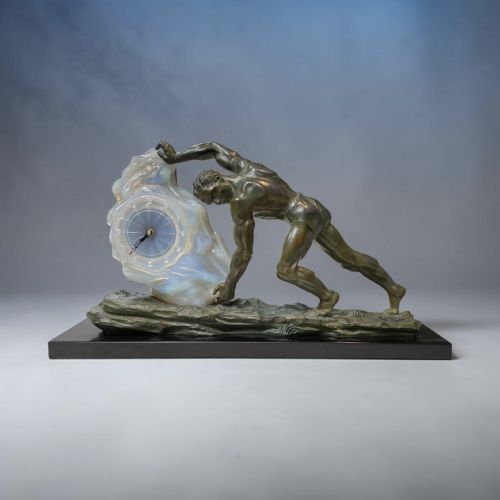
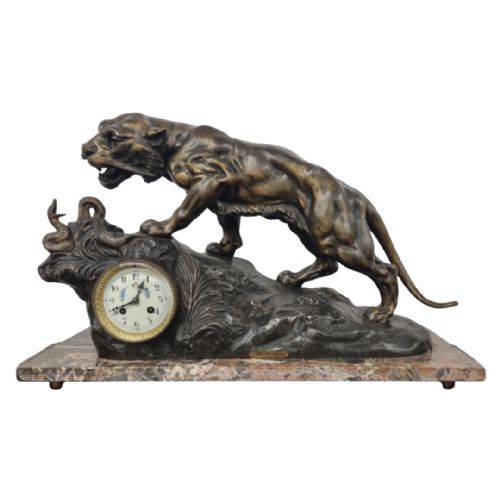
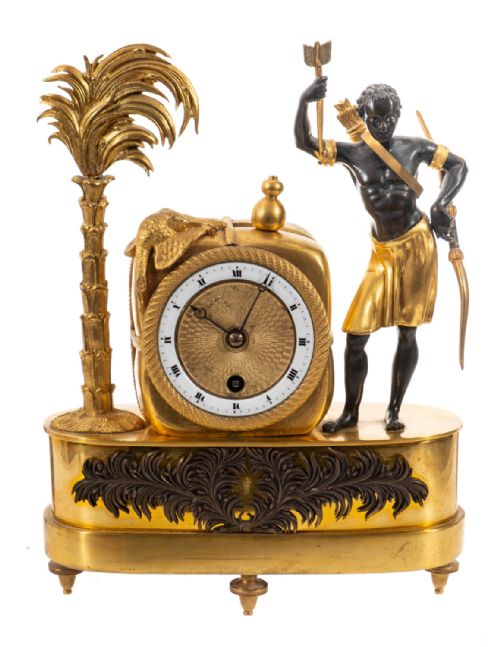
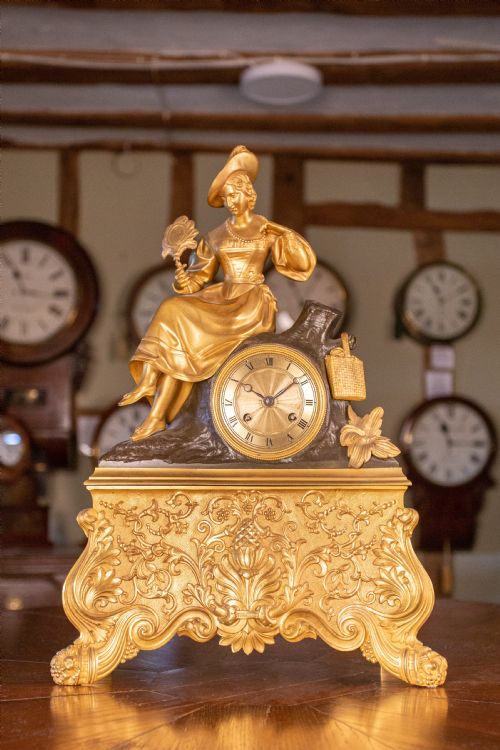
A patinated bronze timepiece is a heavy mechanical clock that combines dark metal surfaces with contrasting gilded mounts, marble bases, or enamel dials. When searching for a patinated bronze timepiece, buyers encounter numerous mantel clocks alongside sundials and cartel clocks from the eighteenth, nineteenth, and early twentieth centuries.
The pieces on this page lean heavily toward French manufacture, spanning Regency, Victorian, and Empire periods. Forms range from classical architectural cases and mythological subjects like Napoleon to figural designs featuring animals, exotic figures, and allegorical themes.
Makers and foundries from Paris dominate the selection alongside regional British examples such as Scottish sundials and London fusee clocks. Domestic mantel clocks and garnitures appear most frequently, designed to sit prominently on a fireplace or sideboard.
Materials and Construction
Foundries cast bronze into complex figural and architectural shapes before applying chemical patination to darken the metal surface. Guilders then added contrasting fire gilding or ormolu highlights to accentuate the sculptural details.
Clockmakers fitted brass movements, often driven by 8-day mechanisms or fusee chains, behind white enamel dials protected by glass bezels. Heavy bases carved from sienna marble or white marble frequently anchor the bronze structures to provide stability.
Craftsmen combined these cast components with hand-chiselled surface chasing, uniting the patinated dark bronze bodies with polished brass and gilt details.
Patinated Bronze Timepiece Retail Price Guide 2026
Typical asking prices for patinated bronze timepiece among the pieces listed under this phrase on Sellingantiques today, from the lower quarter to the upper quarter. They describe what is for sale here now, not the wider market.
Listings feature patinated bronze timepieces spanning the Regency, Victorian, and Art Deco periods, utilising materials like sienna marble, ormolu, and enamel.
Qualities of Distinction
The integration of the patinated bronze with ormolu mounts and marble plinths dictates the overall visual success of the piece. Better clocks combine harmonious proportions with original mercury gilding and well-preserved dark patination.
Movement sophistication also separates standard productions from exceptional works, particularly when complex automata, fusee movements, or signed maker plates are present.
R Varnier·Japy Freres·Ravrio·Hessen Paris·Lemerle Charpentier·Andre Guilmet·Baetens London
The Patinated Bronze Timepiece Glossary
- Ormolu
- Gilded bronze produced by applying an amalgam of gold and mercury to the metal base before heating. This historic technique creates a durable, deep yellow lustre.
- Fusee
- A conical pulley used in mechanical clocks to maintain even tension on the gear train as the mainspring unwinds. It ensures consistent timekeeping.
- Cartel clock
- A wall clock housed in an ornate ornamental case made of bronze, ormolu, or wood. These pieces fasten directly to the wall rather than resting on a mantel.
- Patination
- The surface finish developed naturally through age or applied chemically to bronze. It creates a dark, protective layer over the metal.
- Garniture
- A set consisting of a central clock flanked by matching decorative objects such as urns or vases. They form a balanced display on a mantelpiece.
Patinated Bronze Timepiece: Frequently Asked Questions
Where should I place a heavy mantel clock?
These bronze and marble clocks require a sturdy, level surface such as a heavy sideboard, chest of drawers, or a deep mantelpiece capable of supporting substantial metal and stone weight.
Keep them away from direct heat sources and damp exterior walls to protect the delicate enamel dials and internal brass movements from environmental stress.
How do 8-day movements work?
An 8-day movement requires winding approximately once a week using a matching key inserted into the dial holes. The internal springs store sufficient mechanical energy to drive the gear train and escapement for that duration.
Regular winding maintains steady tension on the gears, keeping the hands moving accurately across the enamel face.
What is the difference between Empire and Rococo styles?
Empire style clocks draw on classical Roman, Greek, and Egyptian motifs, featuring symmetrical architectural lines, military trophies, and dark patinated bronze paired with bright ormolu. They reflect the neoclassical tastes of the early nineteenth century.
Rococo style pieces embrace asymmetrical curves, naturalistic scrollwork, flowers, and playful organic forms that recall the mid-eighteenth century French aesthetic.
How do I read a fusee clock movement?
A fusee movement uses a spiral-grooved cone connected to the mainspring by a fine metal chain or cord. As the spring loses power, the chain moves to a wider part of the cone to maintain equal torque.
This mechanism compensates for the declining force of the uncoiling spring, delivering consistent power to the escapement for more precise timekeeping.