

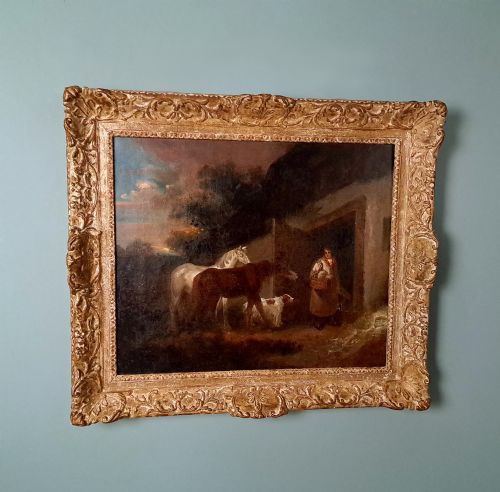
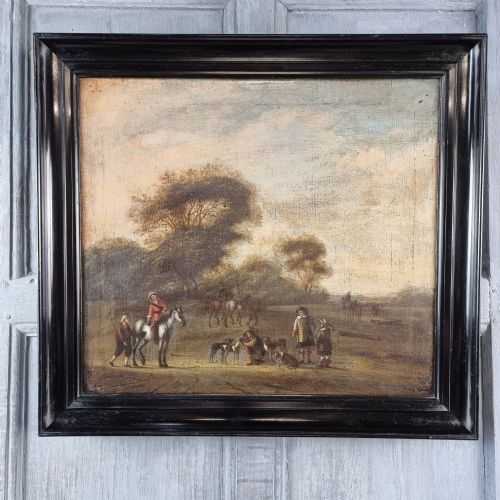


Pastoral Horse Scene
A pastoral horse scene captures rural working life on canvas and paper, offering an authentic glimpse into historical farming methods and countryside landscapes.
Pastoral Horse Scene
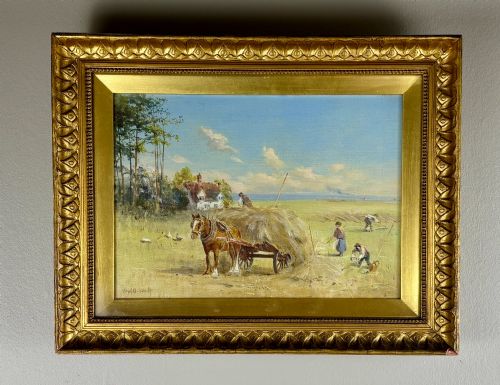
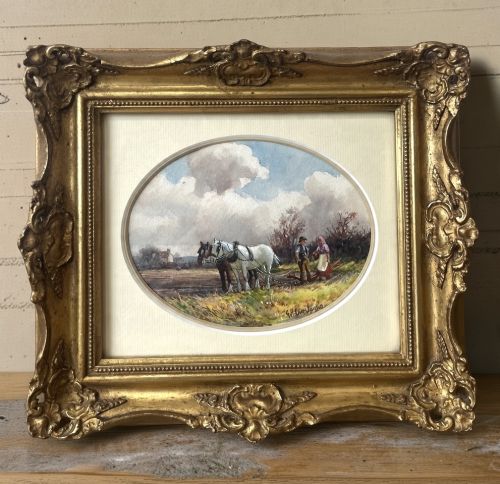
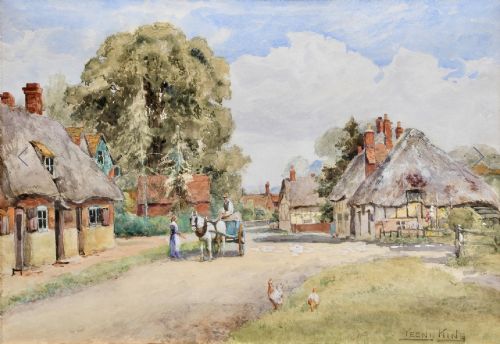
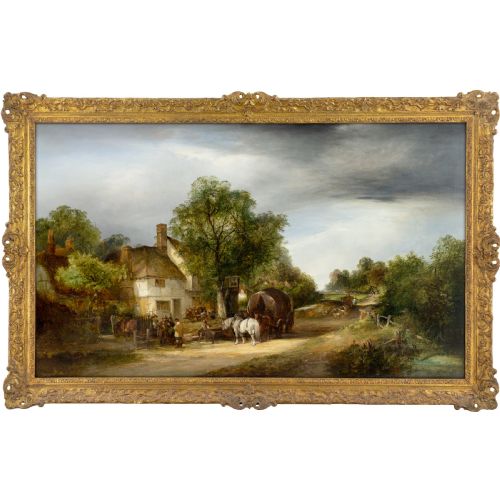
A pastoral horse scene typically depicts working animals, farm carts, plough teams, and agricultural labourers integrated into rural British landscapes. These pieces frequently date from the nineteenth and early twentieth centuries, capturing traditional countryside scenes created by artists working in oil and watercolour.
The version most commonly encountered on this page is a framed nineteenth-century oil painting or watercolour featuring horses engaged in rural labour such as harvesting or hauling timber. These artworks often present detailed depictions of shire horses, cart horses, and farmyards combined with figures and cottages.
Materials and techniques
Artists deployed oil paint upon stretched canvas or wood panels, building rich textures and deep colour tones to render the atmosphere of rural fields and farmyards. Alternatively, watercolour pigment on paper offers lighter, translucent washes suited to capturing the shifting light of country skies and lanes.
Framing typically involves gilt or wooden mouldings that protect the paper or canvas supports while providing a traditional presentation for these fine art works.
Pastoral Horse Scene Retail Price Guide 2026
Typical asking prices for pastoral horse scene among the pieces listed under this phrase on Sellingantiques today, from the lower quarter to the upper quarter. They describe what is for sale here now, not the wider market.
Materials documented in the collection include canvas, paper, wood, oil paint, watercolour pigment, and gilt.
Assessing visual and technical standards
Quality rests upon the artist's ability to render the anatomy and movement of working horses alongside the natural lighting of the landscape. Stronger examples demonstrate precise brushwork or confident watercolour washes that define the texture of the soil, foliage, and animal coats.
The depth of composition and the handling of atmospheric perspective separate standard topographical records from works possessing genuine artistic distinction.
Edward Charles Williams·William Shayer·John Linnell·George Cole·George Turner
The Pastoral Horse Scene Glossary
- Oil painting
- A work created using pigments bound in a drying oil, typically applied to canvas or wood.
- Watercolour
- A painting method where coloured pigments are suspended in a water-based solution and applied to paper.
- Pastoral
- An artistic style depicting rural life, agriculture, and idealized countryside scenes.
- Gilt
- A thin layer of gold leaf or gold paint applied to wooden frames or decorative surfaces.
Pastoral Horse Scene: Frequently Asked Questions
What periods do these artworks originate from?
The works span from the seventeenth century through to the mid-twentieth century, with a heavy concentration originating in the nineteenth and early twentieth centuries.
Victorian and Edwardian periods provide the majority of the surviving painted records depicting rural life and working horses.
What subjects appear alongside horses?
Horses are typically shown performing agricultural duties such as ploughing fields, hauling timber carts, and gathering the harvest.
Human figures including farmworkers, ploughmen, and riders frequently share the composition alongside farm dogs, country inns, and cottages.
How should these paintings be displayed?
Watercolour paintings require protection from direct sunlight behind glass to prevent fading of the pigment on paper.
Oil paintings on canvas tolerate ambient room light well, provided they hang away from excessive moisture and temperature fluctuations.
How do oil and watercolour pieces differ?
Oil paintings utilise viscous pigments on canvas or wood, allowing for thick impasto and deep, layered colour variations.
Watercolour works employ translucent pigments on paper, creating bright, luminous effects that capture open skies and rural light.