
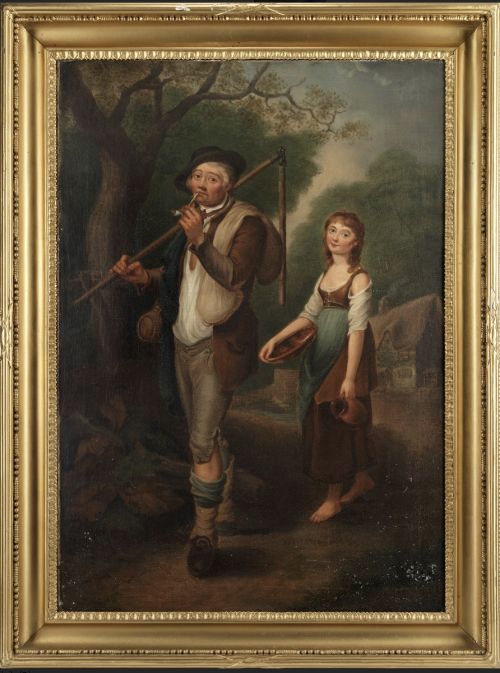
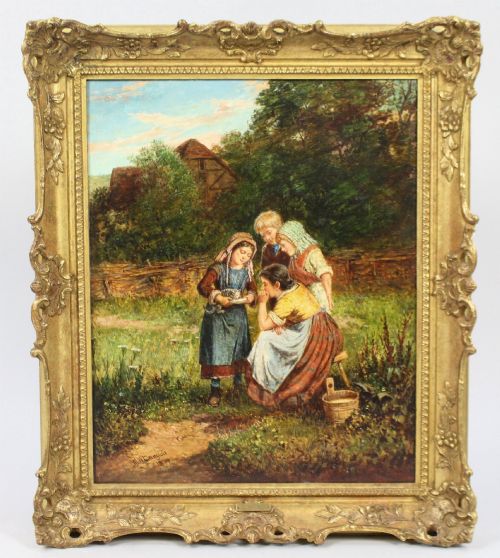
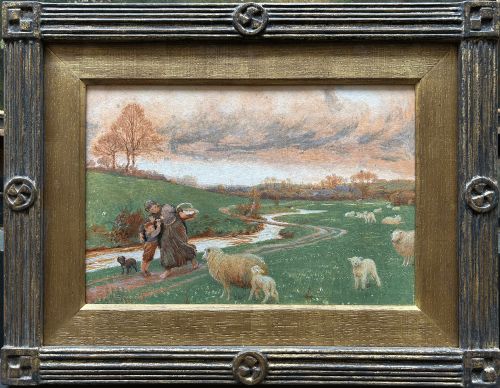

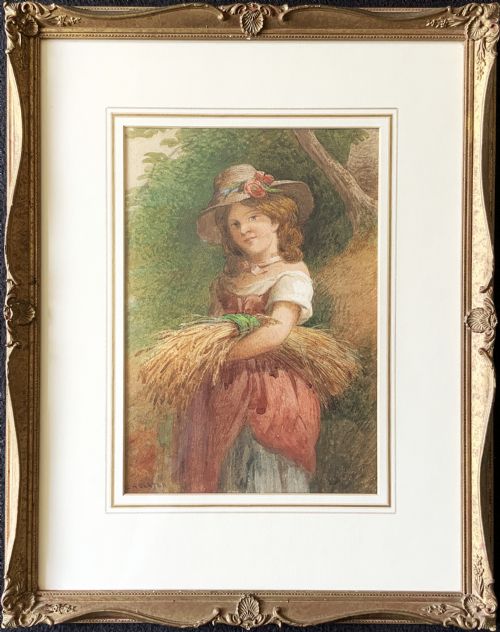
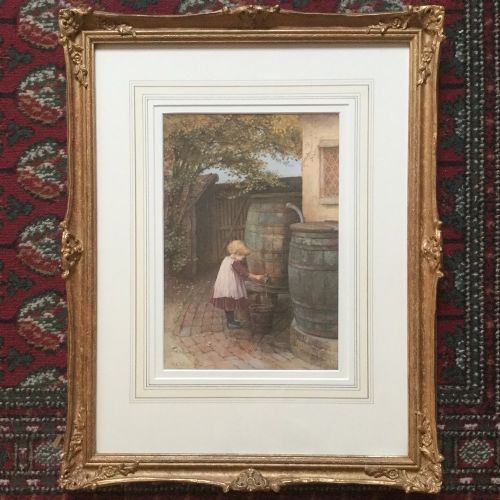


Pastoral Genre Art
Pastoral genre art captures idyllic rural scenes of rustic life, farmworkers, and children outdoors, offering a charming window into nineteenth-century countryside charm.
Pastoral Genre Art
Pastoral genre art focuses on everyday rural scenes, depicting farmworkers, children picking flowers, and countryside pastimes. You will frequently encounter nineteenth-century works representing Victorian ideals of rustic tranquillity and agricultural life.
These pieces range from intimate watercolours to large oil paintings on canvas and board, often framed in period wood. The subjects span idyllic river views, farmyards, and village landscapes set across the Georgian, Regency, and Victorian eras.
How they were made
Artists painted primarily in oil on canvas or board, and in watercolour on paper, capturing detailed rural subjects with careful brushwork. Many works incorporate traditional framing using wood, gesso, and gilt wood, sometimes paired with glass protection.
Techniques also include hand-coloured engravings, lithographs, and paintings on glass, reflecting diverse methods of pictorial representation across the eighteenth and nineteenth centuries.
Surviving examples encompass diverse formats including oil paintings, watercolours, glass paintings, and antique prints.
What varies in quality
Quality rests upon the artist's ability to render light, texture, and naturalism within the figures and the surrounding landscape. Finer works display confident brushwork in complex compositions, whereas simpler decorative pieces rely on more formulaic rural motifs.
The integrity of the original support, the sensitivity of the colour palette, and the suitability of the period frame contribute significantly to the overall presence of each piece.
Thomas Barker of Bath·Mark William Langlois·Miles Birkett Foster·Charles Henry Slater·Charles Edward Wilson·Henry William Banbury·Charles Zacharie Landelle·John Sanderson Wells·Friedrich von Kaulbach·James Hardy Junior·Helena Maguire·Daniel Pasmore·Ernest Walbourn·Alfred Banner·Henry Sykes·William Lucas·Thomas Hollingsworth·Edward H. Holder·George Cole·George Morland·Fred Morgan·John Pedder·Thomas Mackay·Georgina Lara·Edward John Cobbett
The Pastoral Genre Art Glossary
- Genre art
- Painting that depicts aspects of everyday life by portraying ordinary people engaged in common activities. These scenes often carry narrative or sentimental appeal.
- Oil on canvas
- Pigment mixed with drying oil applied to a stretched woven fabric support. This medium allows for rich blending of colour and varied surface textures.
- Watercolour
- A painting method where fine pigment is suspended in a water-based solution on paper. It produces translucent washes of colour that capture delicate atmospheric effects.
- Gesso
- A plaster-like mixture applied to wood frames before gilding or painting. It provides a smooth base for decorative mouldings.
- Hogarth frame
- A distinctive narrow wooden picture frame with a stepped profile, popular in the eighteenth and nineteenth centuries for prints and watercolours.
Pastoral Genre Art: Frequently Asked Questions
What defines pastoral genre art?
These works depict scenes of rural life, agricultural labour, and children in countryside settings, focusing on idealized everyday moments.
They offer a nostalgic view of historical rural communities through paintings, watercolours, and prints.
How should I hang these paintings?
Keep them away from direct sunlight and damp walls to protect the canvas, paper, and traditional wooden frames.
Display them at eye level in rooms with stable ambient temperatures to preserve the pigments.
How do I identify the period?
Examine the materials of the support, the framing style, and the artist's recorded dates alongside the clothing and architecture depicted.
Nineteenth-century works often feature distinct Victorian painting techniques and stretcher constructions.
Were these works reproduced?
Many popular rural compositions were issued as hand-coloured engravings, lithographs, and prints for domestic decoration.
Original paintings remain distinct from these printed items through their visible brushwork and physical texture.