
Pastoral Art Painting
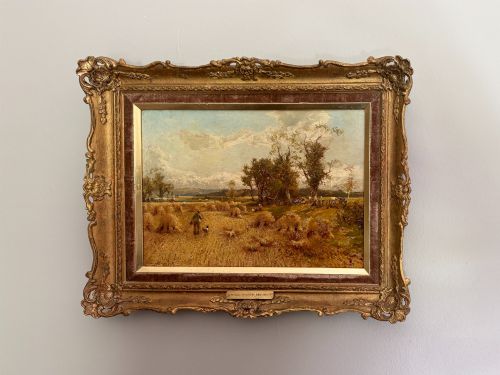
Pastoral art painting brings rural tranquillity indoors through rural scenes of herds, harvests and shepherds.
Pastoral Art Painting
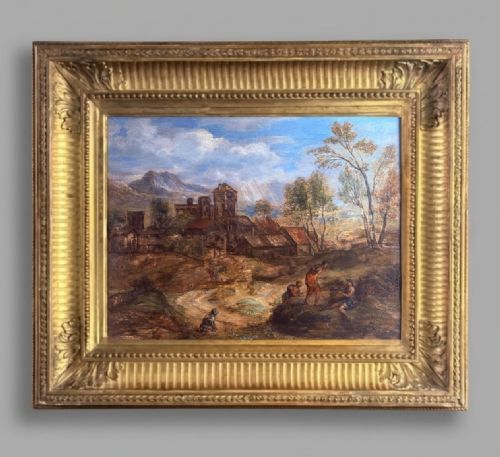
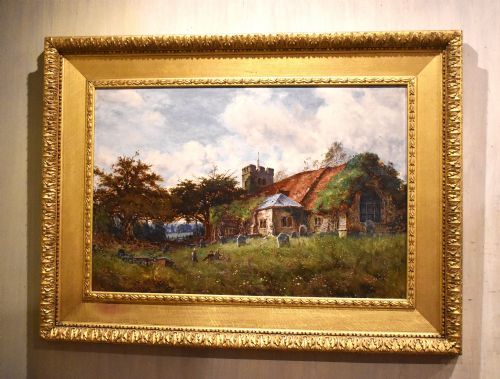
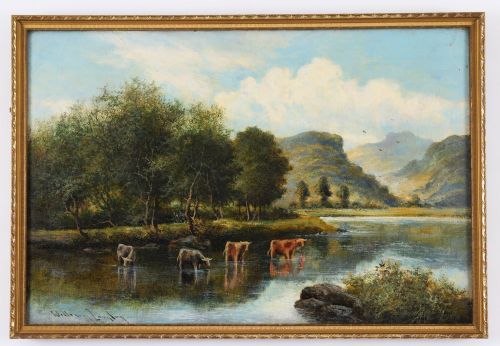
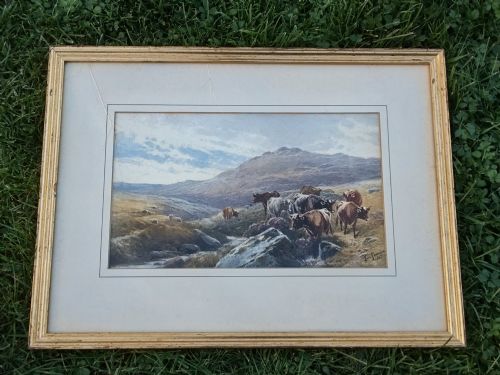
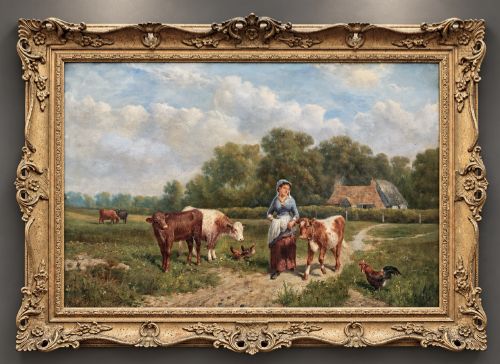
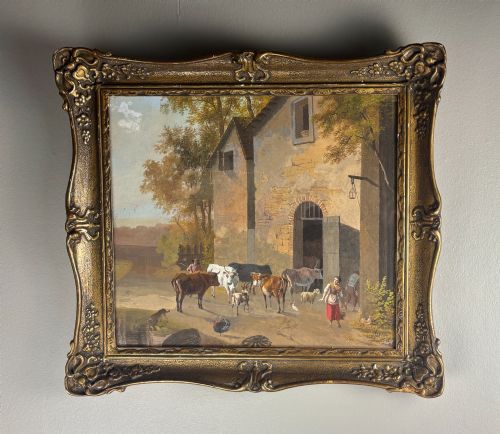
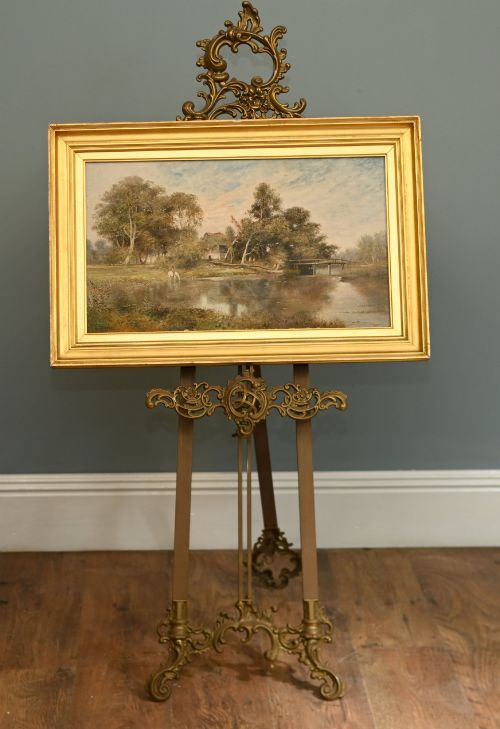
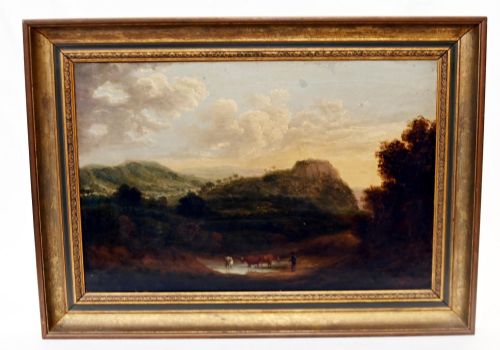
A pastoral art painting captures the quiet rhythm of country life, focusing on rural landscapes, farmyards, herds of cattle and figures resting by rivers. These works draw the viewer into an idealised or realistic rustic world populated by shepherds, farmers and livestock.
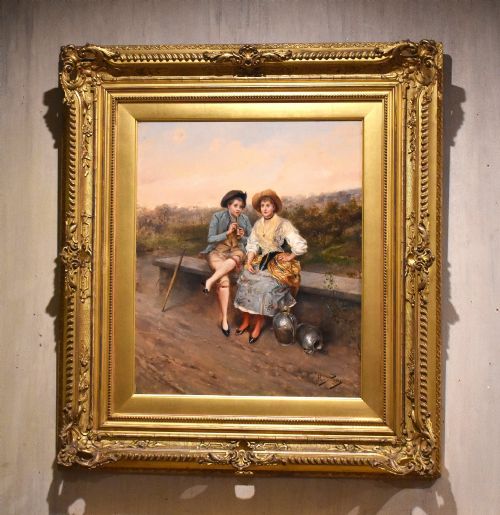
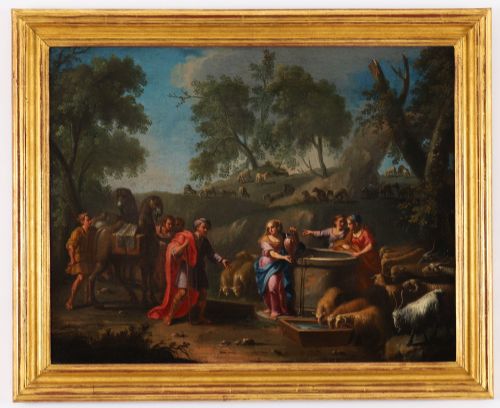
The pieces on this page span several centuries, with a strong representation of nineteenth-century canvases and watercolours alongside earlier seventeenth-century panels and eighteenth-century compositions. Works range from detailed British realism to Dutch-influenced panel paintings and French provincial scenes.
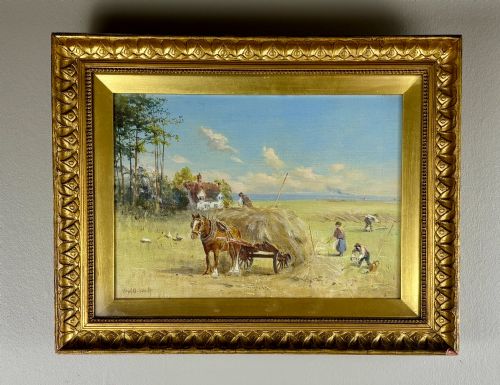
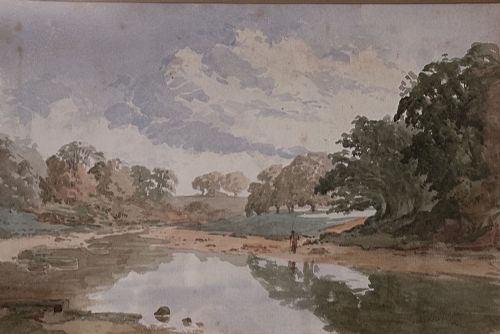
Buyers encounter oil paintings on canvas and wood panels, alongside watercolours on paper and gouache. Common subjects include cattle grazing near castle ruins, sheep driven to market, hay harvests and quiet riverbanks under expansive skies.
How they were made
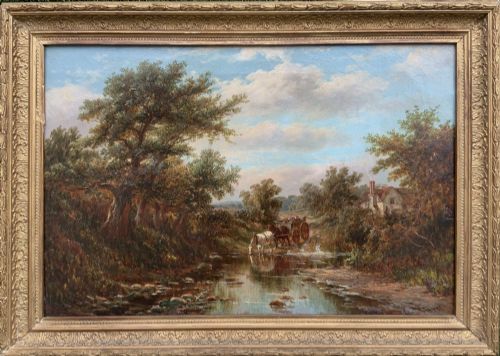
Artists relied primarily on oil paint applied to canvas, wooden panels or board, building depth through layered brushwork and subtle glazes. Watercolours on paper provide a lighter, more translucent alternative for recording atmospheric rural light.
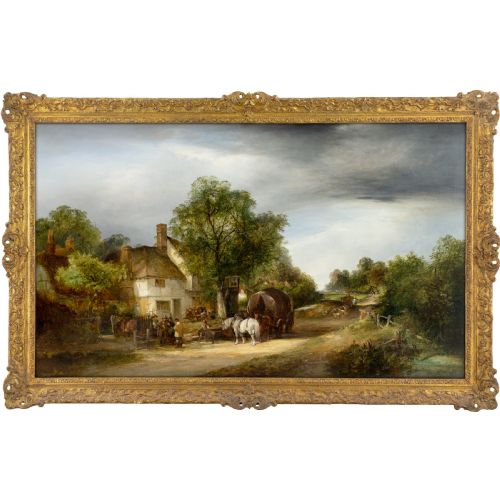
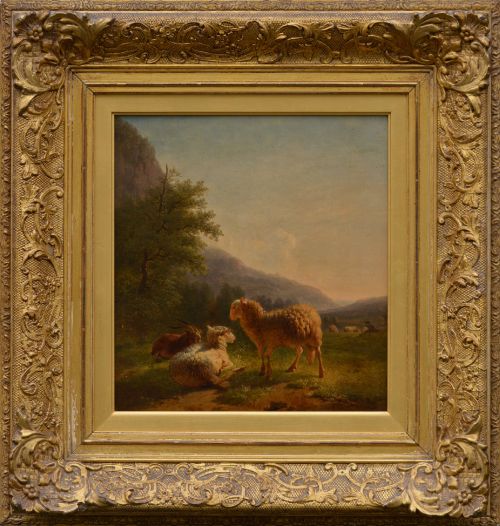
Frames often incorporate carved wood and gesso with gilt finishes, which protect the edges of the canvas and complement the tones of the landscape within.
Prized shorthorn bulls and quiet cats keep company with the hard-working sheep across these pastures.
What varies in quality
Quality rests in the handling of light, shadow and perspective, distinguishing a flat record of a field from a work with genuine atmospheric depth. Stronger pieces capture the texture of wool, foliage and water with confident, purposeful brushstrokes.
The articulation of figures and animals reveals the skill of the hand, where proportion and natural posture give life to a harvest scene or a resting shepherd.
James Elliot·Alonso Perez·William Langley·Thomas Rowden·Samuel Joseph Clark·Hugh Barry-Scott·William Manners·Karel Dujardin·Edward Charles Williams·William Shayer·Eugène Verboeckhoven·William H Myers·George Graham·Tom Campbell·Percy Lancaster·James Smetham·Francois Boucher·John Horace Hooper·William Joseph Shayer Senior·Hendrik Willem Schweickhardt·EJ Letheren·Thomas Barker of Bath·Mark William Langlois·David Bates·Walter Heath Williams
The Pastoral Art Painting Glossary
- Oil on Canvas
- A traditional painting medium where pigments suspended in oil are applied to a stretched cloth support. This technique allows for rich colour blending and longevity.
- Oil on Panel
- A painting executed on a wooden board rather than fabric. Panels provide a rigid surface favoured by earlier European schools.
- Gouache
- An opaque water-based medium containing pigment and a binding agent such as gum, producing a flat, matte finish on paper.
- Gilt Gesso
- A plaster-based material applied to wood frames and covered with thin metal leaf to create a gilded decorative surface.
Pastoral Art Painting: Frequently Asked Questions
What subjects define these paintings?
These works focus on agricultural scenes, farm animals, shepherds and rustic landscapes. They depict daily rural labour and quiet countryside views.
Common motifs include cattle resting near rivers, sheep in woodland settings and figures gathering hay during harvest time.
How should I hang a pastoral painting?
Choose a wall with stable humidity away from direct sunlight to protect the canvas or paper support. Adequate spacing allows the traditional gilt frame to complement the room.
Matching the scale of the frame to your furniture ensures the artwork anchors the space effectively without dominating smaller walls.
How do I identify the period?
Examine the stretcher bars, canvas weave and framing style alongside the signature of the artist if present. Nineteenth-century works often feature distinct realism and rich earth tones.
Earlier seventeenth-century pieces typically utilise heavy wooden panels and darker, dramatic palettes influenced by European baroque traditions.
Are watercolours as durable as oils?
Watercolour paintings require protection behind glass to prevent moisture damage and fading from light exposure. They offer a delicate alternative to heavy oil on canvas.
Properly framed and glazed watercolours preserve their vibrant pigments and paper supports across generations.