

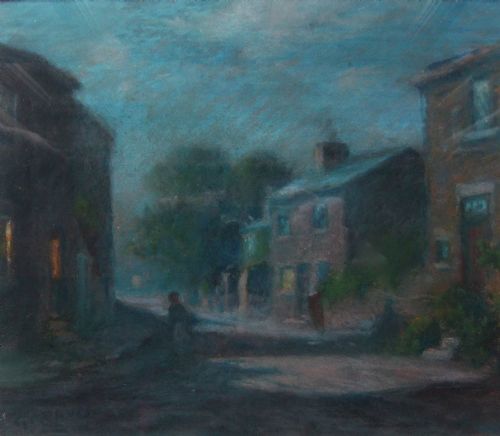
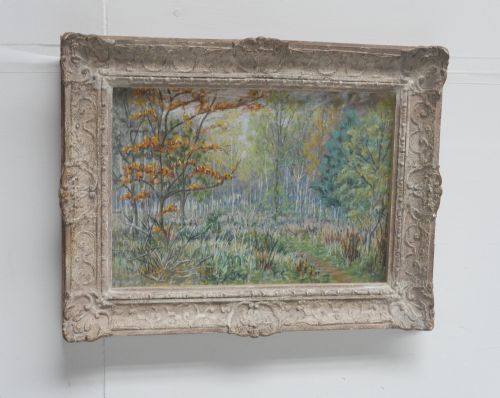


Pastel Landscape Scene
A pastel landscape scene captures atmosphere through soft pigment on paper, offering subtle light and texture.
Pastel Landscape Scene
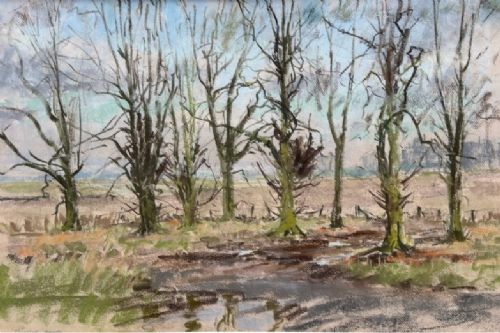
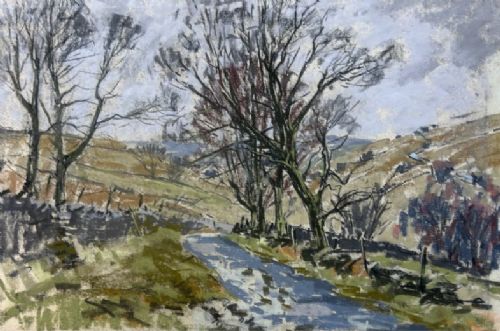
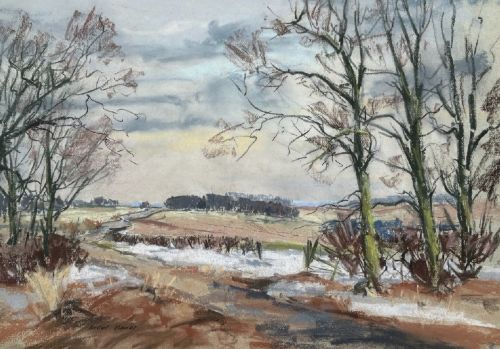
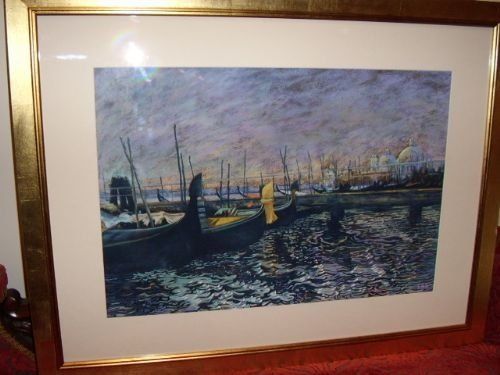
A pastel landscape scene brings together delicate dry pigment and paper to record countryside views, harbours, and woodland settings. The works on this page span from the late nineteenth century through to the middle of the twentieth century, reflecting various regional schools.
Buyers frequently encounter mid-twentieth-century British works alongside earlier Victorian examples. These pieces often depict recognizable locations such as Yorkshire, Dartmoor, and Cornish coastal harbours.
The format ranges from intimate studies to larger framed drawings, frequently preserved under glass to protect the fragile surface of the medium. Works combine pastel with gouache or chalk to build depth and atmospheric tone.
Materials and technique
Pastel pigment is applied directly to paper or canvas, relying on the purity of coloured chalks to construct light and shadow without liquid binding agents. Artists frequently blend strokes by hand or with tools to achieve soft transitions across skies and water.
Many examples incorporate gouache or chalk alongside pastel to add opacity and highlight specific areas of the composition. Protective framing under glass safeguards the delicate, friable surface of the medium from environmental disruption.
Pastel Landscape Scene Retail Price Guide 2026
Typical asking prices for pastel landscape scene among the pieces listed under this phrase on Sellingantiques today, from the lower quarter to the upper quarter. They describe what is for sale here now, not the wider market.
Listings feature works executed in pastel, gouache, and chalk across periods spanning from 1890 to 1960.
Assessing quality
Quality rests upon the artist's handling of light and tone, where confident mark-making creates a convincing sense of atmosphere and distance. Superior examples demonstrate skilled management of the powdery medium to establish texture and depth.
Condition and original framing also influence the standing of a piece, particularly the preservation of the pigment beneath glass. Stronger works retain the vibrant immediacy intended by the artist without excessive rubbing or loss.
Angus Rands·Joseph Knight·William Greaves·Gyrth Russell·Berthe des Clayes
The Pastel Landscape Scene Glossary
- Pastel
- A dry painting medium consisting of powdered pigment combined with a binder, formed into sticks. It allows for immediate colour application and soft blending effects.
- Gouache
- An opaque water-based paint often used alongside pastel to provide solid highlights and dense areas of tone. It dries to a flat, matte finish.
- Chalk
- A soft, earthy material used for initial sketching or combined with pastel to define linear elements within a composition. It offers a firm line against softer pigment fields.
- British Impressionism
- A painting style developed in the late nineteenth and early twentieth centuries focusing on everyday subjects and the transient effects of light. Practitioners applied broken colour and rapid brushwork.
Pastel Landscape Scene: Frequently Asked Questions
What is a pastel landscape scene?
A pastel landscape scene is an artwork created primarily with dry pigment sticks on paper, depicting natural scenery, coastal views, or rural settings. These works rely on the soft texture of chalky pigments to render subtle shifts in light and atmosphere.
Most examples found here date from the late nineteenth century to the mid-twentieth century. They capture specific topography ranging from Yorkshire dales to Cornish harbours.
How should pastel artworks be displayed?
Pastel works require framing behind glass to prevent the delicate pigment from smudging or absorbing airborne moisture. The glass should not touch the surface of the paper directly.
Hang these pieces away from direct sunlight and areas of high humidity to preserve the integrity of the paper and the brilliance of the colours.
How do pastels differ from oil paintings?
Pastels use dry pigment applied directly to a support without liquid oils, resulting in a matte, velvety surface texture. They require glass protection because the pigment sits loosely on the paper.
Oil paintings use pigments bound in drying oils applied to canvas or wood, creating a durable, glossy or semi-gloss finish that needs no glass barrier.
What periods do these landscapes represent?
The pieces span several decades from the late Victorian era through the mid-twentieth century, including works from the eighteen-nineties and the nineteen-fifties. Each period brings distinct regional approaches to British and European landscape art.
Mid-century examples often reflect the twentieth-century British school, whilst earlier works align with nineteenth-century pastoral traditions.