


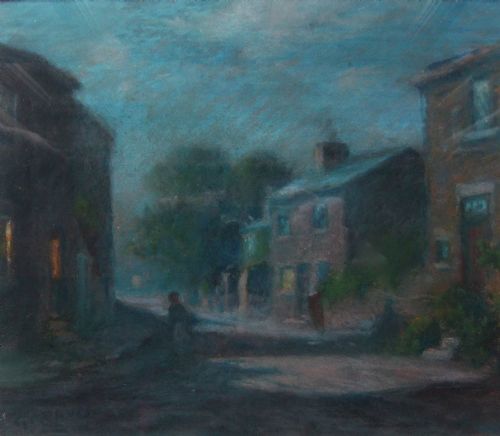


Pastel Landscape Art
Pastel landscape art brings atmospheric views and rural scenes into rooms, capturing light and weather on paper.
Pastel Landscape Art
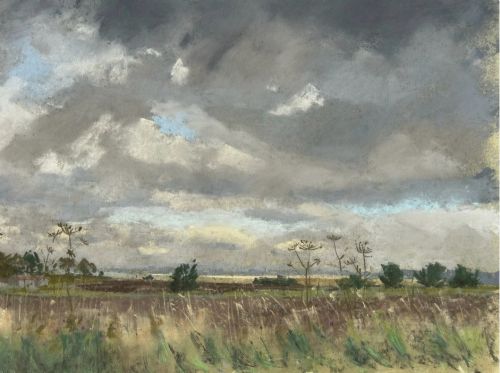
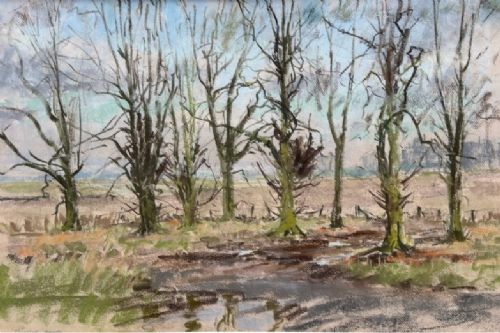
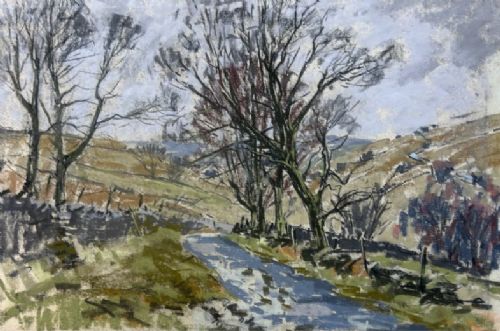
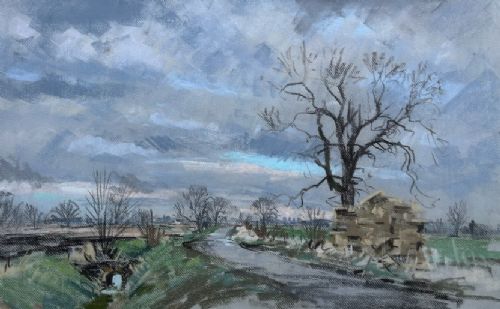
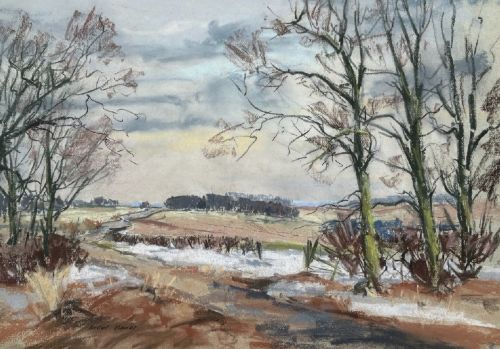
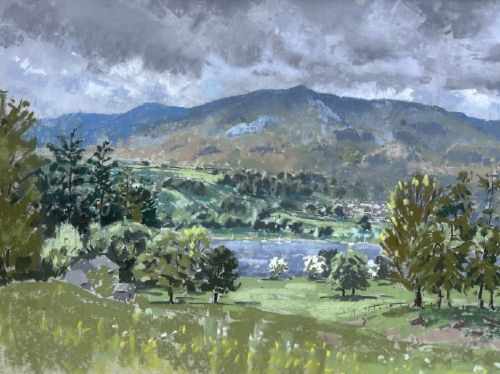
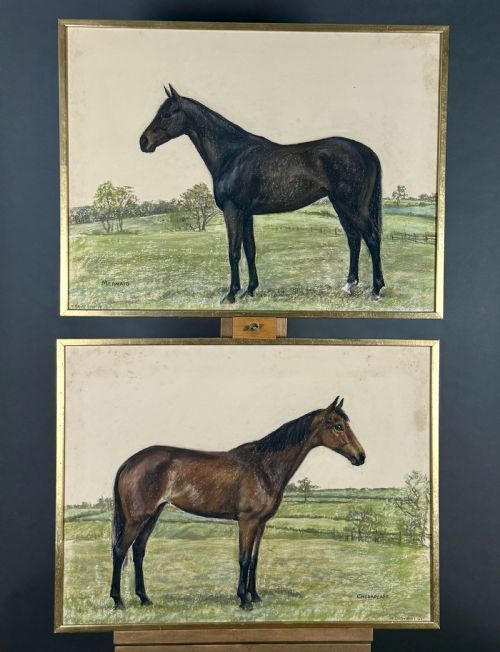
When you search for pastel landscape art, you encounter original works depicting countryside, coastal, and urban views executed primarily in soft chalk. These pieces range from Victorian studies to mid-20th-century British and European depictions of rivers, fields, and harbours. The most common examples on this page date from the mid-20th century, often capturing regional British scenery like the Yorkshire Dales or Devon.
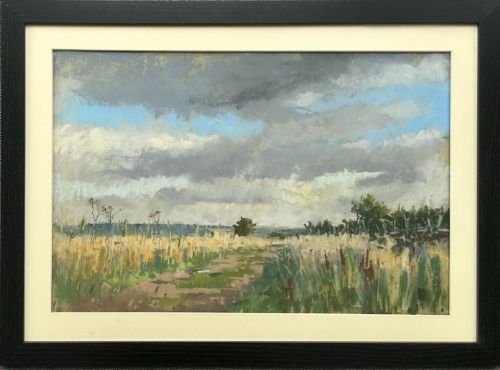
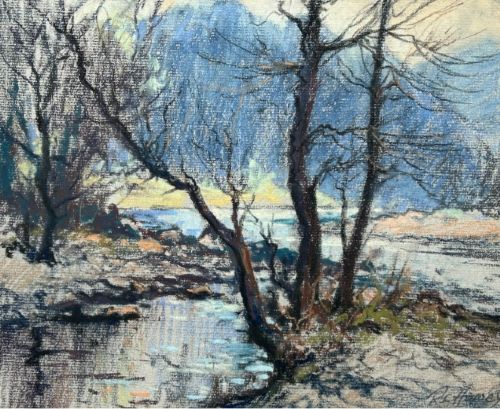
The works span several stylistic movements, including British Impressionism, Post-Impressionism, and traditional European schools. Artists utilise the medium to record fleeting effects of light, evening glows, and winter snow scenes across paper supports. Framed variants frequently incorporate glass to protect the delicate pigment surface from disturbance.
How they were made
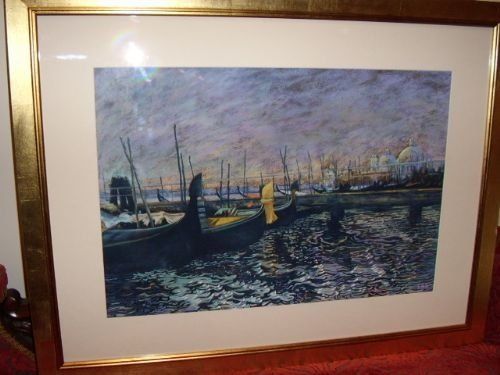
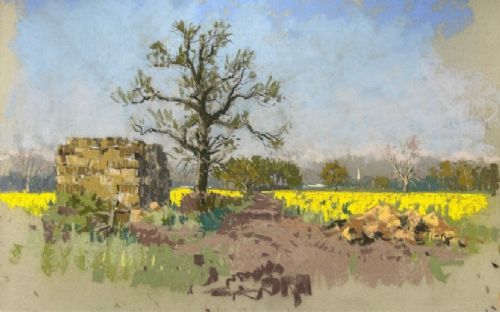
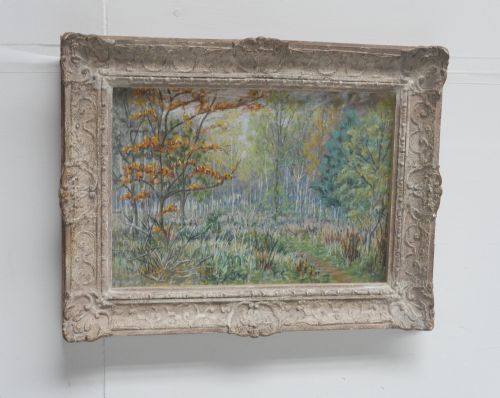
Pastel landscape art relies heavily on pigment sticks applied directly to paper supports, occasionally combined with gouache, watercolour, or ink pen to build detail and depth. Artists draw lines and blend colours by hand or with tools on textured surfaces that grip the loose chalk particles. Many works are preserved beneath glass within wood or gilt wood frames to prevent the friable medium from smudging.
Works from this selection combine dry chalk techniques with washes of watercolour or gouache, particularly in skies and water reflections. The physical application varies from rapid, energetic marks capturing stormy weather to careful, layered strokes defining winter landscapes and coastal harbours.
Pastel Landscape Art Retail Price Guide 2026
Typical asking prices for pastel landscape art among the pieces listed under this phrase on Sellingantiques today, from the lower quarter to the upper quarter. They describe what is for sale here now, not the wider market.
Listings span periods from the nineteenth century through the 1960s, featuring paper supports combined with pastel, watercolour, and gouache.
What varies in quality
The success of pastel landscape art depends upon the artist's command of tone, composition, and atmospheric perspective within a demanding medium. Superior examples demonstrate confident mark-making and a secure grasp of light, whether rendering a winter sky over Yorkshire or a sunlit harbour in France. Lesser works may exhibit hesitation, muddy colour mixing, or static composition that fails to activate the paper.
Condition and preservation heavily influence the standing of an individual piece, given the inherent fragility of unsealed chalk pigments. Stronger examples retain their original vibrance beneath clean glass, whereas inferior or poorly stored instances suffer from pigment loss or fading due to improper framing over decades.
Angus Rands·Robert Leslie Howey·Joseph Knight·William Greaves·Gyrth Russell·John Hobson Nicholson·Berthe des Clayes·Augustus William Enness·Henry Bright
The Pastel Landscape Art Glossary
- Pastel
- A dry painting medium consisting of powdered pigment combined with a binder and moulded into a stick. It allows artists to apply pure colour directly to paper with immediate tonal effects.
- Gouache
- An opaque water-based paint often used alongside pastel to add solid highlights and dense opaque passages in mixed media landscapes.
- Post-Impressionism
- An art movement following impressionism that extends its use of vivid colours and distinct brushstrokes while emphasising geometric forms or expressive content.
- Gilt wood
- Wood framing treated with a thin layer of gold leaf or metallic gilt finish, commonly found protecting traditional framed artwork.
- Paper
- The primary support material for pastel drawings, chosen for its tooth and texture which holds the dry chalk particles in place.
Pastel Landscape Art: Frequently Asked Questions
Are these works original or prints?
The pieces listed here are original handmade artworks executed directly on paper by individual artists rather than mechanical reproductions.
Close inspection under magnification often reveals the physical texture of chalk strokes and paper grain characteristic of unique drawings.
Why is glass used on pastel drawings?
Glass protects the loose pigment particles of pastel landscape art from accidental touching, dust, and airborne pollutants in the home.
Because pastel lacks a wet binder like oil paint, the dry chalk remains vulnerable to smudging without physical barriers.
How do I identify the period of a pastel?
Dating relies on stylistic clues, framing materials, artist signatures, and occasionally inscriptions or studio portfolio stamps recorded on the reverse.
Mid-century British works frequently display distinct regional subject matter and framing conventions typical of the 1950s and 1960s.