







Parquetry Display Case
A parquetry display case brings together geometric wood patterns and glazed panels to showcase treasured possessions with French revival elegance.
Parquetry Display Case
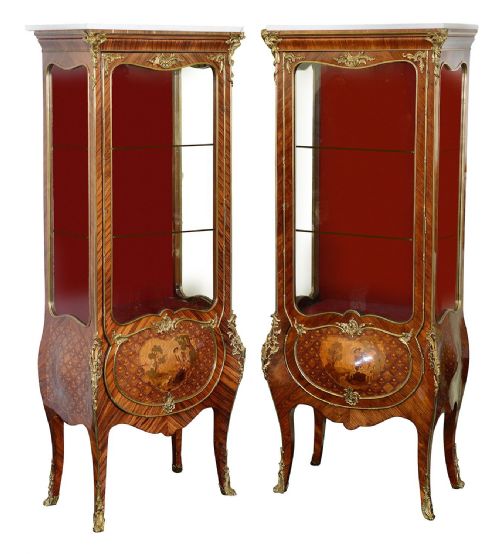
When you search for a parquetry display case, you are looking at sophisticated vitrines and cabinets designed to protect and exhibit precious objects. These pieces originate predominantly from the nineteenth century, including Victorian and Edwardian periods, as well as specific years such as 1870, 1880, 1890, and the Edwardian era.
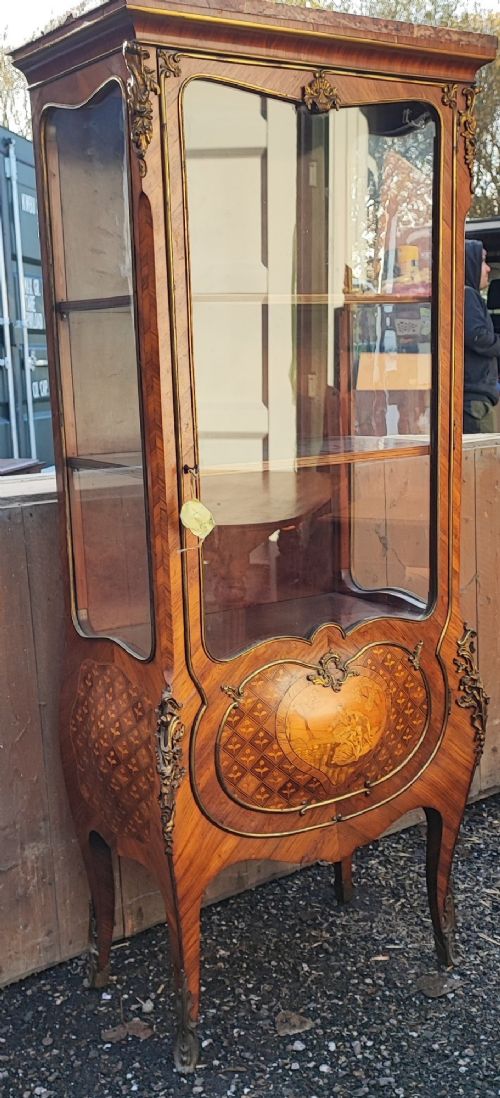
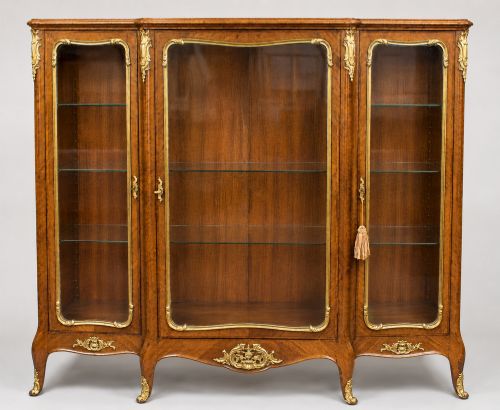
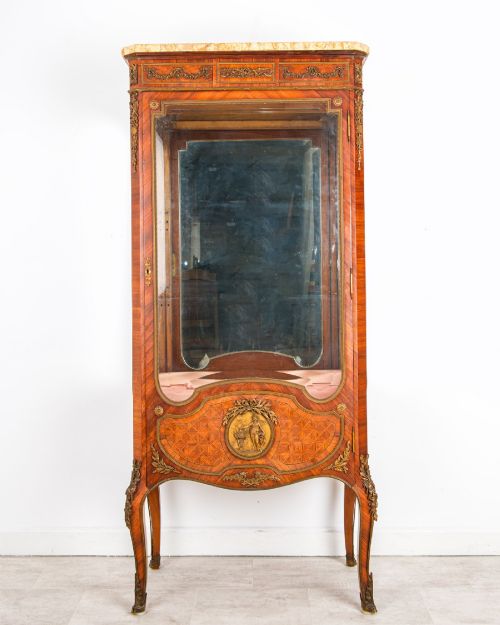
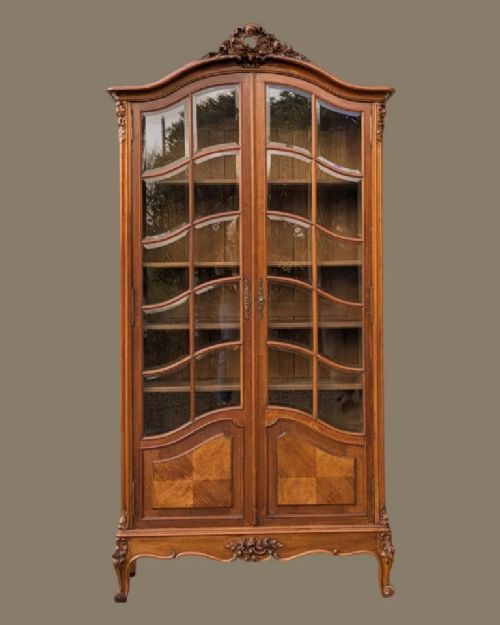
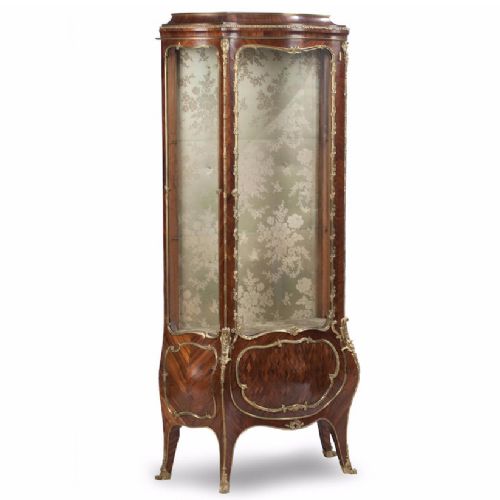
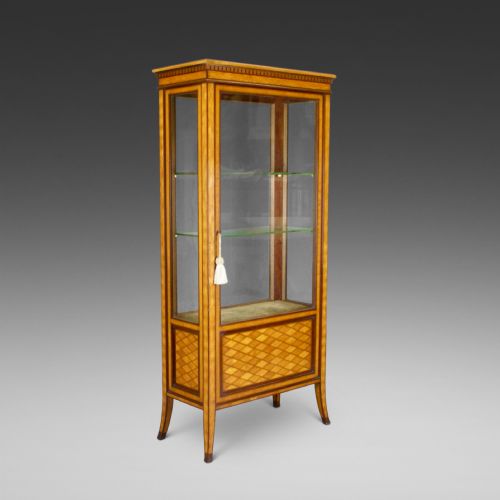
The versions you are most likely to meet on this page take the form of freestanding display cabinets and bookcases with glass panels. They frequently adopt French design vocabularies, notably Louis XV and Louis XVI styles, alongside French Empire and Rococo revivals.
Makers and workshops of the period constructed these cabinets to serve as focal points in formal rooms. Their geometric wood veneers create striking visual textures that frame the glass doors and windows effectively.
How they were made
Cabinet makers built the carcases using timbers such as kingwood, mahogany, walnut, and satinwood, applying intricate parquetry veneers in precise geometric arrangements. This wood foundation provides both structural stability and a rich canvas for decorative patterns.
Mounts made from ormolu, gilt bronze, and gilt-metal accent the corners, legs, and cornices, while brass details often edge the glass panels. Many examples incorporate shaped marble tops that sit securely above the wooden framework.
Parquetry Display Case Retail Price Guide 2026
Typical asking prices for parquetry display case among the pieces listed under this phrase on Sellingantiques today, from the lower quarter to the upper quarter. They describe what is for sale here now, not the wider market.
Listings feature nineteenth century periods alongside Victorian and Edwardian eras, utilising kingwood, mahogany, satinwood, marble, and ormolu.
What varies in quality
The distinction between tiers of quality rests on the precision of the veneer work and the crispness of the metal mounts. Finer cabinets display seamless alignment in their geometric patterns and substantial, finely chased ormolu rather than lighter gilt-metal fittings.
Construction methods and timber selection also divide standard production from exceptional pieces. Superior examples utilise dense exotic hardwoods and feature harmonious proportions with well-fitted doors and original marble tops.
Maison Krieger·Francois Linke·Gouffel
The Parquetry Display Case Glossary
- Parquetry
- A geometric mosaic of wood veneers used to decorate floors or furniture surfaces. It creates repeating patterns like cubes or chevrons.
- Vitrine
- A glass-fronted cabinet designed for displaying fine ceramics, glass, or curiosities. These pieces often feature glass sides to maximise light penetration.
- Ormolu
- Gilt bronze ornamentation applied to the mounts of high-end nineteenth-century furniture. The technique involves a mercury gilding process that produces a deep golden lustre.
- Kingwood
- A dense, heavily figured South American timber prized in French cabinet making. It yields rich brown and golden tones suited to detailed veneering.
- Serpentine-front
- A furniture front characterised by a wavy contour with a convex centre flanked by concave curves. This shaping requires expert woodworking skills.
Parquetry Display Case: Frequently Asked Questions
What is a parquetry display case?
A parquetry display case is a glazed cabinet decorated with geometric wood veneers, typically built during the nineteenth century in various French revival styles.
These pieces feature glass panels designed to exhibit fine objects while protecting them from dust.
How do I style a vitrine cabinet?
Place the cabinet in a drawing room or dining space where natural light can pass through the glass panels to illuminate the interior shelves.
Balance your collection of ceramics or glassware inside without overcrowding the space, allowing the wood veneers and metal mounts to remain visible.
How do I identify Louis XVI style?
Louis XVI style furniture relies on classical restraint, featuring straight tapered legs, geometric symmetry, and architectural motifs.
This aesthetic contrasts with the flowing, asymmetrical curves typical of earlier Louis XV and Rococo designs.
What is the difference between kingwood and mahogany?
Kingwood is an exotic timber known for its distinctive dark figuring and contrasting grain patterns, frequently used in French parquetry.
Mahogany provides a more uniform reddish-brown tone and robust structural qualities favoured in both Victorian and Edwardian cabinet making.