





Parlour Chiffonier
A parlour chiffonier brings low storage and display surface into the principal reception rooms of Victorian and Edwardian homes.
Parlour Chiffonier
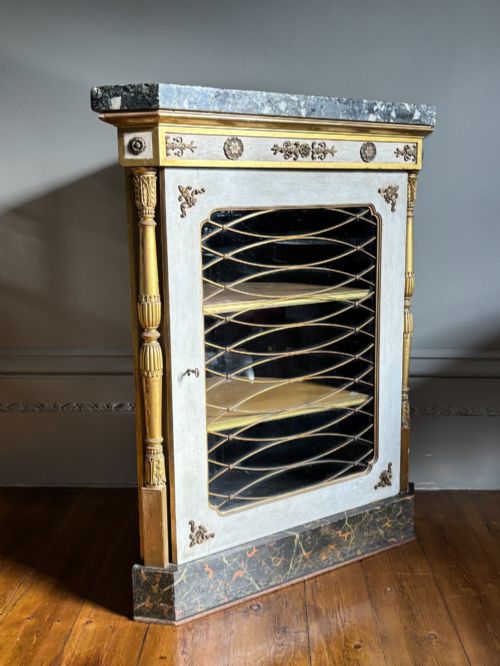
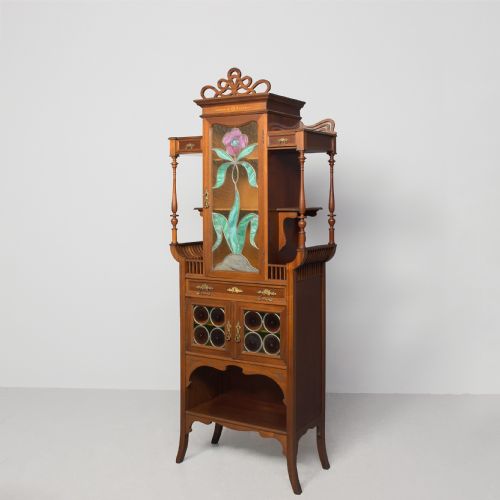
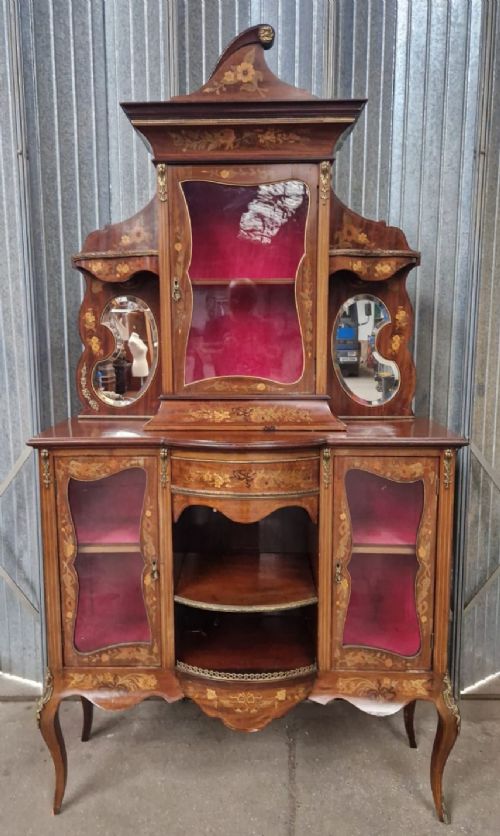
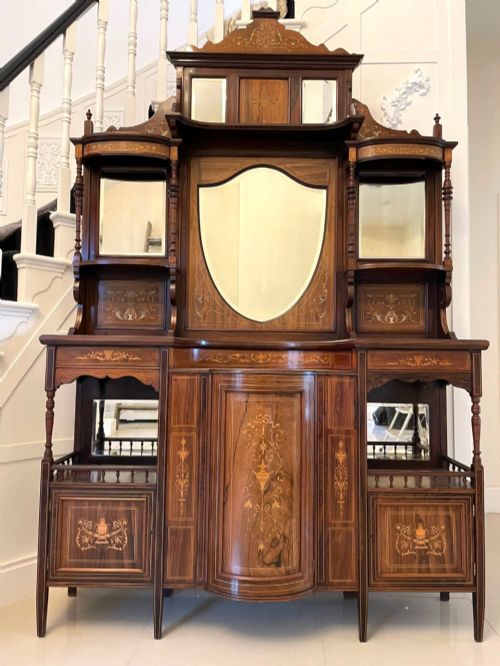
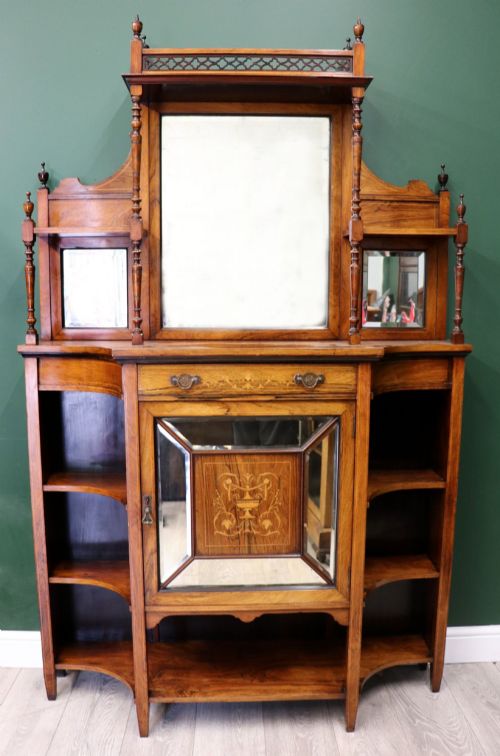
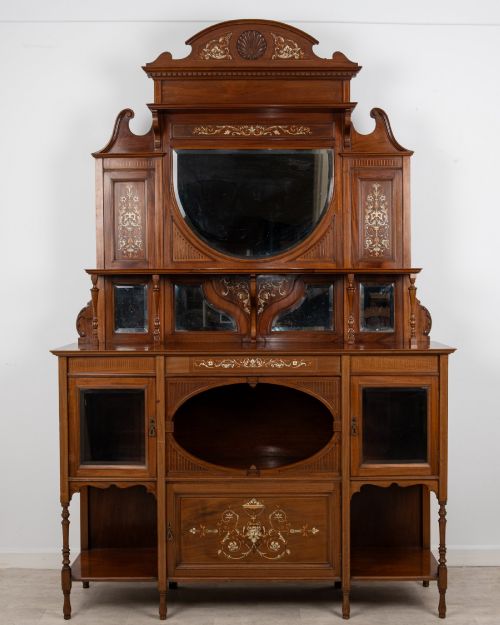
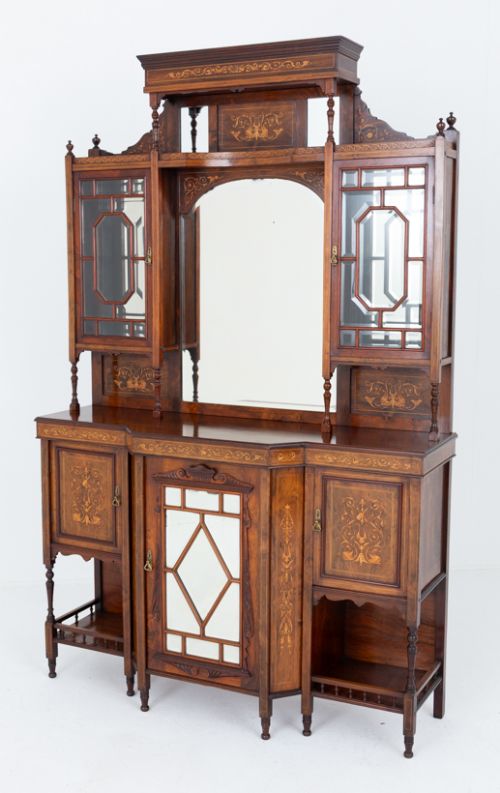
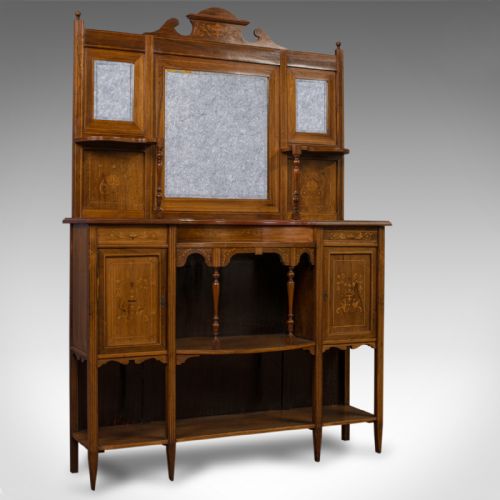
A parlour chiffonier sits within the wider family of side cabinets, credenzas, and mirror back sideboards found in nineteenth and early twentieth century interiors. These pieces function as low storage units often topped with mirrored backs or shelving for displaying decorative objects.
The versions most common on this page date from the Victorian and Edwardian periods, stretching from the mid nineteenth century into the early twentieth century. They appear in styles ranging from late Victorian and Aesthetic Movement to Edwardian French Revival and Chippendale Revival.
Makers such as Garnett and Sons and Gillows contributed to this form, employing timbers suited to formal reception rooms rather than utilitarian spaces.
Materials and construction
Makers built these cabinets using dense hardwoods such as mahogany, walnut, burr walnut, and rosewood as the primary structural frames. Ebonised finishes also appear, giving a dark, uniform surface.
Decoration relied on marquetry, boxwood inlay, and brass hardware, alongside mirrored glass inserted into back panels. Satinwood is utilised for contrasting inlay work within the darker timbers.
Parlour Chiffonier Retail Price Guide 2026
Typical asking prices for parlour chiffonier among the pieces listed under this phrase on Sellingantiques today, from the lower quarter to the upper quarter. They describe what is for sale here now, not the wider market.
Listings feature rosewood, mahogany, walnut, burr walnut, and satinwood, spanning the Victorian and Edwardian periods.
Judging the quality
The standard of timber selection distinguishes the better pieces, particularly the choice of figured burr walnut or dense, richly grained rosewood. Finer examples display meticulous marquetry and boxwood inlay rather than simple painted lines.
Construction detail separates workshop-attributed furniture from standard production, seen in the integration of mirror back superstructures and the crispness of carved elements in styles like Chippendale Revival.
Garnett and Sons·Gillows
The Parlour Chiffonier Glossary
- Chiffonier
- A low cabinet with doors, developed from sideboard designs to hold tableware or linens. It frequently includes a raised shelf or mirror at the back.
- Credenza
- A sideboard or cabinet lacking legs, sitting low to the floor with enclosed cupboards. It originates from Renaissance Italy but describes nineteenth century reception room furniture here.
- Marquetry
- The art of applying pieces of veneer to a structure to form decorative patterns and pictures. It uses woods of contrasting natural colours.
- Boxwood inlay
- The insertion of narrow strips of pale boxwood into contrasting dark timber grounds like rosewood or mahogany. This technique defines much of the linear ornamentation on these cabinets.
- Mirror back
- A superstructure incorporating a glass mirror plate above the main cabinet surface. It reflects light and displays objects placed on the tiered shelves in front of it.
Parlour Chiffonier: Frequently Asked Questions
Where did people put a parlour chiffonier?
These cabinets stood in the principal reception rooms, such as the drawing room or parlour, where guests were received. Their low profile allowed them to sit against a wall without dominating the floor space.
The top surface and any accompanying mirror back provided a stage for displaying porcelain, small sculptures, and decorative objects alongside the family's prized possessions.
How do I date a parlour chiffonier?
Dating relies on observing the combination of timber, hardware, and decorative style recorded across the pieces. Mid nineteenth century examples lean towards rosewood and walnut, while later Victorian and Edwardian pieces introduce lighter satinwood inlay and mirror back superstructures.
Cabinet construction and revival styles, such as Chippendale Revival or Aesthetic Movement, offer further clues to the decade of manufacture between eighteen fifty and nineteen ten.
How do I care for rosewood and walnut furniture?
Polished hardwoods require stable indoor environments away from direct sunlight and extreme humidity changes, which cause timber to warp and veneer to lift. Dusting with a dry, soft cloth maintains the finish without stripping the historical polish.
Avoid liquid cleaners and silicone sprays, opting instead for traditional beeswax applied sparingly when the wood appears dry.