




Paris Street Painting
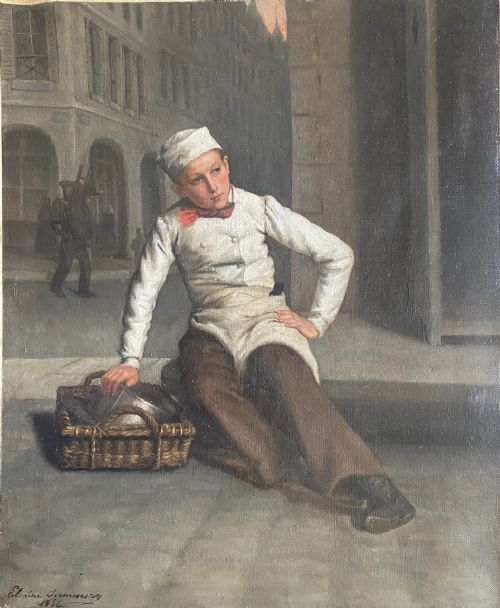
A paris street painting captures the enduring charm of the French capital through expressive brushwork, ranging from mid-century impressions to nineteenth-century salon works.
Paris Street Painting
A paris street painting represents urban views of the French capital, featuring prominent cityscapes, iconic landmarks like the Eiffel Tower and Pont Neuf, and bustling boulevards. These works capture the atmosphere of Parisian life across different eras, from nineteenth-century realism to mid-century impressionist interpretations.
Buyers will most frequently encounter oil paintings on canvas depicting winter scenes in Montmartre, grand squares, and vibrant urban thoroughfares. Alongside canvases, the selection includes detailed watercolour paintings on paper and porcelain figures portraying traditional Parisian street vendors.
The pieces span various periods, drawing heavily from nineteenth-century academic traditions as well as twentieth-century mid-century modern interpretations. Stylistic approaches encompass impressionism, post-impressionism, and realism, reflecting how generations of artists viewed the capital's streets.
How They Were Made
Artists primarily applied oil paint onto stretched canvas or prepared board, utilising thick brushstrokes to build texture and capture the play of light on wet urban pavements. Watercolour on paper appears in specific works, offering a more translucent rendering of light and atmospheric effects.
Many paintings are housed in substantial wooden frames, frequently enhanced with gold leaf, gilt wood, or Rococo Revival ornamentation. Three-dimensional street vendor figures are formed from porcelain and hand-painted to replicate earlier ceramic traditions.
Paris Street Painting Retail Price Guide 2026
Typical asking prices for paris street painting among the pieces listed under this phrase on Sellingantiques today, from the lower quarter to the upper quarter. They describe what is for sale here now, not the wider market.
Listings feature works in oil, watercolour, and porcelain, spanning periods from the mid-nineteenth century to the mid-twentieth century.
What Varies in Quality
The handling of light and atmospheric perspective separates standard decorative cityscapes from works by accomplished salon-exhibiting painters. Superior canvases demonstrate a confident command of tone and movement, successfully conveying the bustling energy of the French capital.
Frame craftsmanship also indicates overall quality, with hand-gilded wooden mouldings and period-appropriate frames contributing significantly to the visual presence of the artwork. Finer porcelain figures exhibit precise hand-painting and delicate modelling that distinguish them from simpler decorative objects.
Albert Ludovici Jnr·Caroline Burnett·Victor Gabriel Gilbert·Merio Ameglio·Eduard Leon Cortes
The Paris Street Painting Glossary
- Oil on Canvas
- A traditional painting medium where pigments suspended in drying oil are applied to stretched fabric. This combination allows for rich colour blending and textured impasto application.
- Gilt Wood
- Wood that has been treated with a thin layer of gold leaf or metallic powder. It provides an ornate, reflective border designed to complement the artwork within.
- Impressionism
- A nineteenth-century art movement characterised by relatively small, thin yet visible brush strokes and an open composition. It prioritises the accurate depiction of light in its changing qualities.
- Watercolour Painting
- A method where paints are made of pigments suspended in a water-soluble vehicle. It is typically executed on paper to achieve luminous, translucent washes of colour.
- Salon-Exhibiting
- A descriptor for artists whose works were accepted into official state-sponsored exhibitions such as the Paris Salon. This distinction marks professional standing and academic recognition in the period.
Paris Street Painting: Frequently Asked Questions
What periods do these paintings date from?
The selection spans from the mid-nineteenth century through to the mid-twentieth century. Works reflect evolving artistic movements from academic realism to mid-century impressionistic views.
Earlier examples often connect to official salon traditions, while later mid-century pieces capture the enduring popularity of Parisian street scenes among collectors.
How should I display a gilt-framed canvas?
Gilt frames require stable indoor environments away from direct sunlight and excessive humidity to protect the delicate gold leaf and wood structure. Hanging them at eye level on a sturdy wall ensures proper viewing of the textured brushwork.
Ensure the hanging hardware matches the weight of the wooden frame and canvas combination to secure the artwork safely.
What is the difference between an oil and watercolour?
Oil paintings utilise pigment suspended in oil on canvas, allowing for thick texture, rich colour depth, and subsequent alterations during creation. Watercolours use water-soluble pigments on paper, resulting in transparent, luminous effects.
Oils generally present a heavier surface texture suited to bold cityscapes, while watercolours offer a lighter, more delicate rendering of atmospheric light.