


Panelling Mahogany Sideboard
These panelling mahogany sideboard pieces are substantial timber servers that anchor a dining room with rich grain and traditional utility.
Panelling Mahogany Sideboard
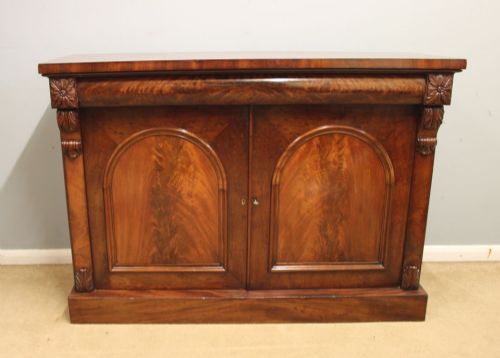
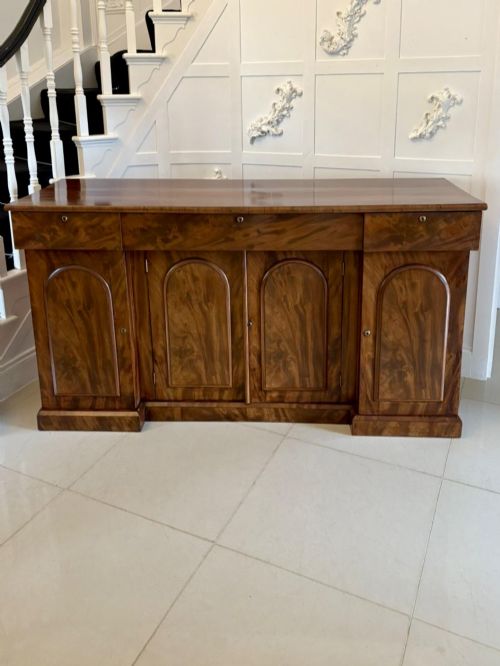
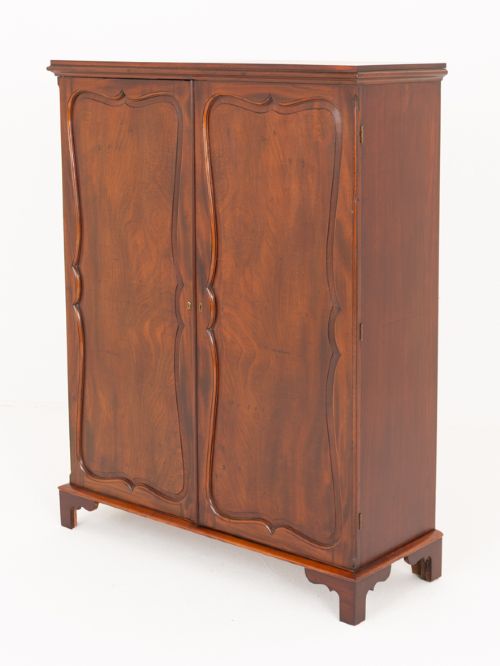
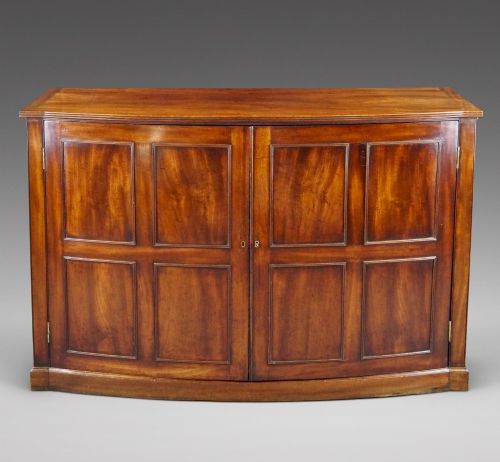
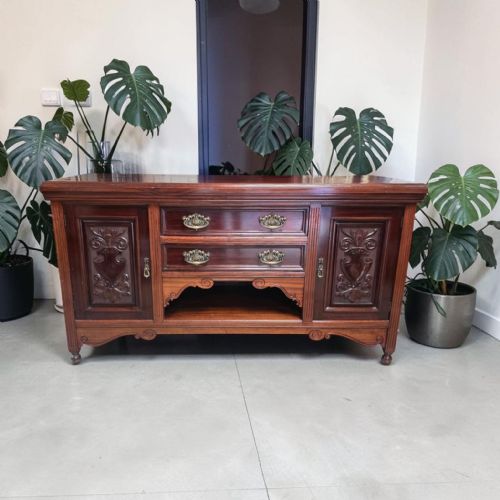
When you search for panelling mahogany sideboard items, you encounter a robust range of dining room servers, cupboards, and chiffoniers dating from the Georgian, Regency, and Victorian eras. The version you are most likely to meet on this page is the Victorian mahogany sideboard or two-door side cabinet featuring rich timber tones and practical enclosed storage.
These pieces function primarily as serving surfaces and storage units for dining rooms and hallways, appearing in configurations from simple two-door cupboards to elaborate pedestals. The selection spans the early nineteenth century through to the early twentieth century, including revival styles such as Neo-Classical and Arts and Crafts interpretations.
How They Were Made
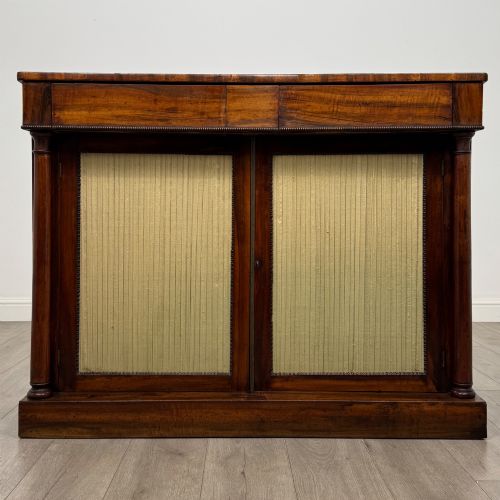
Maker construction relies heavily on solid mahogany and flame mahogany veneer applied over secondary timbers, often accented with brass hardware and occasionally copper or fabric elements. Workshops shaped these dense woods using traditional joinery methods to build heavy carcasses capable of enduring daily household use.
Surface finishing involves careful polishing to highlight the natural figuration of the mahogany grain, sometimes complemented by hand-carved details such as barley twist columns or panelled door fronts.
What Varies in Quality
The standard of a panelling mahogany sideboard rests upon the choice of timber figure, particularly the depth and movement found in flame mahogany veneer compared to plain stock. Superior examples demonstrate meticulous timber selection where grain patterns match harmoniously across drawer fronts and cupboard doors.
Another distinction lies in the crispness of execution in carved details, such as barley twist uprights or moulded panels, alongside the integration of original brass hardware and the overall integrity of the internal carcass construction.
M. D. Miller & Sons·Gillows·Shapland & Petter·Maple & Co
The Panelling Mahogany Sideboard Glossary
- Flame mahogany
- A veneer cut from the fork of the mahogany tree that produces a distinctive flame-like pattern. It was frequently utilised on the primary display surfaces of high-grade cabinets.
- Chiffonier
- A compact sideboard or low cupboard developed in the early nineteenth century, typically featuring a raised shelf or mirrored back above enclosed lower storage.
- Pedestal cabinet
- A freestanding vertical storage unit, often found in pairs matching a larger sideboard, designed to stand at either end of a serving table or sideboard.
- Barley twist
- A type of turning shaped like a spiral resembling a stalk of barley. This decorative motif appears frequently on the vertical supports of nineteenth-century servers.
- Veneer
- A thin layer of superior wood applied over a more stable secondary timber base. This technique allowed cabinetmakers to display striking grain patterns without wasting scarce materials.
Panelling Mahogany Sideboard: Frequently Asked Questions
What is a mahogany chiffonier?
A chiffonier is a low sideboard featuring enclosed cupboard space below and often a raised shelf above, designed for serving and storing dining room items.
Cabinetmakers produced these pieces widely during the Victorian era for smaller dining spaces where a full-size sideboard proved impractical.
How do I date a mahogany sideboard?
Dating relies on observing stylistic markers such as Regency curves, Georgian proportions, or Victorian carving details alongside construction methods like dovetailing.
Makers often left internal clues or specific hardware styles that align with known periods between eighteen hundred and nineteen twenty.
Where should I place a side cabinet?
These cabinets suit dining rooms, large hallways, or living spaces where surface display and enclosed storage are both required.
Their robust timber construction and shallow depth allow them to sit comfortably against walls without dominating floor space.
How do I care for antique mahogany?
Care involves maintaining stable indoor humidity levels and dusting regularly with a soft, dry cloth to protect the polished timber surface.
Avoid placing these pieces in direct sunlight or near heat sources to prevent the mahogany veneer from drying out or splitting.