


Panelled Interior Artwork
Panelled interior artwork captures domestic and formal spaces in fine detail, offering a glimpse into historic rooms through oil on panel.
Panelled Interior Artwork
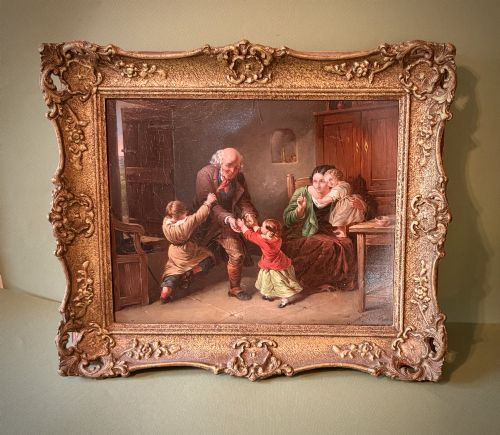
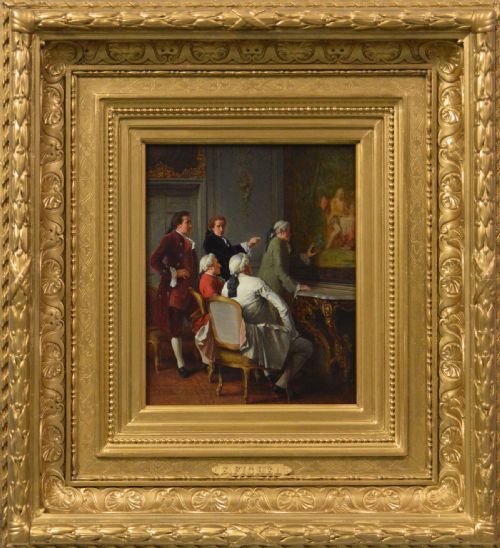
Panelled interior artwork comprises oil paintings on wood boards or panels depicting domestic rooms, halls, cottages, and stately interiors. Buyers examine these works for their atmospheric rendering of historic spaces and figurative scenes.
The pieces on this page span several periods, from eighteenth-century Dutch genre scenes and early nineteenth-century portraits to Victorian genre paintings and modernist twentieth-century interiors. Victorian examples and nineteenth-century academic works appear frequently alongside Dutch golden age styles.
Subjects range from spinning maids in highland cottages and smokers rooms on ocean liners to formal halls of Cambridge colleges and drawing rooms of stately homes. Painters employ panel supports to achieve fine brushwork and durable surfaces for interior details.
How they were made
Artists painted primarily in oil on prepared wood panels, oak panels, boards, and occasionally copper or canvas, utilising the rigid support to build up rich layers of oil paint. This method allowed painters to capture the interplay of light in chiaroscuro scenes and elaborate decorative wall panels.
Several panels capture dogs resting quietly by hearths, watching domestic life unfold in historic rooms.
What varies in quality
Quality in these paintings rests upon the artist's handling of light, shadow, and interior perspective, distinguishing finely observed academic and old master works from standard studio pieces. The depth of the chiaroscuro and the precision in rendering architectural panel work dictate the visual strength of the painting.
The sophistication of the figural composition and the preservation of the painted surface on its wood or copper panel determine the standing of an individual work. Stronger pieces demonstrate confident draughtsmanship in portraying figures within complex architectural spaces.
Benjamin Eugene Fichel·James Kyd·Quirijn Van Brekelenkamp·Hans Temple·Théophile Emmanuel Duverger·Charles Cameron Baillie·Sir John Everett Millais·Francesco Renaldi·Jan Steen·Stephen Taylor·Margaret Thompson·Joseph Murray Ince
The Panelled Interior Artwork Glossary
- Panel
- A rigid support for a painting, commonly made of wood such as oak or board, offering a stable surface for oil paint. Painters utilised panels to achieve high levels of detail in interior scenes.
- Genre painting
- A style of painting depicting scenes from everyday life, typically involving ordinary people in domestic interiors. These works frequently feature figures at hearths, windows, or in cottage rooms.
- Chiaroscuro
- An artistic technique using strong contrasts between light and dark to give a sense of volume to figures and interior spaces. This method creates dramatic illumination in cottage and hearth scenes.
- Old Master
- A term for a European artist of high skill working before the nineteenth century, or a painting created by such a master. Pieces in this tradition often emulate Dutch golden age styles.
- Academic
- Art produced under the influence of European academies of fine art, adhering to established standards of composition and finish. These works display formal precision and careful historical detail.
Panelled Interior Artwork: Frequently Asked Questions
What periods do these paintings cover?
The works span from the eighteenth century through the nineteenth century and into the early twentieth century, including modernist pieces from the nineteen-thirties.
Collectors encounter Dutch seventeenth-century styles alongside Victorian genre paintings and twentieth-century realist interior views.
What surfaces were used for these artworks?
Artists painted primarily on wood panels, oak panels, and boards using oil paint, though occasional works appear on copper or canvas.
The rigid wood support allowed painters to execute fine details of architectural panels and interior furnishings.
How should I display panel paintings?
Panel paintings require stable indoor environments away from direct heat sources and extreme humidity fluctuations to protect the wood support and oil paint layer.
Hanging them on interior walls away from direct sunlight preserves the pigments and the stability of the wood panel.
What subjects appear in these interiors?
Subjects include domestic cottage scenes, spinning maids, gentlemen in studies, musicians performing duets, and formal halls in colleges and stately homes.
Many works capture specific historic rooms, rectories, drawing rooms, and decorative wall panels from British and European settings.