


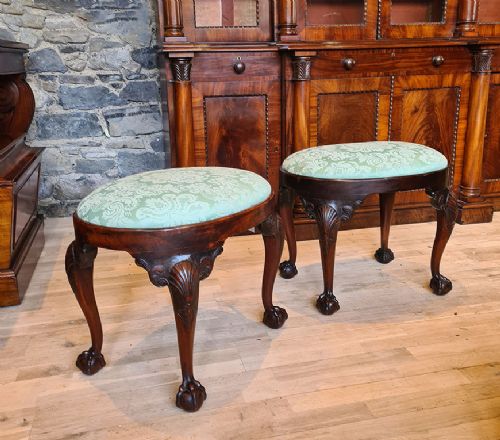


Paired Window Seats
Paired window seats offer matching elegance beside a casement or at the foot of a bed, bringing symmetry to an interior.
Paired Window Seats
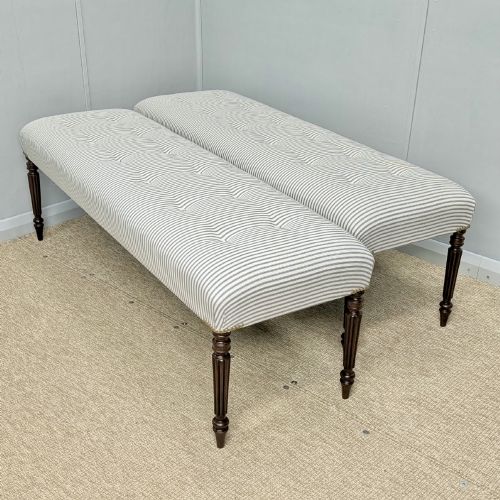
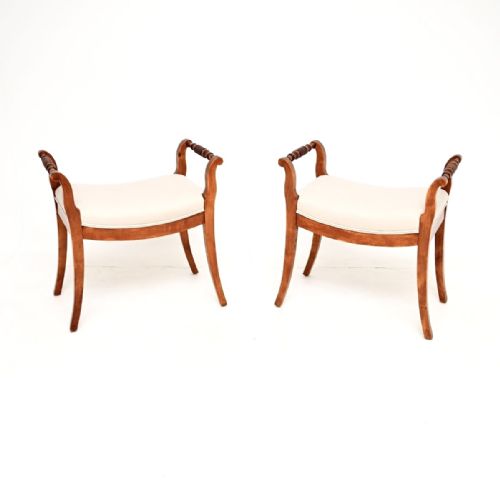
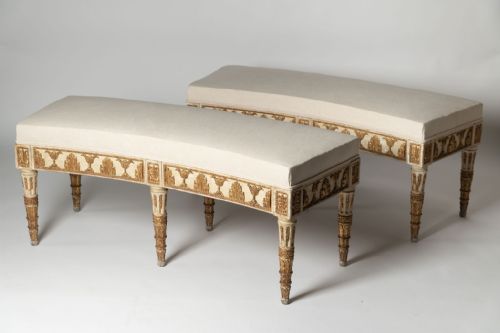
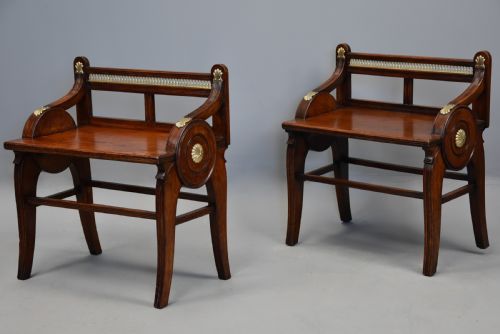
Paired window seats encompass benches, stools, and long forms designed to sit symmetrically in pairs throughout a room. The selection spans the eighteenth and nineteenth centuries, including Victorian, Regency, Georgian, and Biedermeier examples.
These items originate from various European traditions, with French walnut pieces, Swedish satin birch stools, and Italian designs appearing alongside British iterations. They function as both window seating and low hall benches.
How they were made
Makers utilised solid timbers such as mahogany, walnut, oak, satin birch, and rosewood to construct the frames. Some incorporate brass mounts and iron components for structural support and decorative contrast.
Upholstery completed the seating, using fabric and leather fixed to the wooden bases. Frame carving included fluted legs and classical detailing aligned with Regency, Georgian, and Aesthetic Movement styles.
Paired Window Seats Retail Price Guide 2026
Typical asking prices for paired window seats among the pieces listed under this phrase on Sellingantiques today, from the lower quarter to the upper quarter. They describe what is for sale here now, not the wider market.
Listings feature eighteenth and nineteenth-century eras, including Georgian, Regency, Victorian, and Biedermeier periods.
What varies in quality
The choice of timber underpins the distinction between standard and superior pieces, particularly dense figured mahogany, rich walnut, and pale satin birch. Finer examples display crisper carving on structural elements like fluted legs.
Cohesion between the matched items determines the success of a pair, alongside the fidelity of period stylistic details such as Italian Neoclassical or Biedermeier lines.
James Shoolbred & Co.
The Paired Window Seats Glossary
- Biedermeier
- A Central European style spanning the nineteenth century known for clean lines and blonde woods like satin birch. It prioritises domestic comfort and restrained ornamentation.
- Regency
- A British design period associated with the early nineteenth century drawing heavily on classical Greco-Roman motifs. It frequently employs mahogany and architectural details.
- Satin Birch
- A pale, lustrous timber utilised extensively in nineteenth-century Scandinavian cabinetmaking. Its grain offers a distinctive shimmering appearance.
- Giltwood
- Timber treated with a thin layer of gold leaf to create a brilliant metallic surface. It appears on decorative frames from various classical traditions.
- Aesthetic Movement
- A late nineteenth-century design ethos emphasising visual beauty over narrative content. Pieces from this movement display artistic reform characteristics.
Paired Window Seats: Frequently Asked Questions
Where should I place paired window seats?
These pieces fit naturally beneath low casement windows or opposite each other across a large room to create balance. They also function effectively at the foot of a bed or along a wide hallway.
Their symmetrical nature helps anchor an interior layout without dominating the floor space.
How do I identify a Regency window seat?
Regency examples typically feature classical elements such as fluted legs and dark timbers like mahogany. They reflect the architectural influences of the early nineteenth century.
Proportions remain balanced and restraint governs the decorative carving.
What is Biedermeier furniture?
Biedermeier refers to a nineteenth-century Central European style focused on utility and elegant simplicity. Pieces from this tradition often utilise pale woods like satin birch.
The aesthetic avoids heavy ornamentation in favour of clean structural lines.
Can these seats be used in a hallway?
Hall benches and low stools serve well in entrance spaces as functional seating. Oak and iron variants provide robust construction suited to higher traffic areas.
Matching pairs allow for balanced placement against long walls.