
Paired Table Lamps
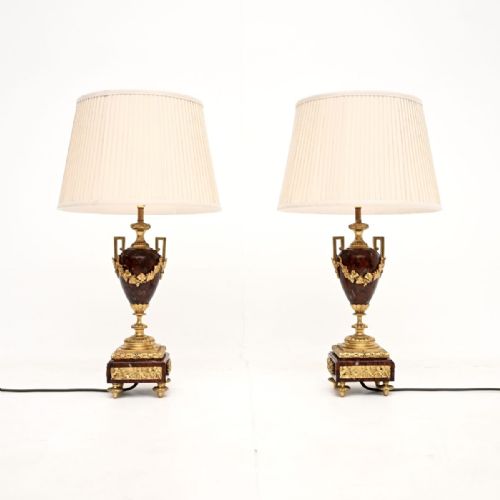
These paired table lamps bring symmetry and balance to a room, offering matched illumination derived from periods spanning the nineteenth century through to the nineteen-thirties.
Paired Table Lamps
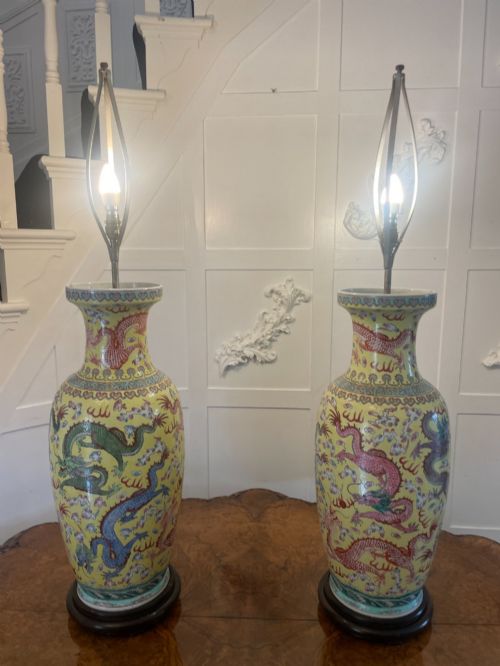
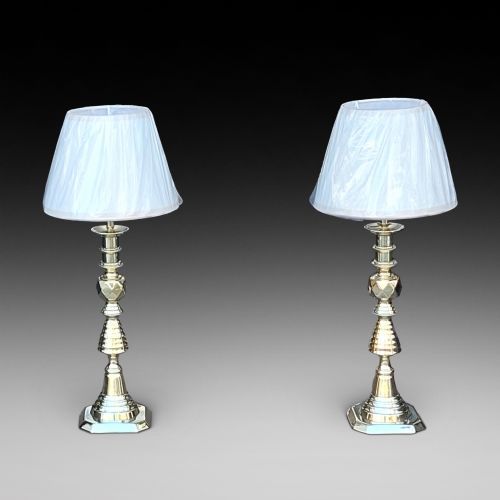
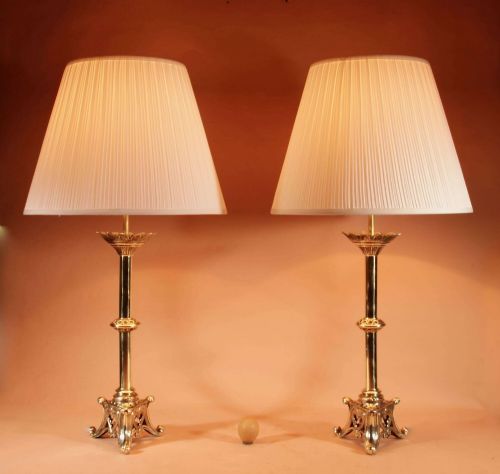
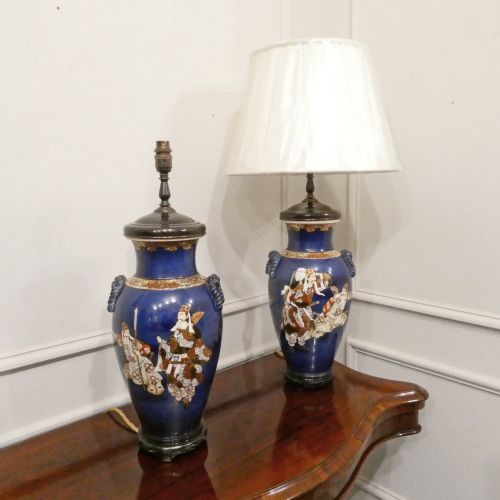
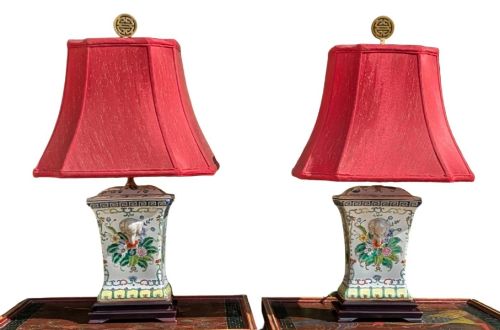
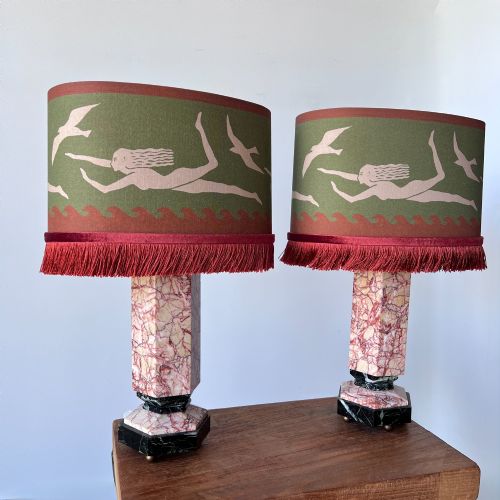
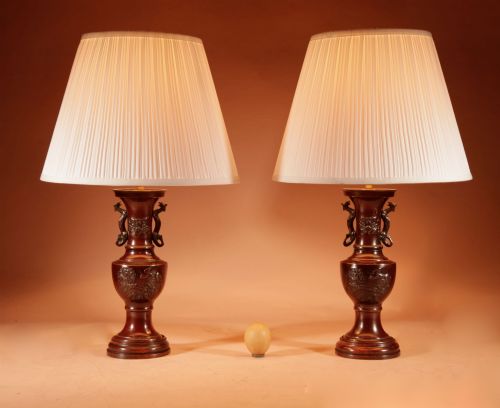
When you search for paired table lamps, you encounter a selection spanning the Victorian, Edwardian, and early twentieth-century eras, reflecting diverse regional aesthetics from French Provincial to Japanese Meiji and Chinese porcelain designs. The inventory includes matched pairs of converted candlesticks, porcelain vases, and cast metal bases designed to create visual harmony on either side of a bed or living space.
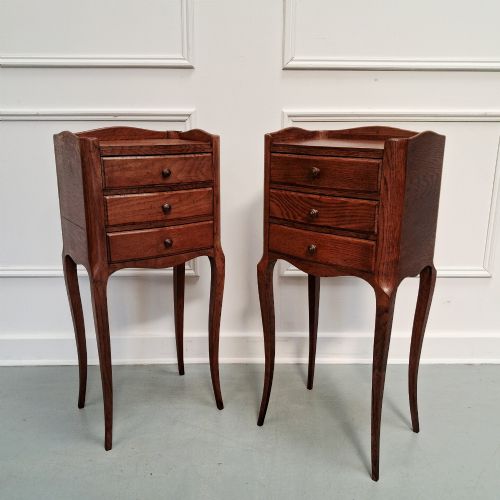
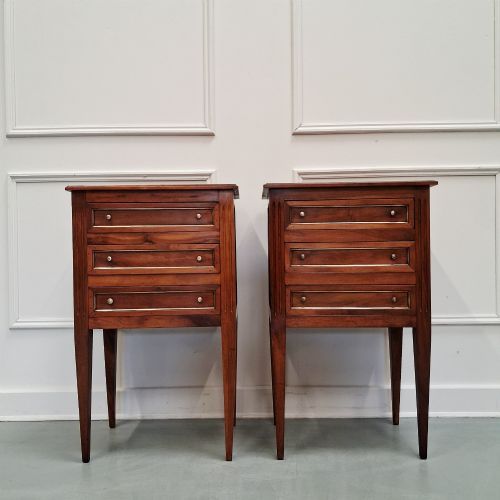
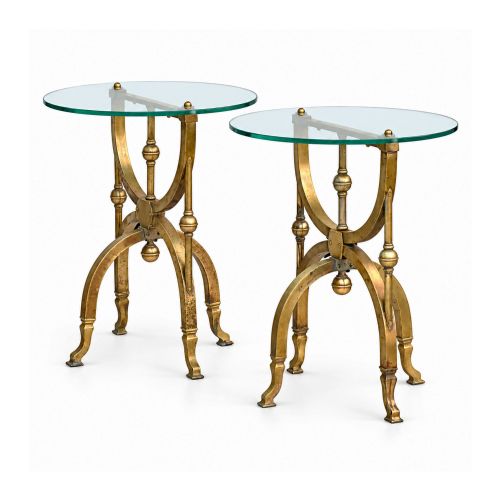
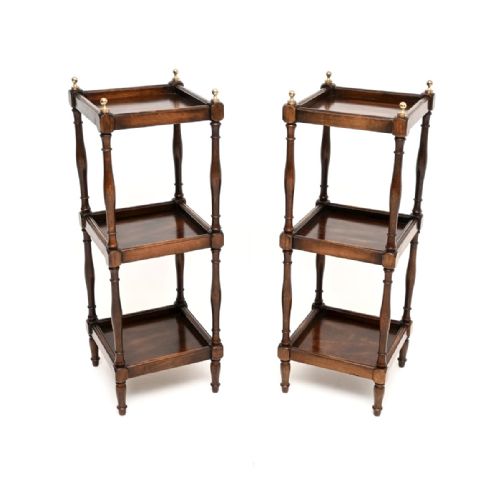
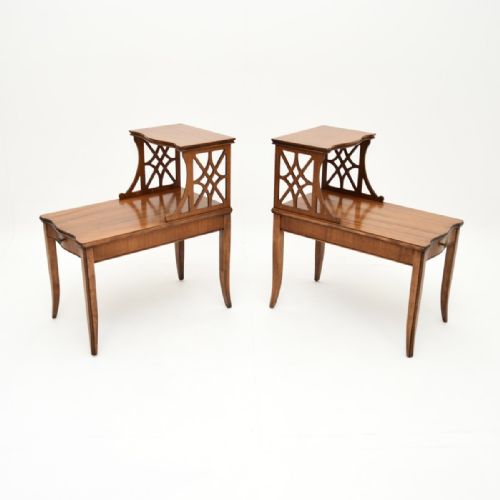
The objects take many forms, bridging the gap between functional lighting and decorative art through materials like bronze, marble, brass, and carved wood. You also find small tables designed to hold lamps, such as mahogany bedside cabinets, side tables, and lamp tables, which frequently appear alongside the actual lighting fixtures in this category.
Materials and construction
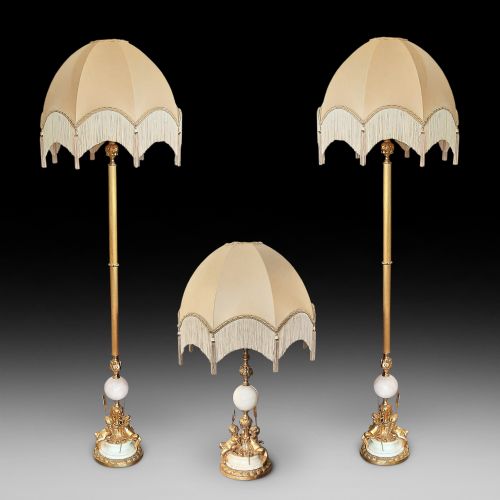
Makers utilised cast metals, particularly brass and gilt bronze, alongside natural stones like marble, onyx, and alabaster to form heavy, stable bases. These structural elements often incorporated fine chasing, cloisonné, or champlevé enamel work.
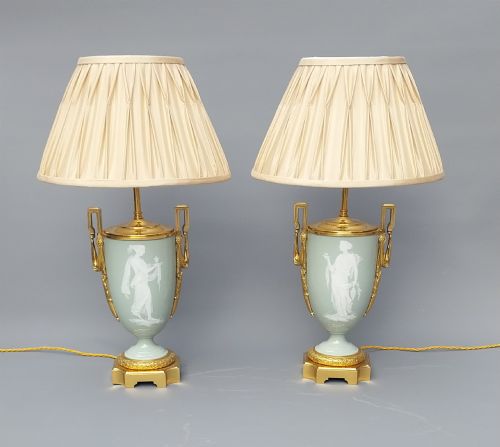
Ceramic elements rely on porcelain bodies, including Satsuma ware and celadon glazes, sometimes paired with bespoke fabric shades or mounted in metal frames. Wooden examples demonstrate cabinet-making traditions in mahogany, oak, walnut, and yew, often featuring carved or lacquered surfaces in Chinoiserie styles.
Several pairs feature sculpted bronze cherubs holding aloft the light, determined to brighten your room with celestial assistance.
Quality and execution
The distinction between standard examples and top-tier pieces lies in the crispness of the casting, the depth of the hand-chasing on metal mounts, and the preservation of original gilding or patination. Finer porcelain versions display hand-painted detail and precise potting rather than transfer printing.
Structural integrity and matching components dictate overall success in a pair, where identical height, weight, and wear patterns matter immensely. Superior items maintain original mounts and uniform colour across both pieces without mismatched replacements.
W.A.S. Benson
The Paired Table Lamps Glossary
- Champlevé
- An enamelling technique where troughs or cells are hollowed out of a metal surface and filled with vitreous enamel before firing. This method creates decorative patterns often seen on nineteenth-century bronze and brass bases.
- Meiji Period
- The era in Japanese history spanning from 1868 to 1912, noted for intricate Satsuma porcelain and fine bronzes exported to the West. Pieces from this time often incorporate detailed figural or floral motifs.
- Corinthian Column
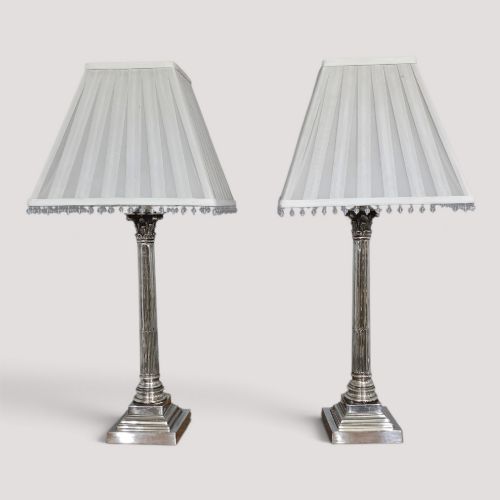
- A classical architectural order featuring an ornate capital decorated with acanthus leaves, frequently utilised for tall brass and silver-plated lamp standards. This design became particularly popular during the late Victorian and Edwardian periods.
- Celadon
- A term for ceramics denoting a pale green glaze resembling jade, often found on nineteenth-century porcelain vases adapted into lighting. It originates from East Asian traditions.
- Pâte-sur-Pâte
- A porcelain decoration technique where wet ceramic paste is painted in layers onto a contrasting background to create a low-relief cameo effect. It requires considerable skill from the artisan.
Paired Table Lamps: Frequently Asked Questions
How do I style paired table lamps?
Place them symmetrically on matching surfaces such as bedside cabinets, side tables, or sideboards to create a balanced composition in a room. Ensure the scale of the lamps corresponds appropriately to the furniture supporting them.
Consider the height of the shades in relation to eye level when seated or in bed. Matching pairs work well to anchor a space, framing a mirror, artwork, or headboard effectively.
Were these always electric lamps?
Many examples began life as oil lamps, candlesticks, or decorative vases before receiving subsequent conversions for electrical wiring during the twentieth century. This practice preserves historical bases while updating them for modern domestic use.
When examining older pieces, look for evidence of past fuel or candle use inside the mount. The conversion process often leaves discreet channels for modern cords.
How do I identify nineteenth-century pieces?
Examine the weight, material patination, and construction methods of the base, such as hand-cut threads on screws or traditional joinery in wooden components. Nineteenth-century examples often feature heavier cast brass, genuine bronze, or hand-finished porcelain.
Style indicators like Neoclassical revival motifs, heavy mercury gilding, and early wiring conduits also point toward this period. Maker marks or registry numbers stamped into the metal can provide further confirmation.
Can I mix different shades?
While matched shades maintain a formal symmetry, coordinating fabric or silk shades of a similar shape and neutral tone can unify disparate bases. The primary goal is to ensure the light diffuses evenly across the pair.
Pay attention to the drop and diameter of the shade so it does not overwhelm the base proportions. Bespoke shades allow you to tailor the colour temperature and opacity to your interior scheme.