

Paired Brass Lights
Paired brass lights bring symmetry and warmth to a room, spanning wall sconces, candlesticks, and grand chandeliers.
Paired Brass Lights
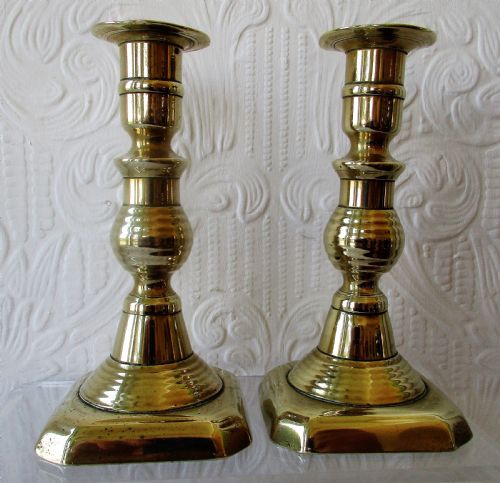
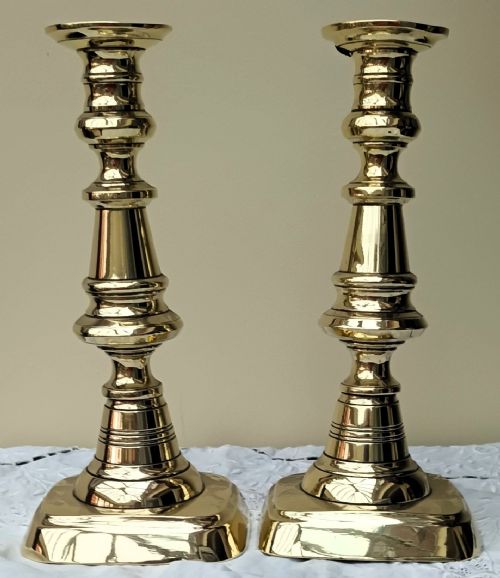
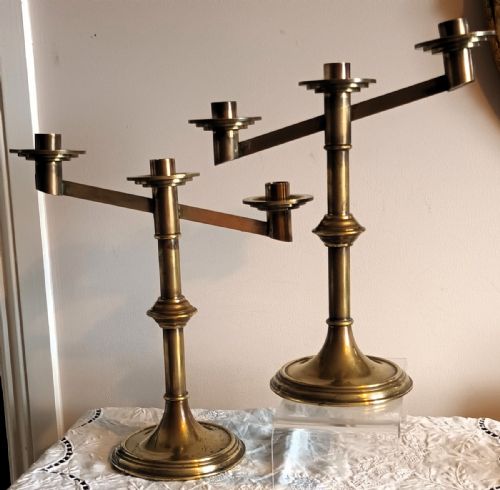
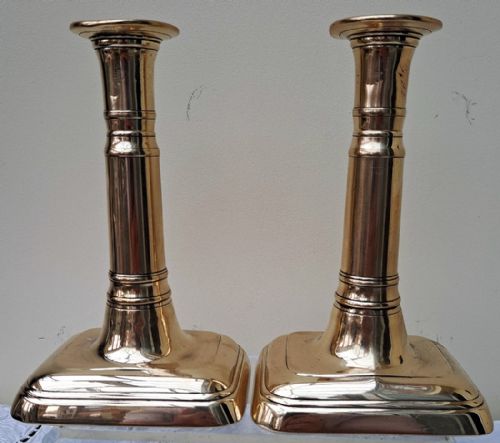
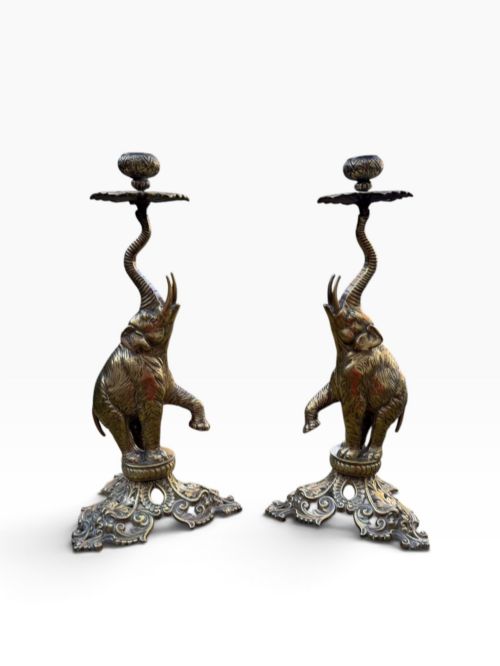
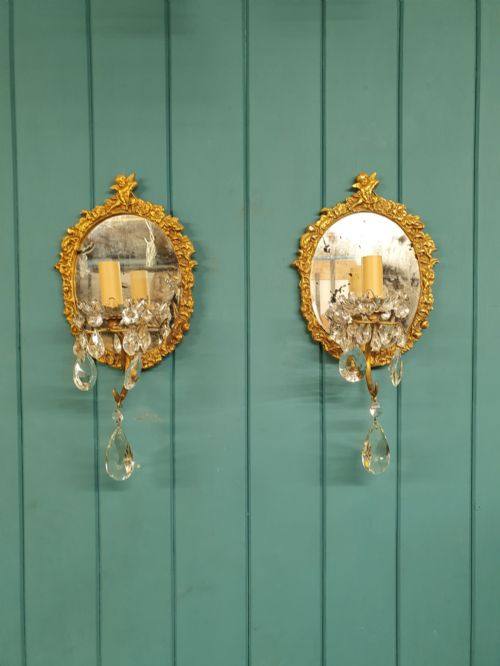
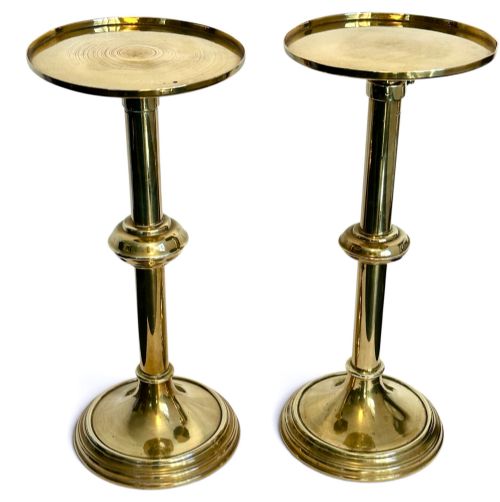
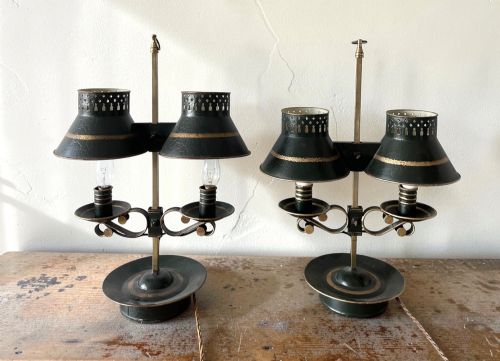
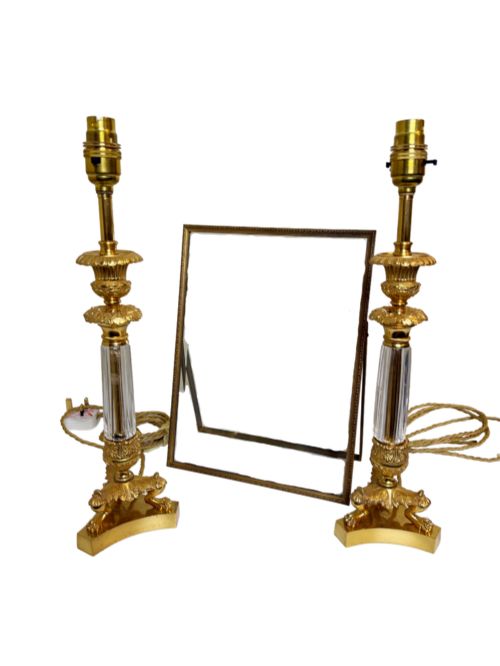
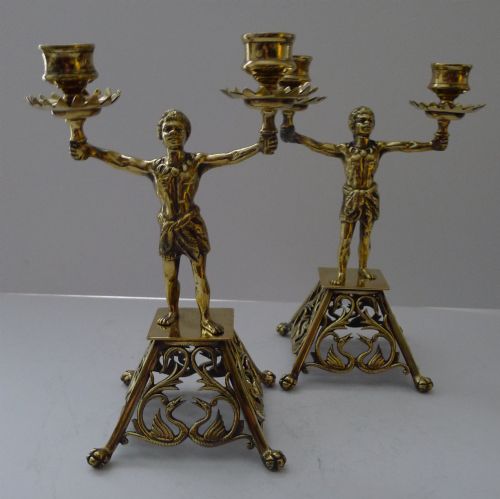
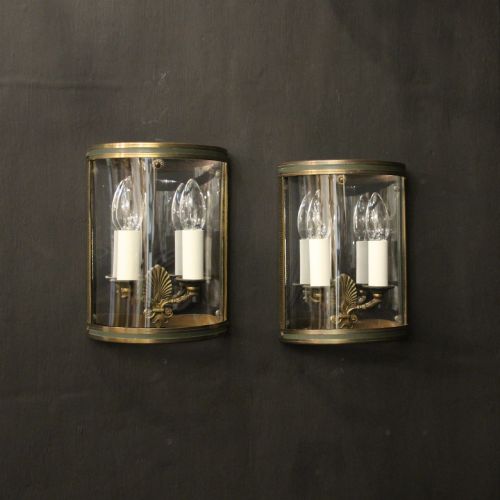
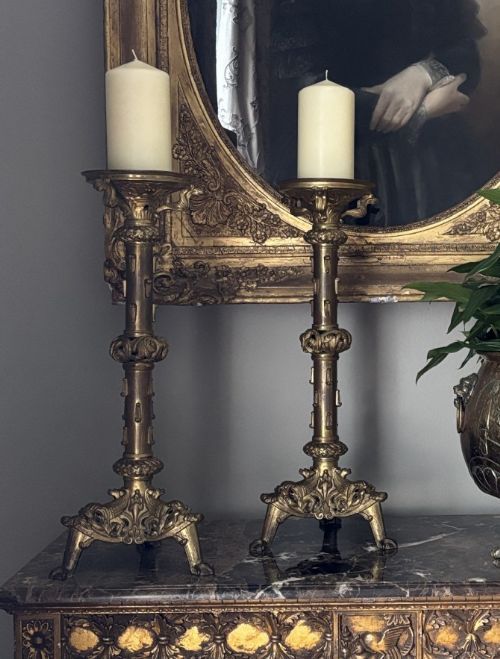
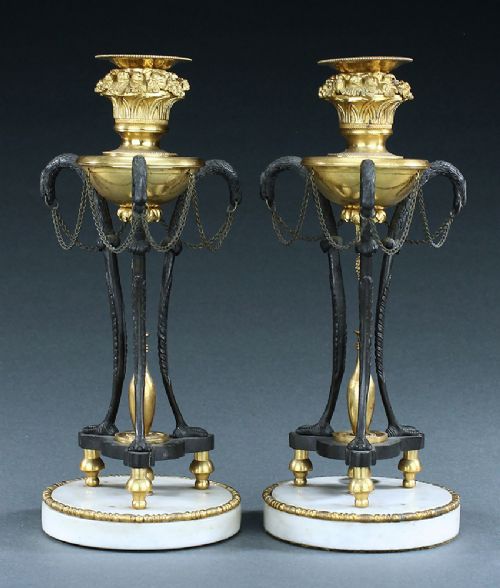
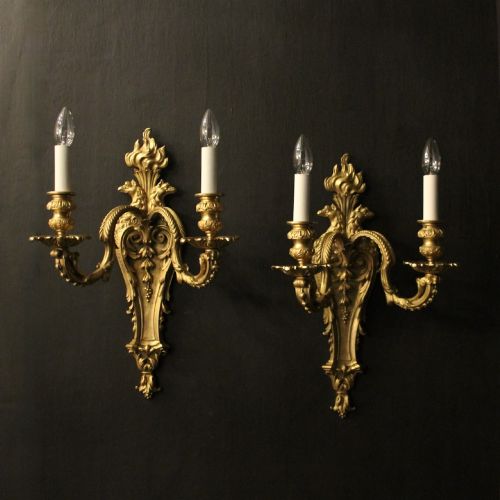
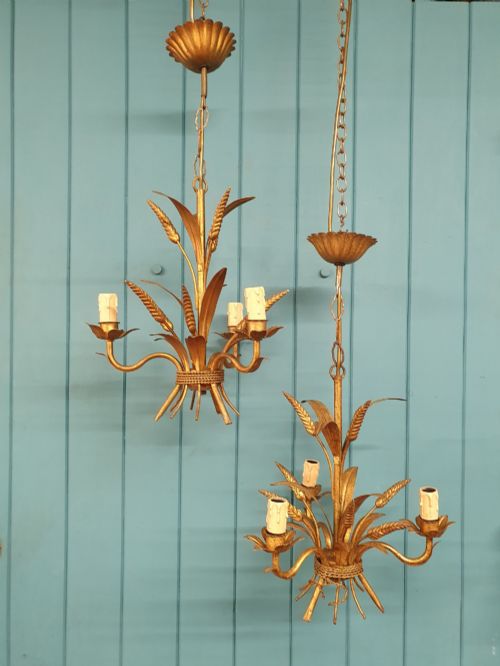
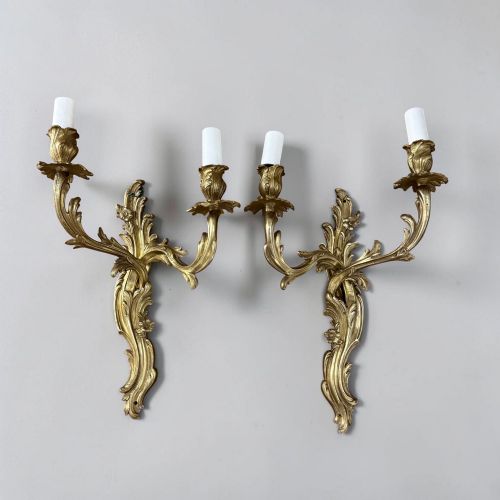
When searching for paired brass lights, buyers encounter a diverse selection ranging from Victorian candlesticks to French wall sconces and chandeliers. The most common forms on this page include matching pairs of wall lights, branch candelabra, and table lamps cast in brass, gilt bronze, or ormolu. These fixtures bridge various design traditions from Georgian simplicity to elaborate Rococo revival styles.
The selection spans multiple centuries, with significant representation from the nineteenth and early twentieth centuries. Pieces often incorporate glass, crystal, or porcelain elements alongside the primary metal structure. Whether configured for candles or electrified for modern interiors, these matching items provide balanced illumination and decorative symmetry.
Materials and Technique
Maker workshops utilised brass, gilt bronze, and ormolu as the primary structural and decorative metals, often employing casting and openwork ajour techniques to achieve intricate detail. Many pieces feature hand-finished chasing and gilding to enhance the surface texture and light reflection.
Glass and crystal components, including cut glass drops, tent configurations, and opaline shades, were integrated into chandeliers and wall lights to refract and amplify illumination. Structural assembly combined threaded metal components, pinned joints, and occasionally turned mahogany wooden elements in earlier domestic candlesticks.
Paired Brass Lights Retail Price Guide 2026
Typical asking prices for paired brass lights among the pieces listed under this phrase on Sellingantiques today, from the lower quarter to the upper quarter. They describe what is for sale here now, not the wider market.
Listings span from the mid-eighteenth century to the mid-twentieth century, encompassing Georgian, Victorian, Edwardian, and mid-century modern design eras.
Quality Variations
The sophistication of the casting and the crispness of the chased detail separate standard production pieces from finer examples. Superior items display sharply defined ornamentation, secure joints, and harmonious proportions between the metalwork and integrated crystal or porcelain components.
Weight and metal composition also indicate standard, as heavier gauge brass and deep, even fire-gilding or ormolu finishes denote superior workshop output. The retention of original matching components across both fixtures in a pair preserves historical integrity and visual balance.
Faraday and Son·Maison Jansen·Maison Bagues
The Paired Brass Lights Glossary
- Ormolu
- A technique of applying finely ground, high-carat gold to a bronze or brass object using a mercury amalgam. This process creates a rich, durable golden finish characteristic of decorative lighting.
- Girandole
- An ornamental branched candlestick or light fixture, often designed to be mounted on a wall and paired with a mirror to reflect light. These fixtures frequently incorporate crystal drops.
- Ajour
- Openwork ornamentation pierced through the metal to create a decorative pattern. This technique appears on cast table lamps and metalwork to lighten the visual weight of the piece.
- Candelabra
- A branched candlestick designed to hold multiple tapers or light sources. Examples range in scale from tabletop brass sticks to substantial multi-branch wall sconces.
- Chinoiserie
- A European artistic style reflecting Chinese motifs and decorative techniques. This aesthetic appears on ceramic lamp bases combined with brass mounts.
Paired Brass Lights: Frequently Asked Questions
Are these lights wired for electricity?
Many of the lighting fixtures on this page have been electrified for modern use, while others retain their original configuration as candlesticks or unpowered wall brackets. Buyers should examine individual listings to confirm whether electrical wiring is present.
Electrified pieces may require rewiring by a qualified electrician to meet current safety standards in the installation location. Unwired items can often be adapted depending on the design.
How do I date a brass light?
Dating relies on stylistic clues, manufacturing techniques, and material combinations recorded across the periods from the eighteenth century through the early twentieth century. Georgian pieces often display simpler petal bases, while Victorian and Edwardian examples lean toward ornate casting.
Construction methods also provide context, as hand-filed components and specific casting marks differ between earlier workshops and later mass-produced items. Comparing the design motifs to documented periods helps establish a reliable timeframe.
Can wall lights be used outdoors?
These antique and vintage wall lights and sconces are designed for interior illumination in domestic or architectural settings. They lack modern weatherproofing seals and protective coatings necessary for exposure to the elements.
Placing them outside would risk damaging the delicate gilt finishes, crystal components, and internal metal structures. They remain best suited for interior drawing rooms, hallways, and dining spaces.
How do I clean antique brass?
Maintenance requires gentle dusting with a soft, dry cloth to remove surface particles without disturbing the patina. Harsh chemical cleaners and abrasive polishes should be avoided, as they strip away historical gilding and ormolu finishes.
For pieces with crystal or glass elements, a mild soapy solution applied carefully to the non-metal parts keeps the components clear. Preserving the natural ageing of the brass maintains the visual character of the object.