

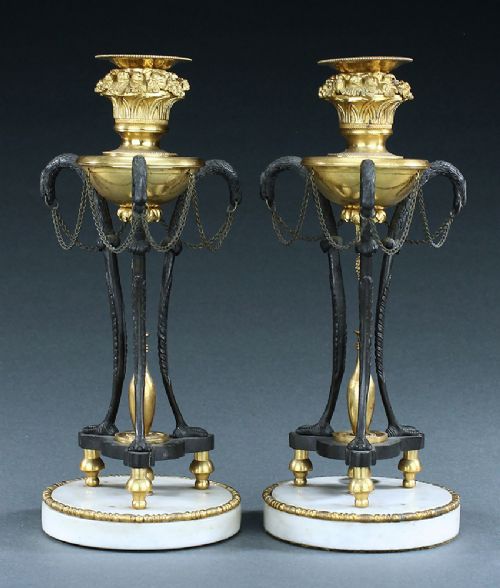
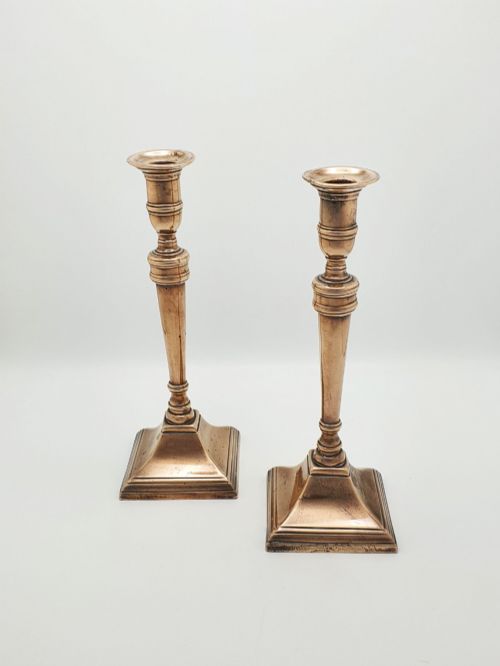
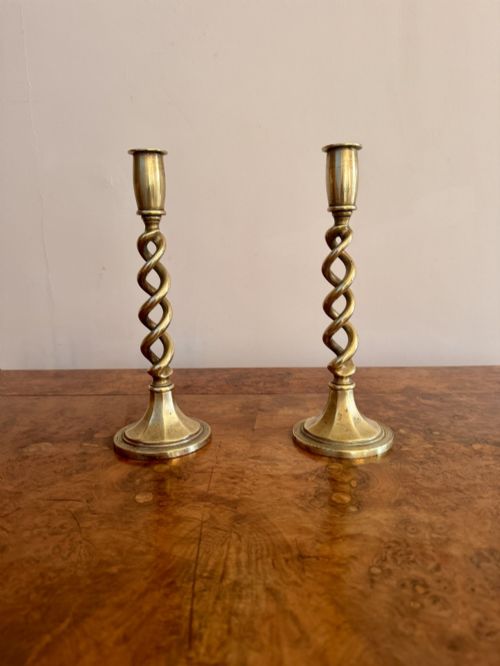
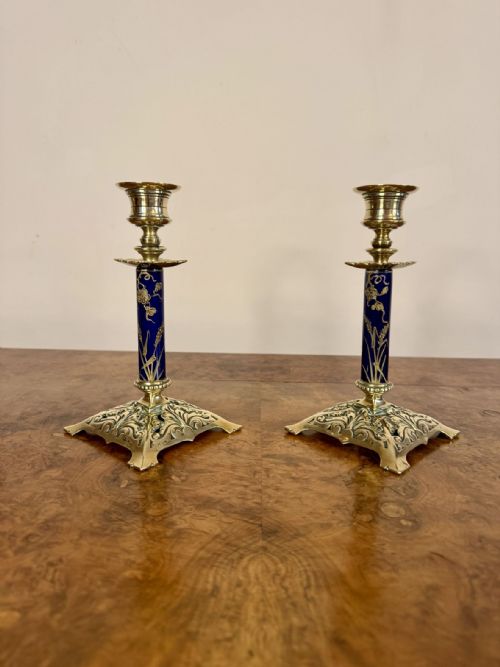
Paired Brass Candleholders
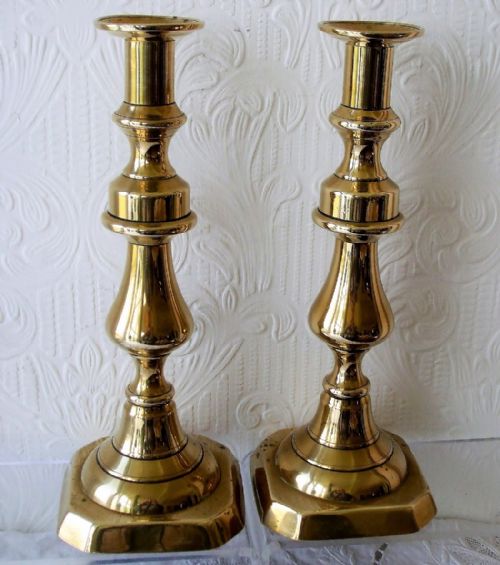
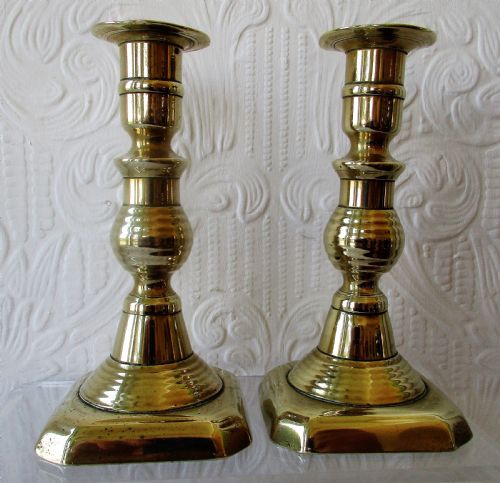
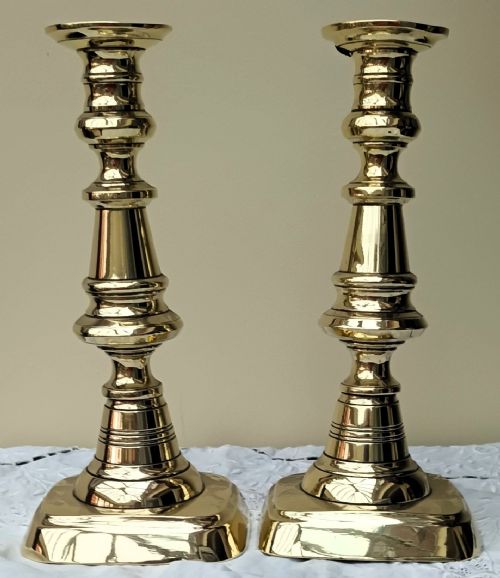
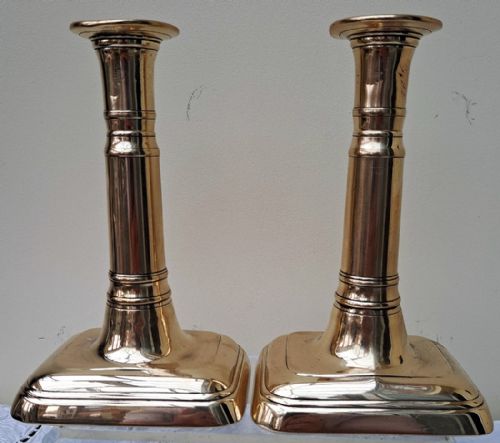
Paired brass candleholders bring balanced symmetry and warm light to a room, spanning periods from early Georgian forms to sturdy Victorian designs.
Paired Brass Candleholders
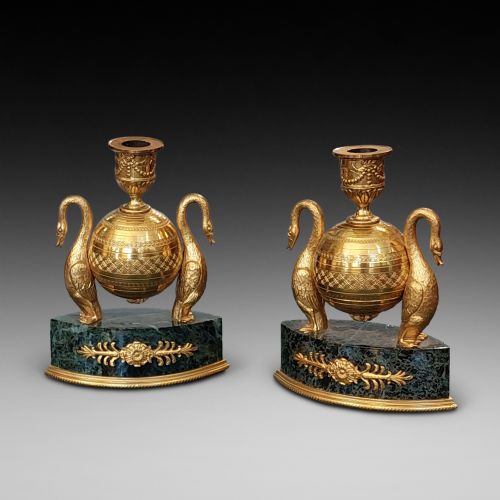
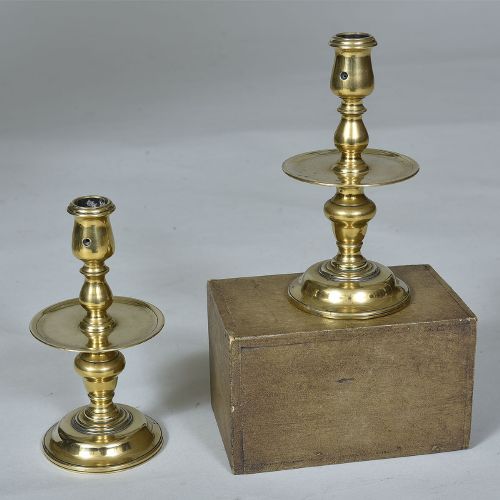
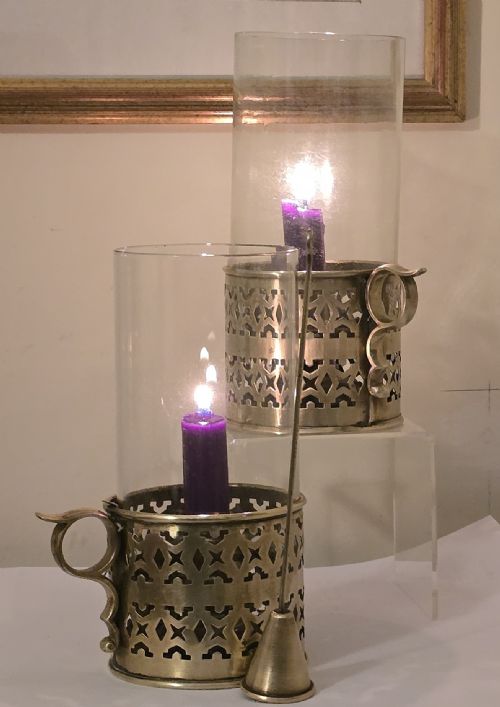
These paired brass candleholders comprise matched sets of candlesticks, candelabra, wall sconces, and candle lamps designed to hold tapers or candles securely. Buyers examining this selection encounter objects originating from the seventeenth century through to the early twentieth century.
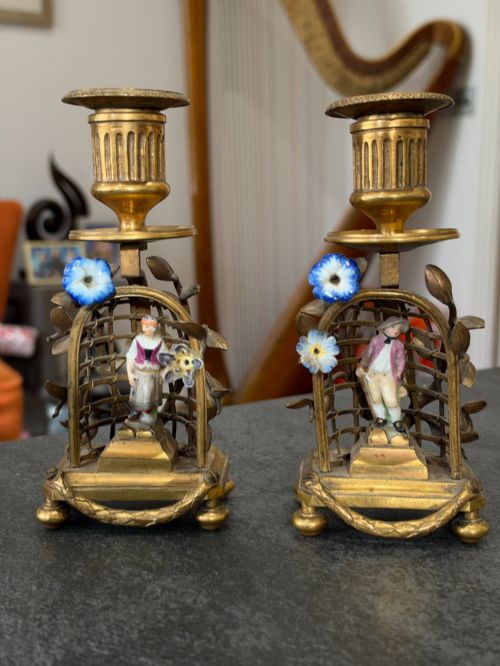
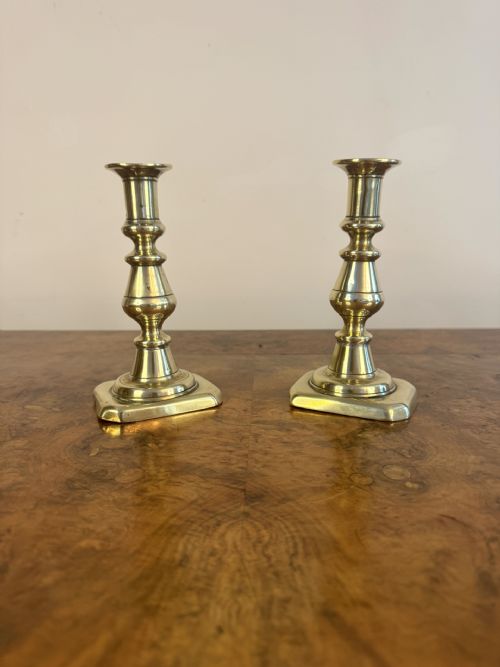
Victorian and nineteenth-century examples appear frequently alongside Georgian designs, featuring forms ranging from slender domestic sticks to heavy ecclesiastical pieces. Materials extend beyond standard brass to include gilt bronze, ormolu, bronze, and combinations with marble, porcelain, wood, and glass.
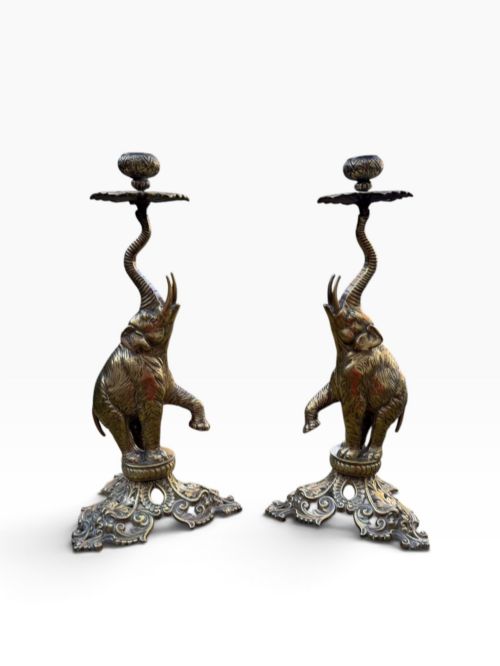
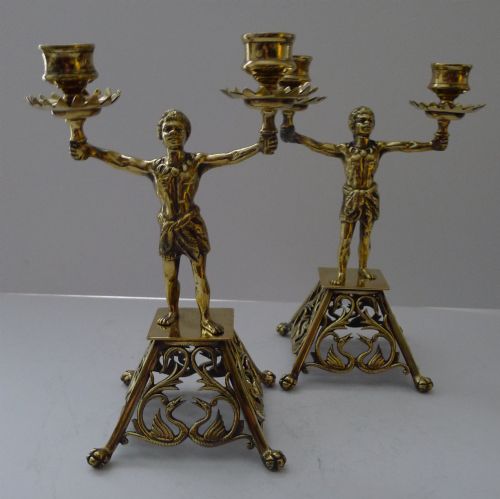
The styles represented stretch across Georgian, Victorian, Edwardian, Arts and Crafts, Regency, Gothic Revival, French Rococo Revival, and the Amsterdam School. Domestic items share space with specialised student lights, telescopic designs, and figural models incorporating animals or human figures.
How they were made
Many of these pieces utilise cast brass and seamed construction, where components were cast in sections and joined or turned on lathes for finished profiles. Makers employed finishing techniques such as gilding on bronze and ormolu, or left the brass with polished and patinated surfaces.
Paired Brass Candleholders Retail Price Guide 2026
Typical asking prices for paired brass candleholders among the pieces listed under this phrase on Sellingantiques today, from the lower quarter to the upper quarter. They describe what is for sale here now, not the wider market.
Listings feature brass alongside gilt bronze, ormolu, marble, wood, and glass across Georgian, Victorian, and Arts and Crafts periods.
What varies in quality
Quality rests in the crispness of the casting and the weight of the metal, where heavier items indicate substantial material use rather than thin pressed sheets. Finer examples display cleanly rendered decorative details, sharp chasing on ormolu or bronze surfaces, and well-fitted mechanical components like ejector mechanisms.
Proportion and balance also define the better pieces, with harmonious stems and stable bases that remain true. The integrity of mixed materials, such as secure mountings on marble bases or intact porcelain inserts, distinguishes superior execution from standard production.
Bruce Talbert·J Miller·Frederick J Smith & Co
The Paired Brass Candleholders Glossary
- Ejector
- A built-in internal mechanism operated by a small side lever to push a shortened candle stub out of the nozzle.
- Ormolu
- Gilt bronze, where a finely ground gold-mercury amalgam is applied to a bronze base and heated to leave a rich gold coating.
- Pricket
- A sharp metal spike set in the drip pan to secure a large candle, often found on church candlesticks.
- Girandole
- An ornamental branched wall sconce or candleholder incorporating a mirror to reflect the light.
- Candelabra
- A decorative candleholder with multiple branching arms supporting more than one candle nozzle.
- Petal base
- A rounded foot moulded with overlapping lobes resembling flower petals, typical of early Georgian candlesticks.
Paired Brass Candleholders: Frequently Asked Questions
How do I clean antique brass candleholders?
Dust gently with a soft dry cloth to preserve the natural aged patina accumulated over decades of use. Avoid harsh chemical polishes that strip away historical surface character.
For stubborn residue, warm soapy water and a soft brush work safely without scratching the metal. Dry thoroughly afterwards to prevent spotting.
What is the difference between an ejector and standard candlestick?
Ejector candlesticks feature a movable internal plate connected to a small thumbpiece on the side of the stem. Sliding this lever upwards lifts the remaining wax stub clear of the socket.
Standard candlesticks rely on an open socket where burnt wax must be removed from the top. This mechanical addition helps date many nineteenth-century pieces accurately.
How do I tell an earlier Georgian stick from a Victorian reproduction?
Georgian pieces often display heavy cast construction with distinct petal or scalloped bases and hand-finished surfaces. They may show evidence of seaming and wear consistent with eighteenth-century manufacturing methods.
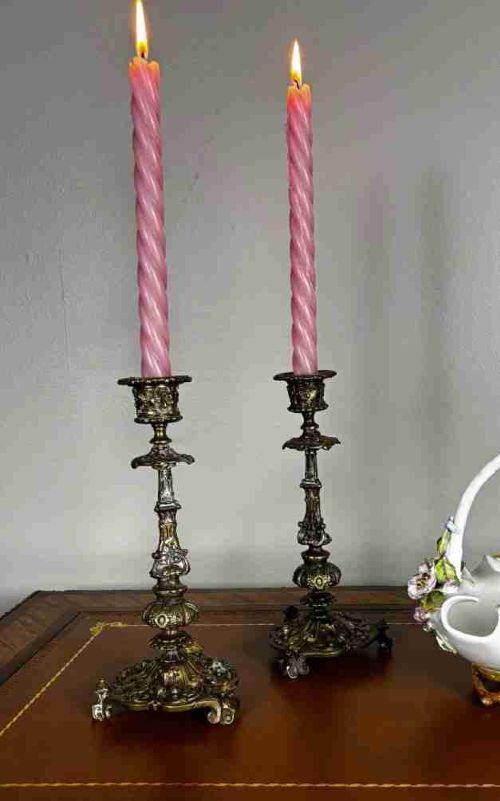
Victorian reproductions and later styles typically adopt heavier proportions or incorporate machine-turned twists and eclectic revival motifs. Examining the base and internal construction reveals the era of production.