
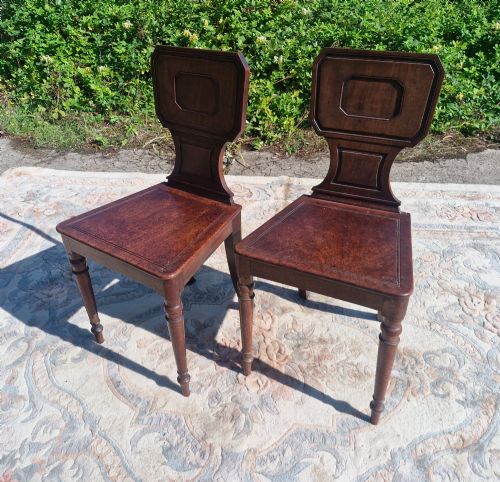
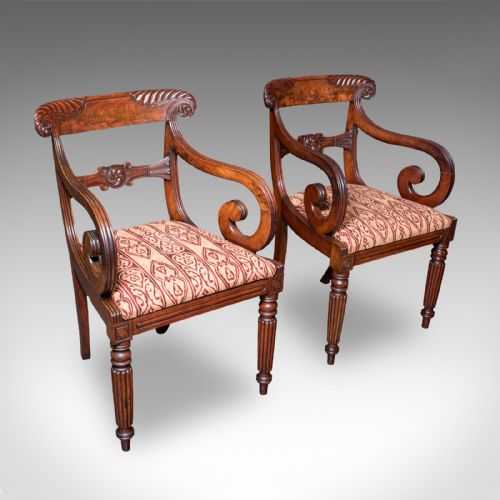
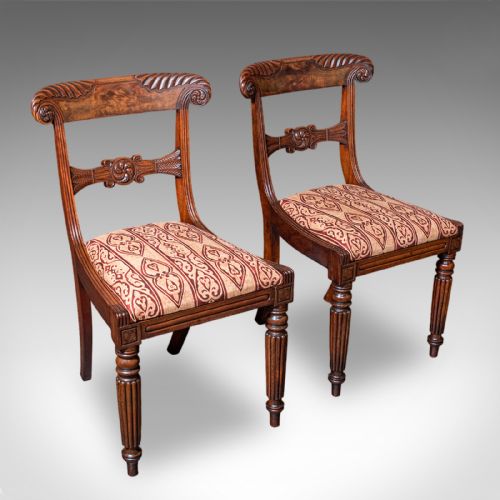
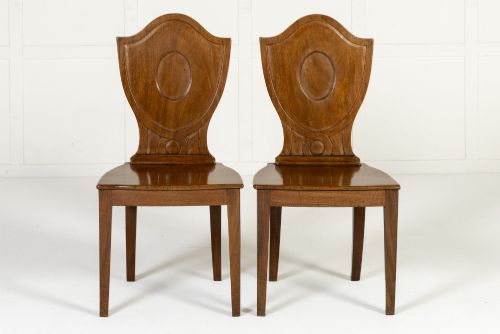
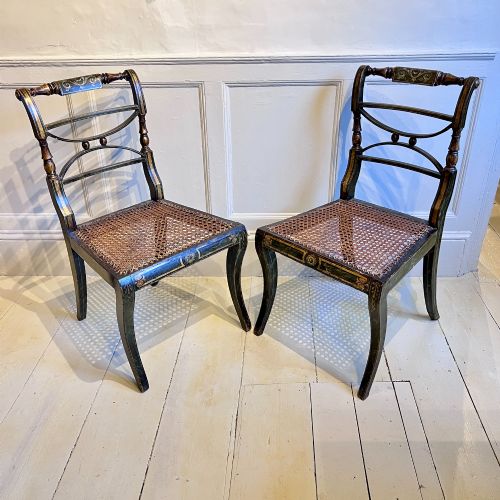
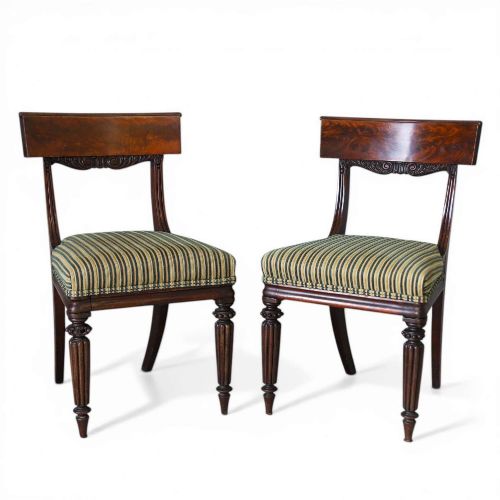
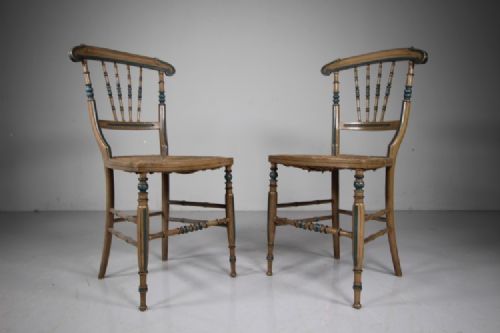
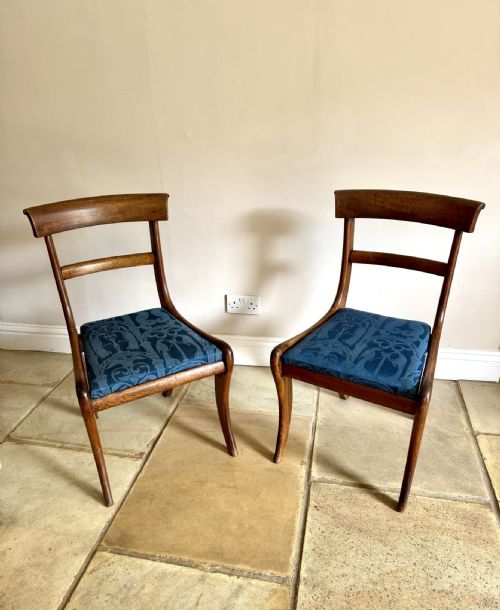



Pair Regency Hall Chairs
A pair regency hall chairs brings formal symmetry to an entrance, combining solid timber construction with carved or painted ornamentation.

How They Were Made
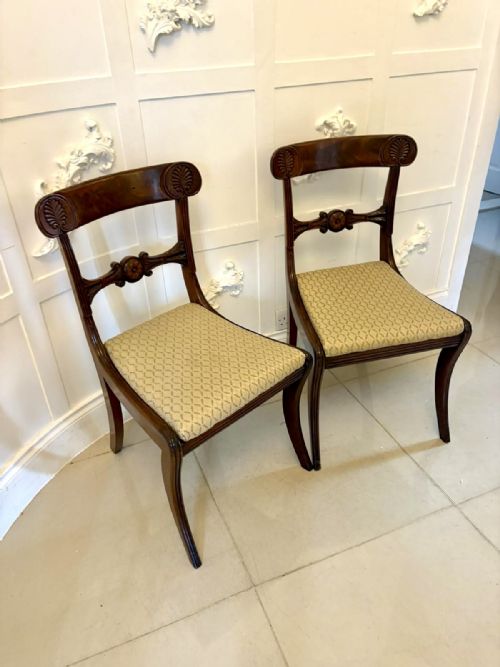
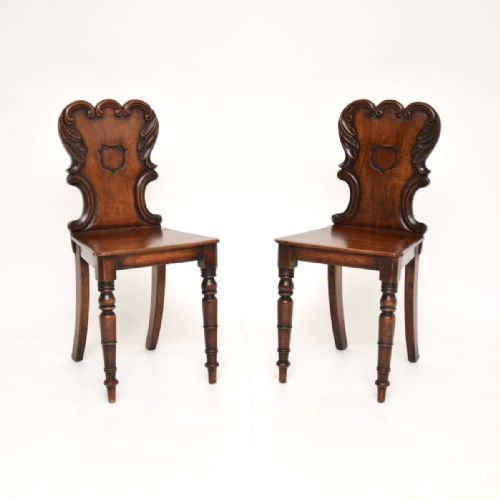
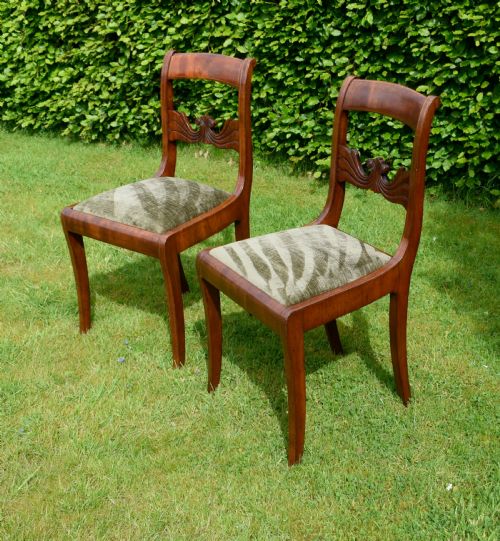
Cabinetmakers constructed these frames primarily from figured mahogany and oak, often shaping the backrests from a single solid board to accommodate deep relief carving or painted crests. Turned or sabre legs provide the characteristic lower support, occasionally complemented by brass inlay or delicate ebony stringing.
Surface treatments range from clear wax polishing that highlights the natural grain of the timber to decorative paintwork, gilt detailing, and faux rosewood finishes. Selected examples incorporate cane seating panels or tailored upholstery secured with traditional tacks.
What Varies in Quality
The distinction between standard examples and the finest work lies in the depth and precision of the carved details on the backrest, such as crisp shell motifs or heraldic crests. Well-executed pieces display superior timber selection with rich, figured mahogany grain and robust joinery that remains stable across the seat and legs.
Attribution to notable workshops like Gillows elevates the standing of a pair, marked by particularly refined proportions and meticulous attention to structural finishing. Lesser examples often feature simpler timber stock and more rudimentary geometric turning.
Some chairs bear painted greyhound crests, reminding guests that even the family hound enjoyed heraldic representation.
Gillows
The Pair Regency Hall Chairs Glossary
- Hall Chair
- A rigid wooden seat designed for an entrance hall or corridor, traditionally lacking armrests and built to display family crests or decorative carving. These pieces prioritize formal appearance and durability over cushioned comfort.
- Pelta Back
- A shield-shaped or axe-head backrest profile resembling a classical Greek shield. This specific contour is frequently encountered on carved mahogany seating from the early nineteenth century.
- Gilt
- A thin layer of gold leaf applied to wood or metal surfaces to create decorative highlights. It often accents ebonised timber frames or carved crests on formal seating.
- Ebonised
- Timber treated with a chemical stain or dark finish to imitate expensive ebony. This dark surface frequently contrasts with gilt highlights or brass inlay.
Pair Regency Hall Chairs: Frequently Asked Questions
Where were pair regency hall chairs placed?
These seats were positioned along the walls of grand entrance halls, corridors, and reception spaces rather than around dining tables. Guests used them briefly while waiting to be announced.
Their upright wooden construction encouraged proper posture and prevented excessive wear from daily lounging.
How do I date a pair of hall chairs?
Dating relies on observing stylistic markers such as sabre legs, turned supports, and specific backrest shapes like shields or shells. Examining the timber grain and construction methods provides further clues.
Most examples date from the Regency and William IV eras, spanning the early to mid nineteenth century.
Are these chairs comfortable for daily use?
Most variants feature solid carved wooden seats designed for formal presentation rather than long hours of sitting. They function best as accent pieces in hallways or bedrooms.
Examples equipped with upholstered pads or cane panels offer slightly softer seating while maintaining their architectural silhouette.
What timber was used for these chairs?
Mahogany is the primary material seen across these listings, valued for its rich grain and strength in carved backrests. Oak and rosewood also appear occasionally in regional or alternative designs.
Surfaces are frequently polished with wax to enhance the natural depth of the wood.