

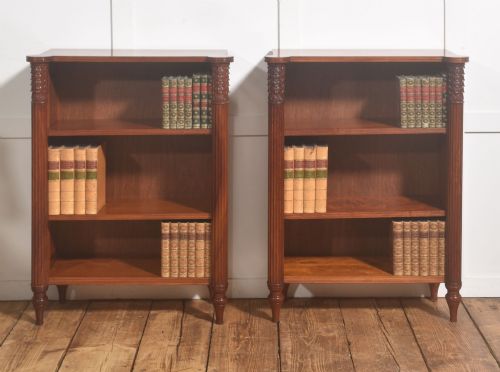
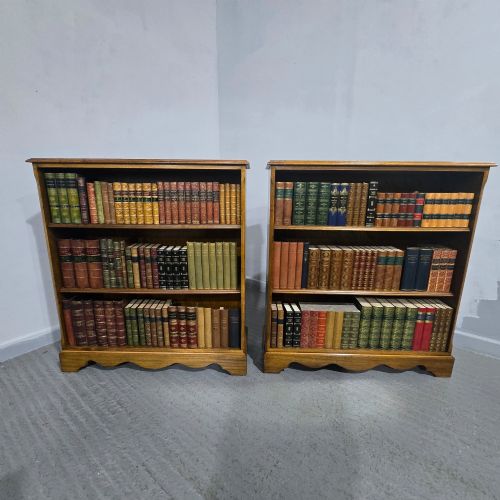
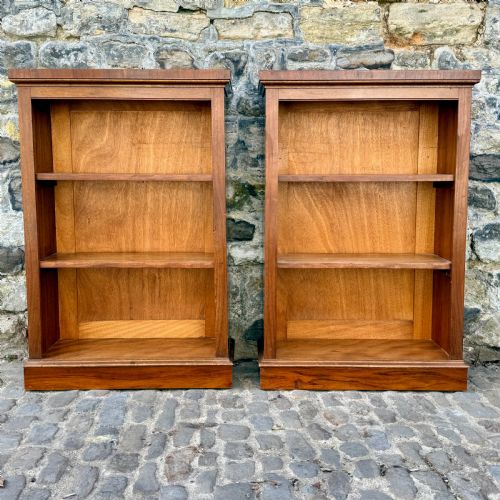
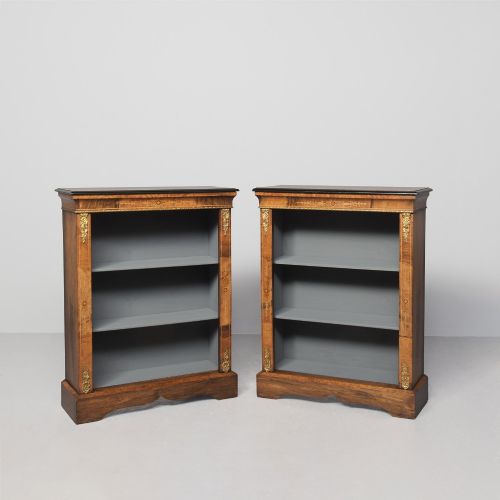
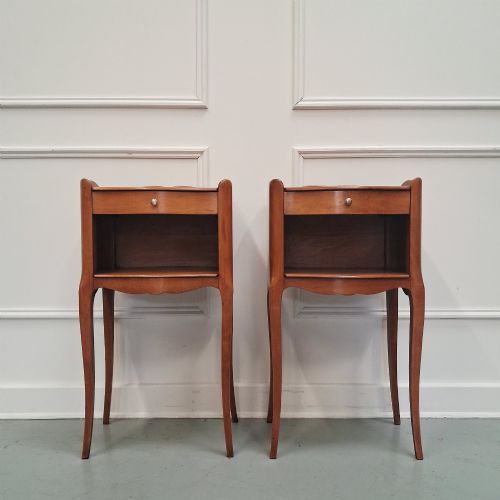

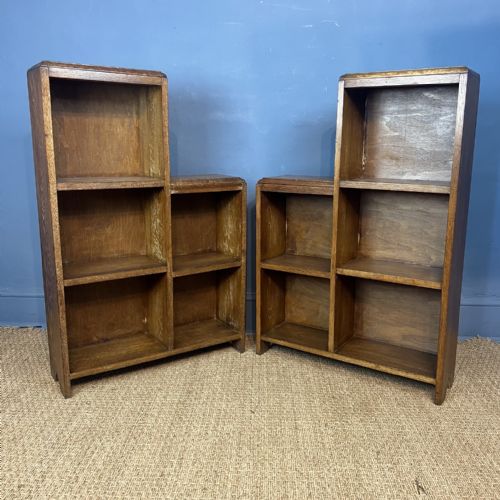
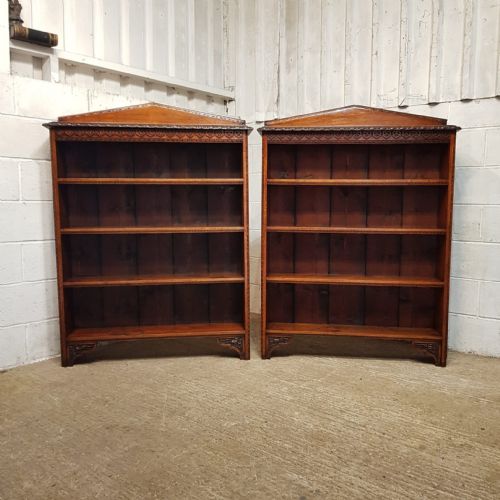
Pair Open Shelves
Pair open shelves bring symmetry and balanced display to a room, uniting books and decorative objects across centuries of cabinet-making.
Pair Open Shelves
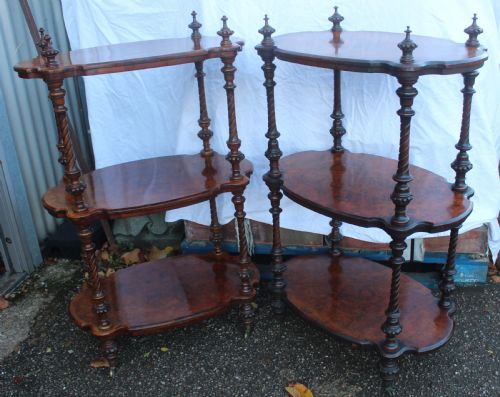
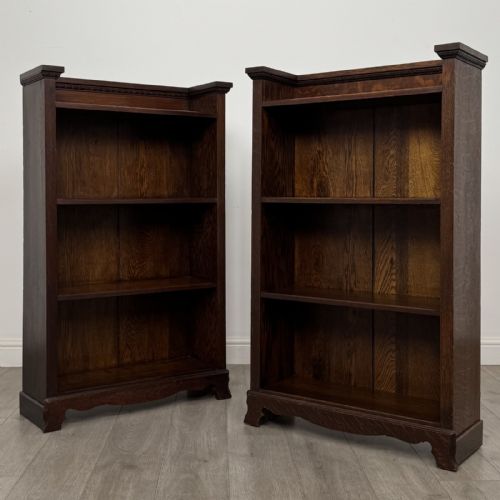
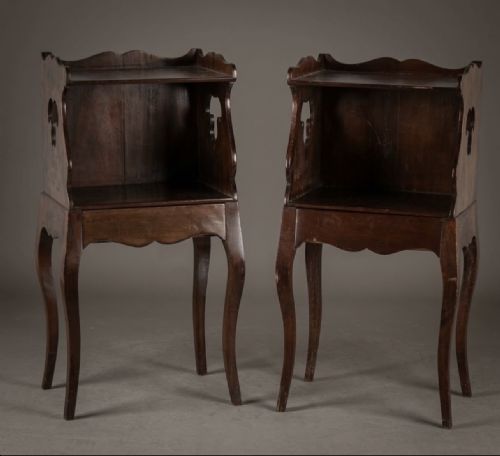
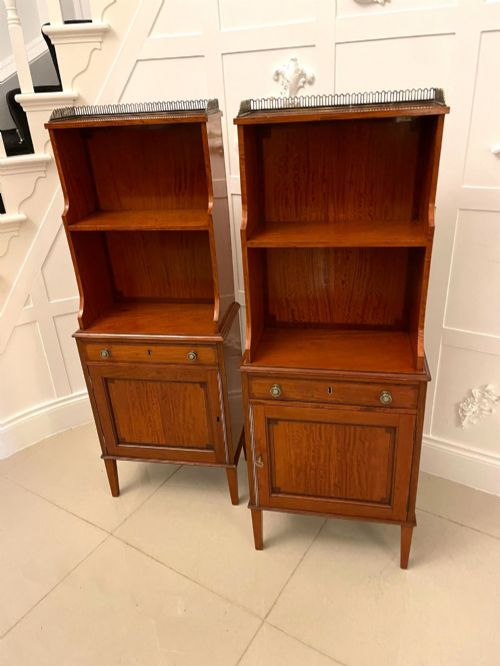
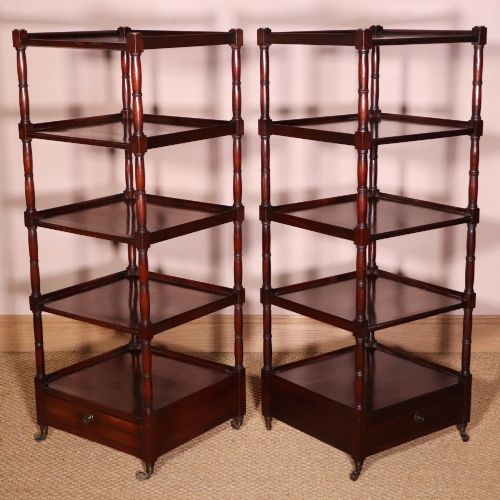
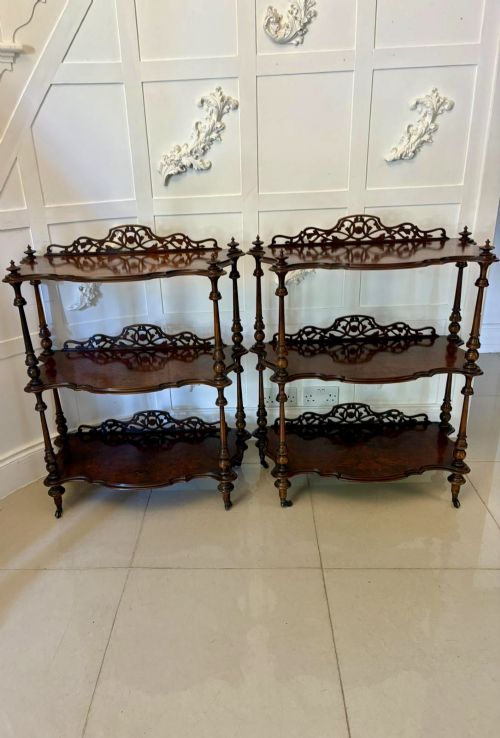
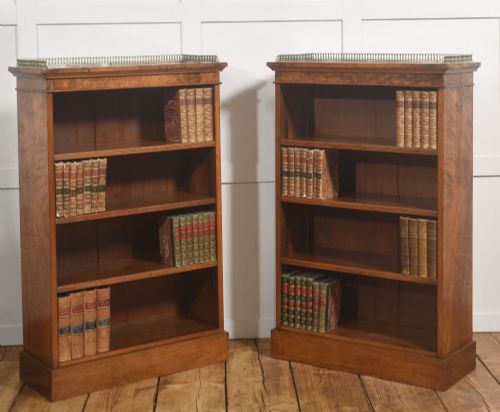
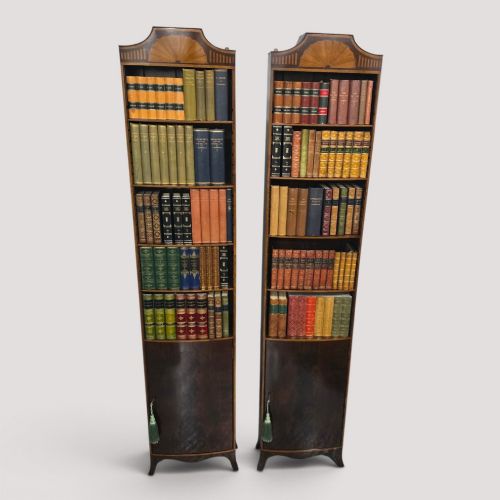
When searching for pair open shelves, buyers encounter matching sets of bookcases, bedside tables, and whatnots spanning the nineteenth and early twentieth centuries. These matching dual forms serve library, bedroom, and drawing room settings with equal utility.
The selection ranges from compact corner units and low bedside cabinets to taller breakfront bookcases with adjustable shelves. Pieces emerge in styles from Regency and Victorian to Art Deco and Edwardian, reflecting the period tastes of their makers.
Materials and Construction
Cabinet-makers relied heavily on rich timbers such as mahogany, walnut, burr walnut, and oak, often enhancing surfaces with satinwood crossbanding or rosewood veneers. Brass mounts, ormolu details, and occasional marble tops complete the construction of finer examples.
Joinery techniques prioritize structural stability for weight-bearing shelves, utilising solid hardwoods alongside figured veneers on secondary woods. Many nineteenth-century library pieces incorporate functional adjustable shelf mechanisms within traditional carcases.
Pair Open Shelves Retail Price Guide 2026
Typical asking prices for pair open shelves among the pieces listed under this phrase on Sellingantiques today, from the lower quarter to the upper quarter. They describe what is for sale here now, not the wider market.
Periods represented across the inventory include Regency, Victorian, Edwardian, and Art Deco.
Assessing Quality and Execution
Quality rests upon the choice of timber figure, such as highly decorative burr walnut or figured mahogany, balanced evenly across both items in the pair. Symmetrical grain matching and crisp execution of details like brass ormolu mounts separate standard production from master workshop output.
Proportion and structural integrity define the upper tier of survivals, where matching sets retain their original shelving mechanisms, uniform patination, and uncompromised structural alignment between the two individual units.
Gillows·Edwards & Roberts·Robert Strahan·Heals
The Pair Open Shelves Glossary
- Whatnot
- A freestanding piece of furniture with multiple tiers of open shelves used for displaying ornaments or books. They frequently appear in Victorian and Regency settings.
- Waterfall bookcase
- A set of open shelves where each tier steps back progressively from bottom to top, creating a cascading profile popular in nineteenth-century designs.
- Breakfront
- A cabinet or bookcase whose central section projects forward from the flanking wings, adding architectural depth to the piece.
- Crossbanding
- A decorative border technique where thin strips of veneer are laid perpendicular to the grain of the primary surface, often seen in satinwood.
- Etagere
- A French-derived term for a set of open tiered shelves used for display, functionally synonymous with certain types of whatnots.
Pair Open Shelves: Frequently Asked Questions
How do I style pair open shelves in a modern room?
Symmetrical pairs work well flanking a fireplace, window, or low doorway to create visual balance. Distribute books and decorative objects evenly across both units to maintain equilibrium without overcrowding the shelves.
Allow negative space around objects to highlight the timber grain and period details of the pieces. Mixing vertical book stacks with horizontal items prevents the displays from feeling rigid.
Are these shelves strong enough for heavy books?
Many period bookcases feature robust hardwood construction in mahogany, oak, or walnut designed to support substantial library collections. Adjustable shelf systems allow reconfiguration for volumes of varying heights.
Check the thickness of the timber and the condition of the shelf supports before loading heavier volumes. Solid wood variants handle heavy text loads reliably compared to lighter decorative display pieces.
What is the difference between a whatnot and a bookcase?
Whatnots are typically lighter, multi-tiered open furniture items designed primarily for displaying ornaments, decorative objects, and small collections. They often feature delicate upright supports and corner configurations.
Bookcases are engineered specifically for housing bound volumes, featuring heavier timber carcases and deeper shelves. While both offer open storage, bookcases prioritize literary capacity over decorative staging.
How can I date a pair of open shelves?
Dating relies on observing stylistic markers, timber choices, and construction methods characteristic of specific eras like Regency, Victorian, or Edwardian. Regency pieces often showcase rosewood and brass inlay, while Edwardian examples favour lighter mahogany and satinwood.
Examine the secondary woods inside and the style of the joinery to confirm the period. Catalogued pieces frequently correspond to design revivals recorded across the nineteenth and twentieth centuries.