



Pair of Wall Lanterns
A pair of wall lanterns brings balanced illumination and architectural presence to a facade or hallway.
Pair of Wall Lanterns
A pair of wall lanterns provides matching architectural illumination for flanking a doorway, gateway, or interior corridor. When you search for this phrase, you find lighting fixtures designed to project outward from vertical surfaces using sturdy brackets.
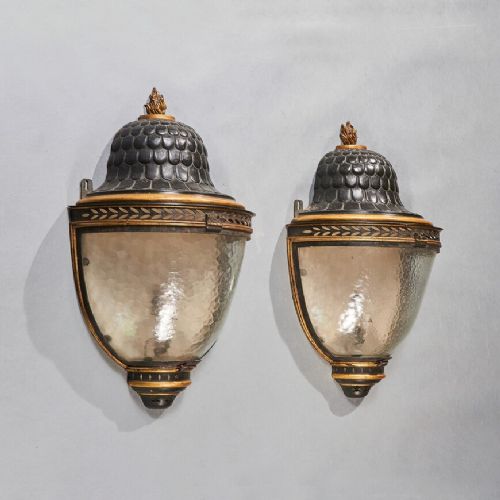
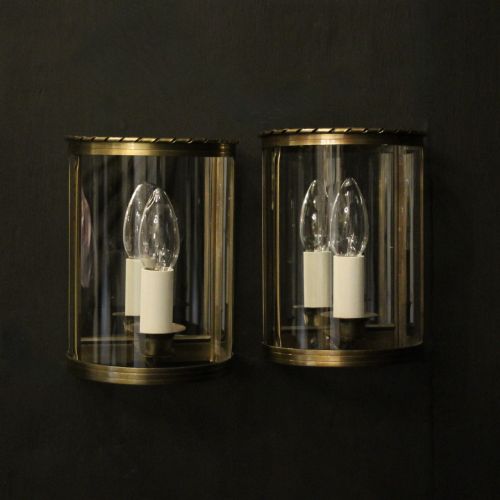
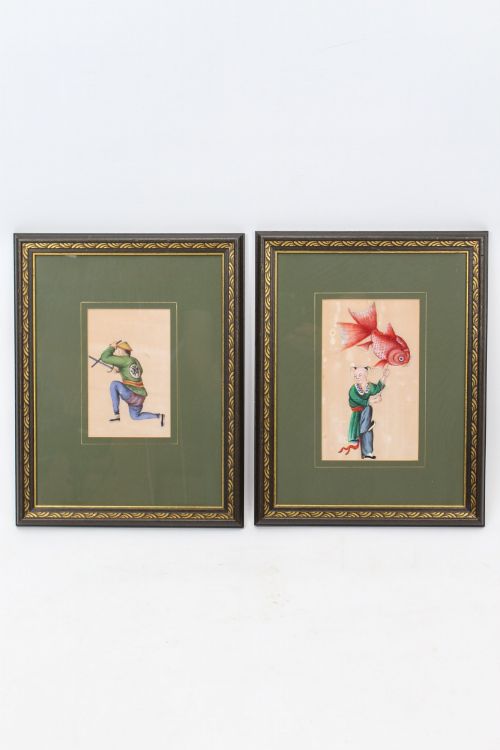
The selections span eras from the Victorian period through the early twentieth century, incorporating French styles alongside English and Chinese influences. These fixtures range from intimate carriage lamps to substantial street lanterns and half-lantern designs meant to sit flat against a wall.
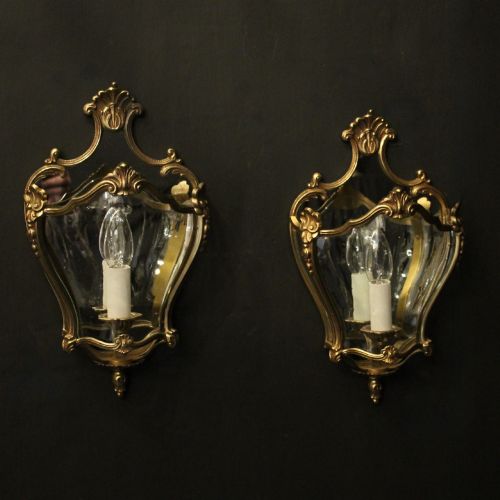
Most examples originate from French workshops or English makers, utilising metals like brass, copper, and bronze paired with glass panels. Collectors encounter everything from coach-house lanterns to gilded interior wall lights.
How they were made
Metals such as brass, copper, bronze, and wrought iron form the structural bodies of these lanterns, often shaped by hand and joined with rivets or solder. Toleware and japanned finishes introduce painted colour onto tin and iron substrates.
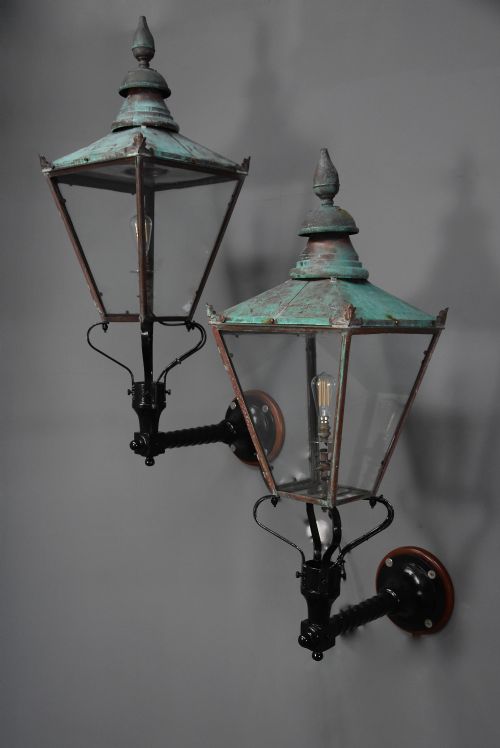
Glass panels, sometimes leaded, curved, or convex, fit securely into metal frames to protect the internal burner or bulb from the elements. Decorative elements like parcel gilding, verdigris patina, and cast brass mounts complete the construction.
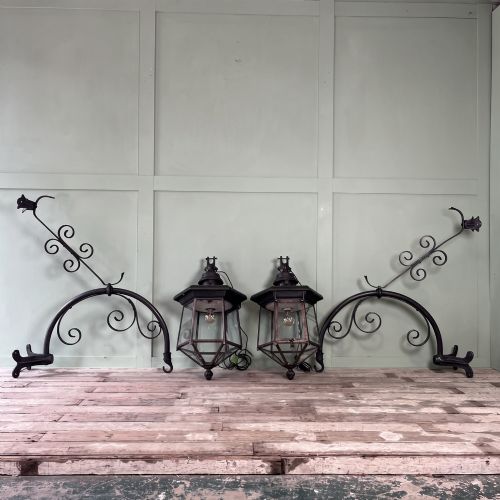
One set of street lanterns arrives supported by sophisticated spiral twist brackets, ready to cast a Victorian glow.
What varies in quality
Proportion and scale also define the better examples, where structural brackets harmonise with the lantern body rather than overpowering it. Intricate detailing such as spiral twist brackets and original fire-gilt surfaces elevate certain pieces far above standard workshop output.
REVO Leicester
The Pair of Wall Lanterns Glossary
- Half Lantern
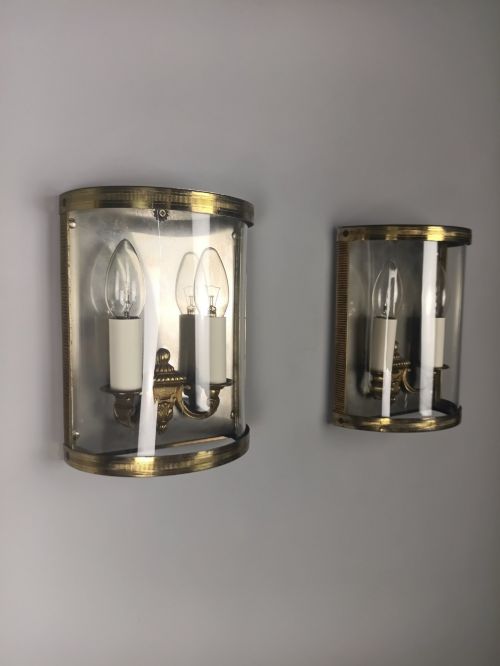
- A lighting fixture flattened on one side to mount directly against a wall surface. These project less than a full lantern, making them suitable for narrower hallways and porches.
- Carriage Lamp
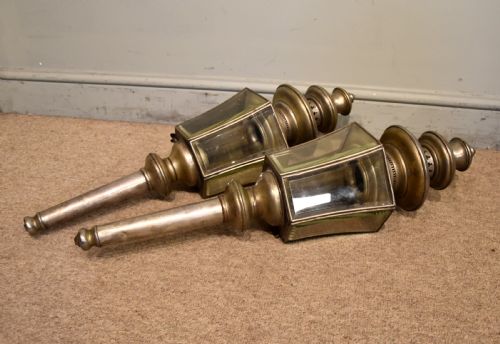
- A traditional outdoor light derived from the illumination once mounted on horse-drawn vehicles. These often feature specialised bracket arms and protective glass panes to withstand travel.
- Toleware
- Painted tin or metalware finished with lacquer or enamel, frequently associated with decorative French pieces. The technique allows rich colour application on domestic and exterior objects.
- Convex
- Curved outward in a rounded shape, commonly describing glass panels on lanterns. This curvature helps diffuse light more broadly across an entryway.
- Japanned
- A European imitation of East Asian lacquerwork using layered varnishes and heat curing. It produces a glossy, dark, or brightly coloured finish often seen on period metal fixtures.
Pair of Wall Lanterns: Frequently Asked Questions
Where should I hang them?
These fixtures suit positions flanking main entrance doors, exterior gateways, or the ends of a long hallway. Matching pairs create symmetry on either side of architectural focal points.
Ensure the scale matches the surrounding wall space so the brackets and lanterns do not appear overcrowded or lost.
How do I date them?
Stylistic markers such as neo-classical proportions, Louis XV curves, or Arts and Crafts simplicity offer clear clues to the decade of manufacture. Materials like verdigris patinated copper and gilt bronze frequently align with specific late nineteenth or early twentieth-century design movements.
Maker marks, construction methods like hand-soldering, and the type of glass used further narrow down the production era.
What is a half lantern?
A half lantern is designed with a flat back plate so the fixture sits flush against a vertical wall. This construction allows large decorative lanterns to occupy narrow exterior passages or indoor corridors where full projection is impractical.
Despite the flattened side, they retain the glass panels and decorative hoods of their freestanding counterparts.