


Pair of Silver Fruit Spoons
These pair of silver fruit spoons are tactile relics of formal dining, prized for their ornate bowls and fitted presentation cases.
Pair of Silver Fruit Spoons
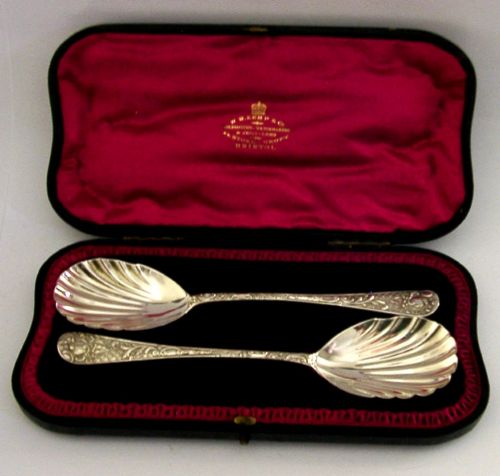
A pair of silver fruit spoons represents a specialised form of antique cutlery designed primarily for serving dessert and fruit during formal meals. When searching for a pair of silver fruit spoons, buyers typically encounter examples originating from the Georgian and Victorian eras, often housed in original fitted cases lined with silk, velvet, or satin.
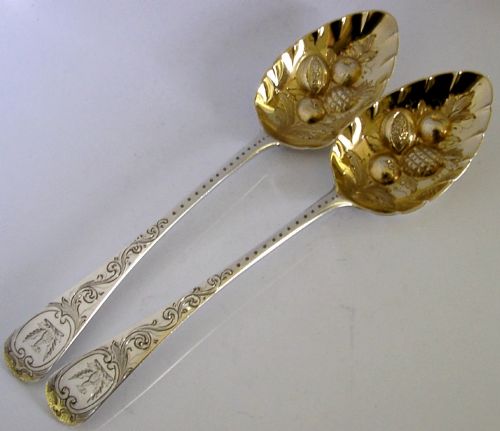
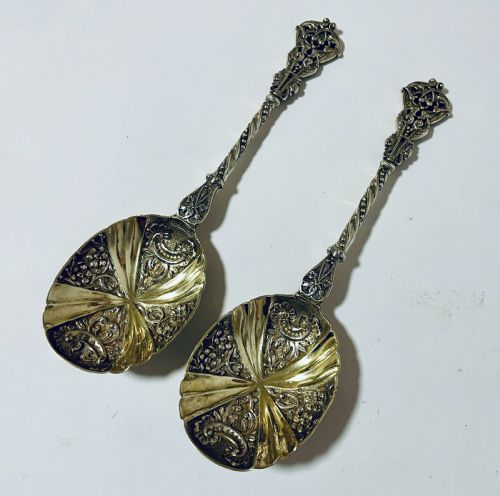
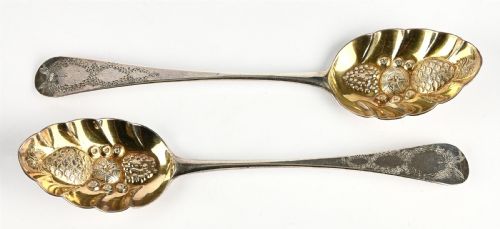
The selection on this page demonstrates that many of these utensils began life as standard dining spoons before being retrofitted or heavily embossed with fruit and floral motifs during the nineteenth century. These later adaptations transformed plain bowls into richly textured serving pieces intended for display as much as for practical use at the table.
What varies in quality
The crispness of the chased decoration separates fine work from softer, worn examples where repetitive embossing has flattened the original detail. Crisp fruit and berry motifs, deep relief work, and well-defined floral borders indicate a higher standard of silversmithing.
The survival of the original fitted presentation case significantly influences desirability, particularly when the interior silk and velvet linings remain intact and clean. Maker attribution also plays a role, with documented silversmiths commanding greater interest than unmarked regional pieces.
peter & Anne Bateman·Sebastian Crespell
The Pair of Silver Fruit Spoons Glossary
- Berry spoon
- A tablespoon retrofitted during the Victorian period with embossed fruit and berry designs in the bowl. These pieces were originally plain Georgian silver before receiving their ornamental surface work decades later.
- Silver-gilt
- Sterling silver that has been coated with a thin layer of gold. This technique protects the underlying silver from tarnishing while providing a warm, golden lustre.
- Repoussé
- A metalworking technique where the artisan hammers the design from the reverse side to create a raised pattern on the front. It is frequently seen on the bowls of ornate fruit spoons.
- Hallmark
- An official stamp applied by an assay office denoting the metal purity, year of manufacture, and origin city. These marks provide definitive evidence for dating antique cutlery.
Pair of Silver Fruit Spoons: Frequently Asked Questions
What were pair of silver fruit spoons used for?
These utensils were created for serving soft fruits, berries, and desserts during formal dining courses in the Georgian and Victorian periods. They allowed hosts to portion delicate foods cleanly without damaging the fruit.
Over time, many of these spoons transitioned from active dining implements to decorative table elements, often preserved within fitted presentation boxes for special occasions.
How do I date a pair of silver fruit spoons?
Dating relies heavily on the stamped hallmarks located on the reverse of the stems, which indicate the assay office and year of production. Stylistic clues, such as the presence of Art Nouveau curves or Victorian naturalistic leaf motifs, also help narrow down the era.
Many spoons from the Georgian period were later embellished during the Victorian era, meaning the assay date on the metal can precede the decorative style by several decades.
Are cased sets more desirable?
Original fitted cases lined with silk, velvet, or satin generally enhance the appeal of a set for collectors. They demonstrate that the spoons were valued and protected as a matched pair over generations.
Cases also provide historical context, often bearing the stamp of the original retail jeweller or silversmith who sold the set.
How should I clean antique silver spoons?
Maintenance requires gentle washing with warm water and mild soap, followed by drying with a soft microfibre cloth. Avoid harsh chemical dips that can strip away desirable patination or damage delicate silver-gilt surfaces.
Regular handling through careful use naturally maintains a pleasing soft polish without the need for aggressive abrasive cleaners.