

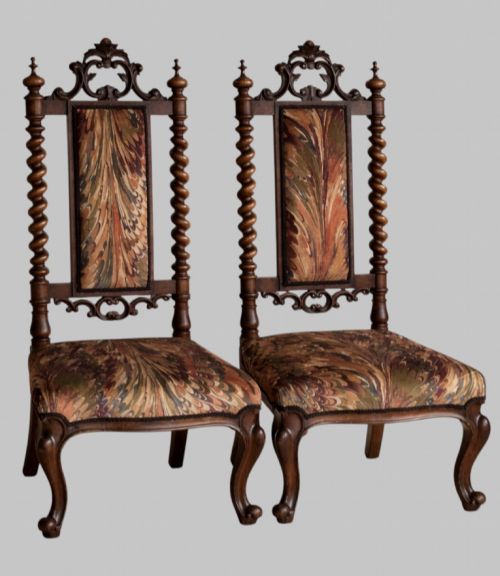


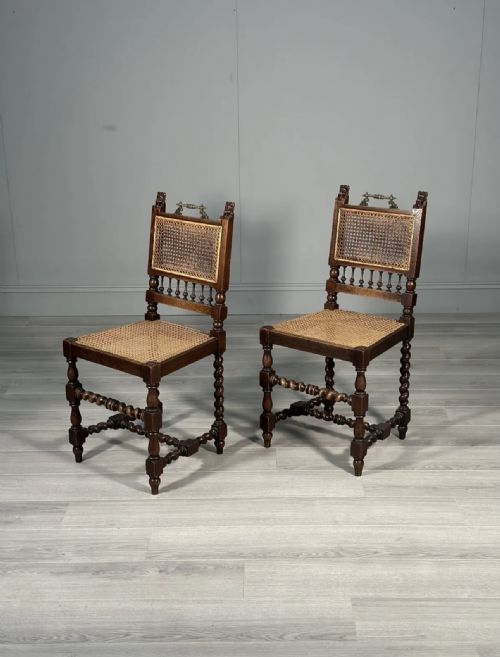
Pair of Carolean Chairs
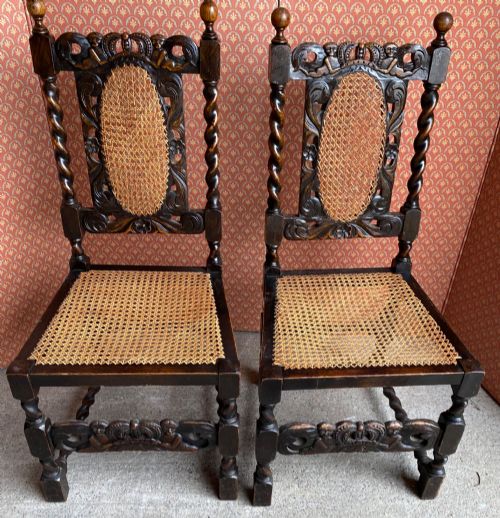
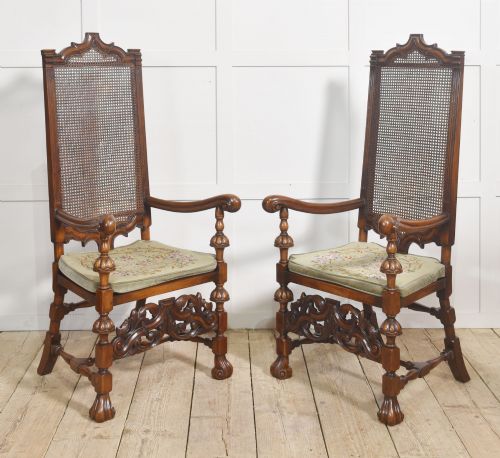
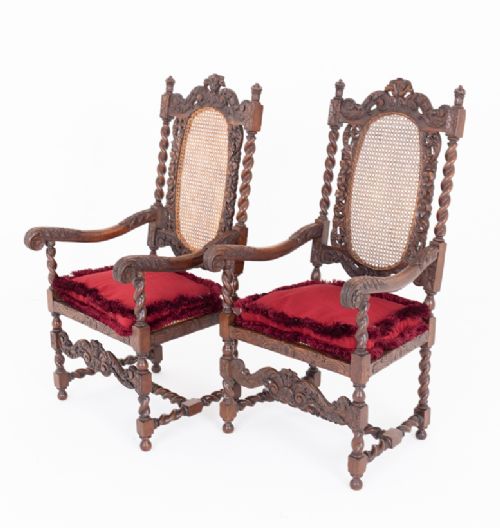
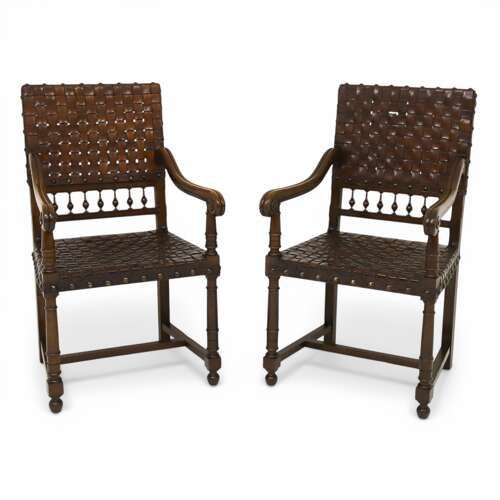
A pair of carolean chairs brings high-back presence and carved woodwork to a room, offering the bold proportions characteristic of the period.
Pair of Carolean Chairs
A search for a pair of carolean chairs directs attention to seating designed for formal spaces, featuring substantial frames and upright profiles. These pieces often emerge in revival styles from the nineteenth century alongside examples from the seventeenth century.
The configurations on this page include armchairs, side chairs, hall chairs, and dining chairs constructed in timber and upholstered in textiles such as velvet, needlepoint, and leather. High-back designs with scroll arms and carved crest rails dominate the selection.
Buyers encounter both walnut and oak constructions, incorporating cane and rattan alongside padded seats. The pieces reflect seventeenth-century grandeur through turned supports and decorative carving.
Factors determining the quality
Depth and crispness of the wood carving separate standard examples from finer pieces, particularly across the crest rails and scroll arms. The fluidity of the turned legs and the integrity of the joinery dictate the overall solidity of the frame.
The choice of primary timber influences the character, with figured walnut often indicating higher ambition than plain oak. Original upholstery materials and intact cane work add significantly to the integrity of a matching pair.
Pair of Carolean Chairs Retail Price Guide 2026
Typical asking prices for pair of carolean chairs among the pieces listed under this phrase on Sellingantiques today, from the lower quarter to the upper quarter. They describe what is for sale here now, not the wider market.
Listings feature items spanning from the seventeenth century through to the 1920s, employing oak, walnut, cane, velvet, and leather.
The Pair of Carolean Chairs Glossary
- Carolean
- Pertaining to the reign of Charles II, marked by ornate wood carving, scrollwork, and high backs. This style resurfaced strongly during the nineteenth century.
- Barley twist
- A turned wooden furniture leg or support resembling a twisted rope. This detail appears frequently on seventeenth-century and revival seating.
- Caning
- Woven rattan material used for chair seats and backs. It provides a resilient and decorative surface.
- Crest rail
- The top horizontal member of a chair back. It often bears the primary carving on formal seating.
- Stretcher
- A horizontal wooden brace connecting the legs of a chair for stability. They often feature turned details matching the legs.
Pair of Carolean Chairs: Frequently Asked Questions
How do I place a pair of carolean chairs in a modern room?
These high-back chairs suit placement against a plain wall or flanking a fireplace where their carved details remain visible. Their strong vertical lines balance lower contemporary seating.
Matching pairs work well in hallways or as occasional seating in reception rooms, providing both function and architectural presence.
What is the difference between seventeenth century and revival chairs?
Seventeenth-century pieces display the tool marks and timber ageing consistent with their original period of manufacture. Revival pieces date from later eras like the nineteenth century and replicate those earlier aesthetic choices.
Both categories share the high backs, scroll arms, and carved motifs characteristic of the style.
How should I care for upholstered carolean chairs?
Textile upholstery requires gentle vacuuming with a soft attachment to remove dust without damaging needlepoint or velvet fibres. Leather elements benefit from occasional conditioning to prevent drying.
Keep wooden frames away from direct heat sources to protect the carved timber and prevent splitting.
Are these chairs comfortable for daily use?
High-back designs encourage an upright posture rather than relaxed lounging. Padded arms and upholstered back panels offer support for reading or conversation.
Library armchairs and wing versions provide deeper seating compared to rigid hall or side chairs.