

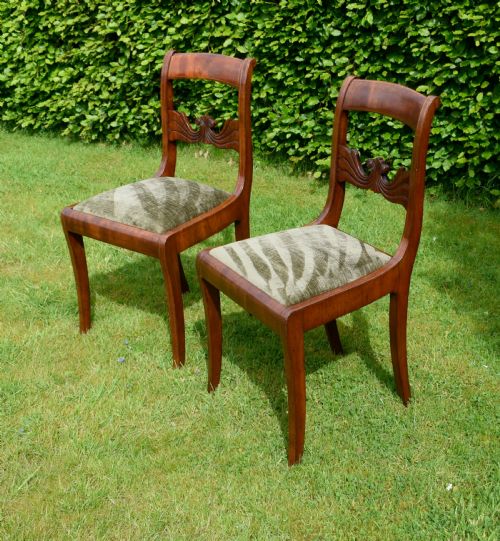


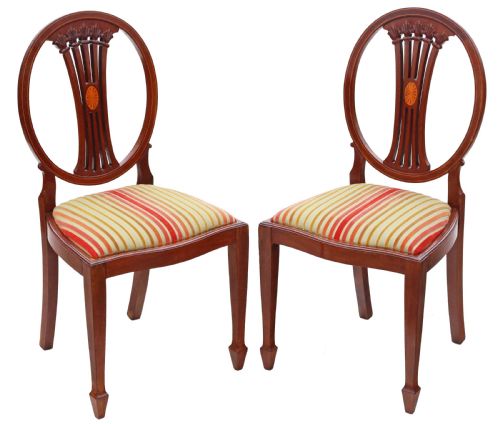
Pair Inlaid Hall Chairs
Pair inlaid hall chairs bring genuine period distinction to a hallway, offering striking decorative presence alongside practical seating.
Pair Inlaid Hall Chairs
When searching for pair inlaid hall chairs, buyers encounter seating spanning the eighteenth century through to the Edwardian period, with Victorian and Edwardian mahogany examples appearing most frequently. These pieces often overlap in form with side chairs, salon chairs, and occasional chairs.
The materials and styles range considerably across the inventory, taking in Regency brass inlay, Portuguese walnut with bone inlay, and Dutch baroque forms. Mahogany serves as the primary timber, complemented by satinwood, walnut, and rosewood.
Makers and workshops across Britain, Europe, and Switzerland produced these matched pairs for grand entrances and formal rooms. Their enduring appeal lies in the combination of structural woodwork and delicate surface decoration.
What varies in quality
The refinement of the inlay work marks the distinction between standard production and exceptional craftsmanship. Crisp lines in contrasting timbers or finely engraved bone and brass indicate a higher standard of manufacture.
Proportion and the retention of original timber surfaces govern the desirability of each pair. Retaining the authentic patination of the wood without excessive intervention preserves the integrity of the piece.
Pair Inlaid Hall Chairs Retail Price Guide 2026
Typical asking prices for pair inlaid hall chairs among the pieces listed under this phrase on Sellingantiques today, from the lower quarter to the upper quarter. They describe what is for sale here now, not the wider market.
Listings feature mahogany as the dominant wood, alongside walnut, satinwood, and rosewood, spanning periods from 1750 to the Edwardian era.
The Pair Inlaid Hall Chairs Glossary
- Inlay
- A decorative technique where pieces of a contrasting material are embedded into the surface of a base timber. This method creates flat ornamentation that defines the visual character of the furniture.
- Marquetry
- Elaborate veneer work arranged in pictorial or geometric patterns across a surface. Artisans assemble finely sliced woods to form intricate decorative scenes.
- Side chair
- A chair without arms designed primarily for dining or occasional placement against a wall. These forms make up a large portion of seating found in hallway settings.
- Satinwood
- A durable, light-coloured exotic timber prized for its lustrous sheen and golden hue. Cabinetmakers utilised this wood extensively for contrasting stringing and decorative panels.
Pair Inlaid Hall Chairs: Frequently Asked Questions
Where should I place pair inlaid hall chairs?
These chairs suit entrance halls, landings, or reception rooms where their decorative backs and inlaid details can be fully appreciated.
Because they were traditionally designed for transitional spaces rather than long periods of lounging, they work best against a wall or in pairs flanking a console table.
How do I care for antique inlaid wood?
Keep the timber away from direct sunlight and extreme temperature fluctuations to prevent the wood and inlay from drying out and lifting.
Apply a traditional beeswax polish sparingly and buff gently with a soft cloth to maintain the natural lustre of the surface.
Are these chairs comfortable for daily use?
Most historic examples feature upright wooden backs or minimal upholstery intended for brief seating rather than relaxing.
Edwardian and Victorian versions often incorporate padded seats or silk upholstery, offering a softer sit while maintaining a slender profile.
How can I tell the period of my chairs?
Examine the secondary timbers, construction methods, and the specific style of the inlay work to determine the likely era of manufacture.
Georgian and Regency pieces often display heavier proportions and brass work, whereas Edwardian examples frequently feature lighter mahogany frames with delicate satinwood stringing.