




Pair Crystal Wall Appliques
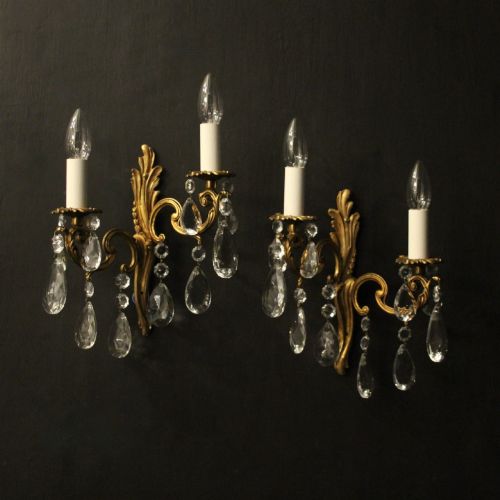
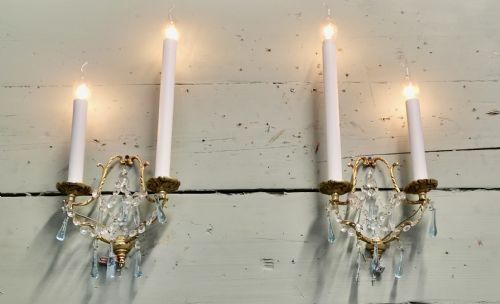
Pair crystal wall appliques bring ambient illumination and French Chateau style to a room, offering symmetric sparkle beside a mirror or fireplace.

Pair Crystal Wall Appliques
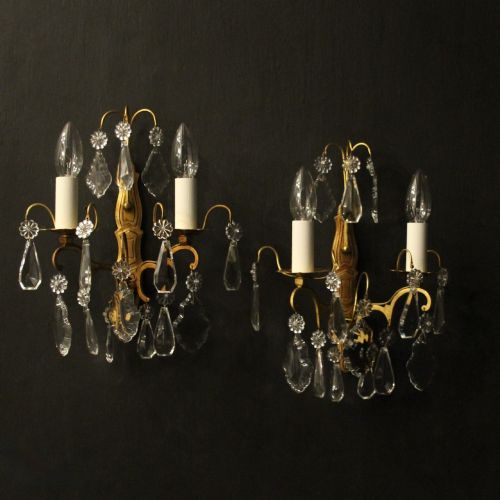
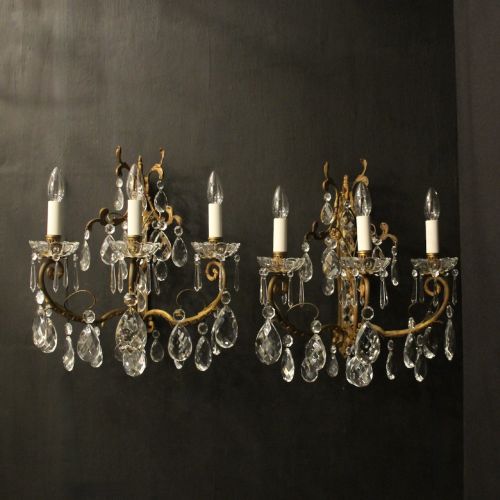
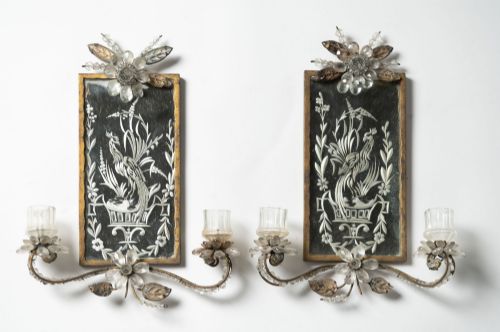
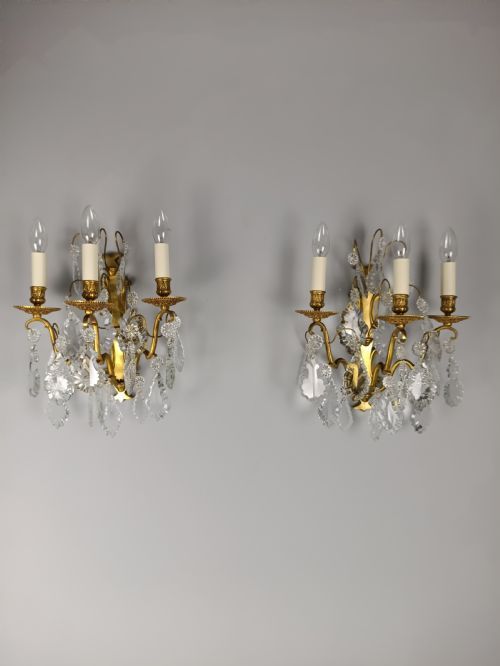
The forms span twin arm and triple arm wall lights, wall sconces, and tall wall chandeliers. French Chateau, French Neoclassical, and Florentine styles dominate the selection, bringing decorative metalwork and hanging drops to domestic interiors.
Most examples employ backplates affixed directly to the wall supporting multiple branching arms. These arms distribute cut crystal or glass elements to maximise reflection from candles or early electric bulbs.
Materials and construction
Maker workshops built these fixtures using structural frames of brass, bronze, gilt metal, or giltwood. Gilding and ormolu finishes were applied to metal backplates and arms to enhance the decorative presence against the wall.
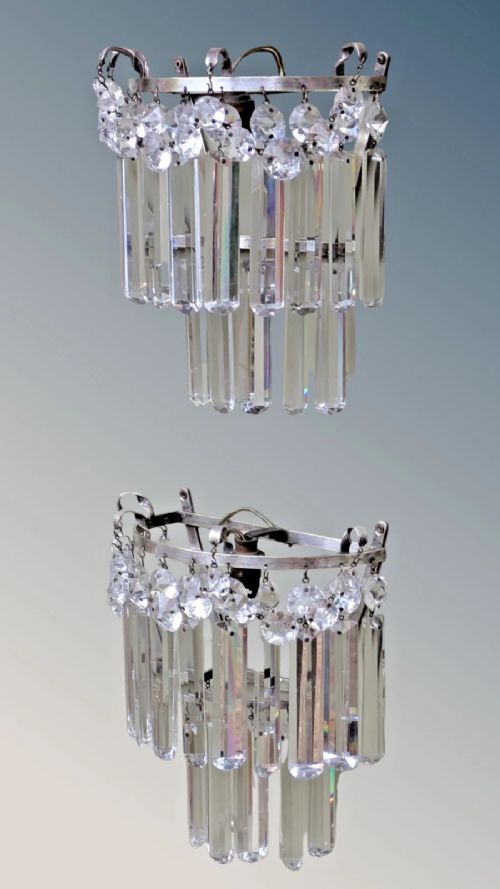
Hanging components consist of cut crystal and glass drops suspended from the metal arms. These transparent elements were shaped and polished by hand to catch and refract light across the room.
Several wall lights come populated with cheerful little cherubs keeping watch over the candle arms.
Qualities of craftsmanship
The distinction between standard and superior pieces rests in the handling of the metalwork and the clarity of the glass. Heavier bronze or brass castings with crisp chased detail elevate an antique above simpler pressed metal alternatives.
The density and precision of the cut crystal drops determine the visual brilliance of the fixture. Substantial hand-cut pendants refract light cleanly, whereas inferior glass components appear flat and lack prismatic depth.
Maison Baguès·F. & C. Osler
The Pair Crystal Wall Appliques Glossary
- Ormolu
- Gilt bronze mounted on decorative objects and lighting fixtures. This technique involved applying a finely ground high-carat gold mercury amalgam to a bronze casting before heating.
- Lustre
- A glass pendant or drop hung from lighting to increase light reflection. These cut elements dangle from the arms and bobeches to scatter illumination.
- Toleware
- Painted sheet metal used in decorative accessories and wall lights. The painted surface often mimics natural finishes or provides colourful floral ornamentation.
- Giltwood
- Timber carved and coated with a thin layer of gold leaf. This material appears frequently in Florentine frames and wall fixtures.
- Sconce
- A wall-mounted lighting fixture designed to hold candles or electric lamps. These pieces project outward from vertical surfaces to light hallways and reception rooms.
Pair Crystal Wall Appliques: Frequently Asked Questions
How were pair crystal wall appliques originally mounted?
These fixtures attached directly to wall studs or panelling using heavy backplates designed to support the weight of the metal arms and crystal drops. They typically flanked mirrors, fireplaces, or doorways to create balanced illumination.
Wiring was added later to many nineteenth and early twentieth century pieces as homes transitioned from candles to electricity. Original mounting brackets often concealed the passage where wall wires entered the backplate.
What periods do these wall lights represent?
The selection spans from the mid-nineteenth century through the Edwardian era and into the nineteen twenties and nineteen thirties. Pieces from the eighteen fifties and eighteen sixties often feature heavy cast bronze and detailed glass lustres.
Later examples from the nineteen twenties embrace French Rococo and neoclassical revivals alongside Gustavian and Florentine styles. This period produced numerous twin and triple arm sconces incorporating cut crystal and gilt metal.
How do you clean crystal wall appliques?
Maintenance involves gently wiping the metal frame with a dry or slightly damp cloth while avoiding harsh chemical polishes that damage gilt surfaces. The hanging crystal drops require individual cleaning by hand using warm water and mild soap.
Each crystal pendant should be dried thoroughly before reattachment to the metal arms. Removing the drops prevents breakage and ensures the glass refracts light properly.
Where should wall appliques be hung in a room?
Placement typically depends on room architecture, with pairs positioned symmetrically to frame focal points such as mantelpieces or large artworks. Height is adjusted so the light source sits at roughly eye level or slightly above.
In hallways and dining rooms, spacing the pair evenly along a wall establishes balanced proportions. The projection of the arms dictates how far the fixture extends into the walking space.