
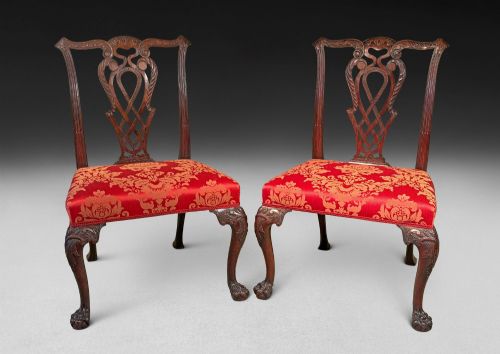
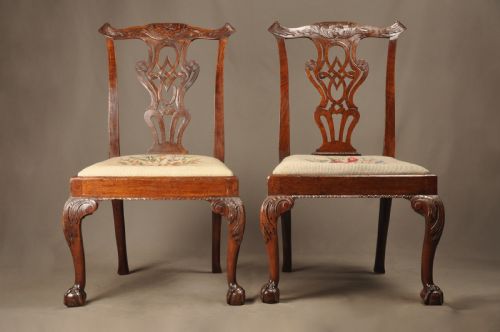
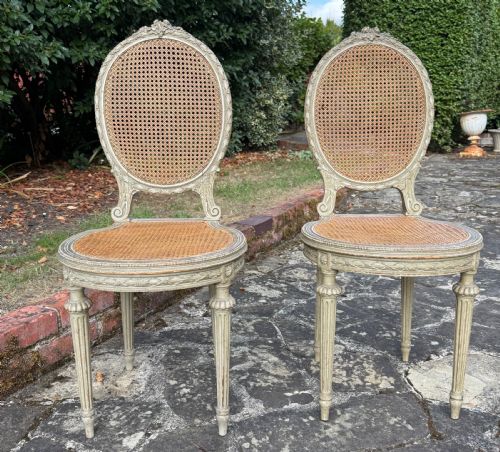
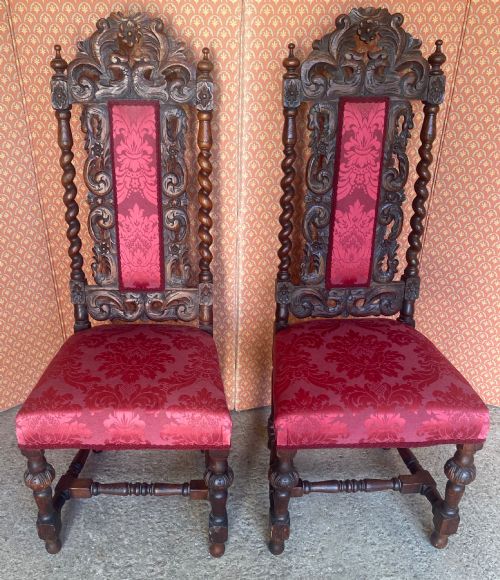
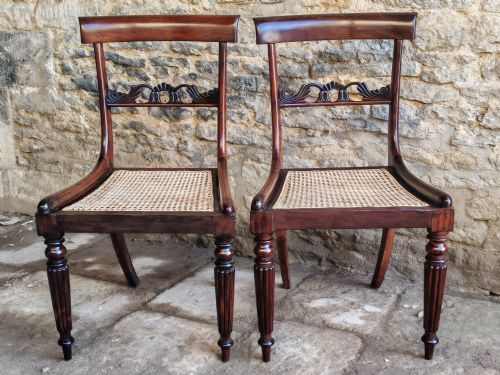
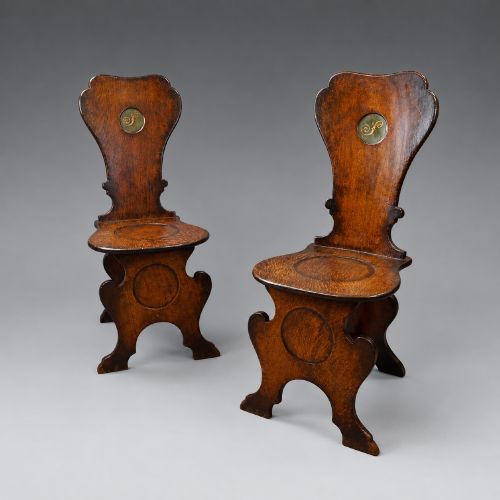
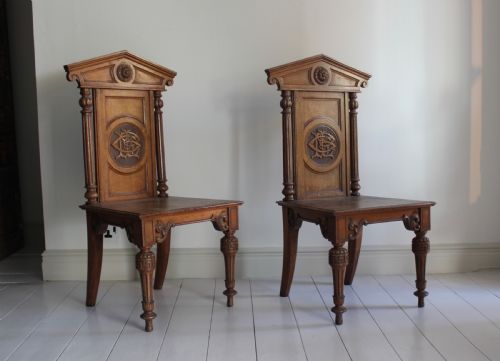

Pair Carved Side Chairs
Pair carved side chairs unite functional seating with decorative woodwork across periods from the eighteenth century onwards.
Pair Carved Side Chairs
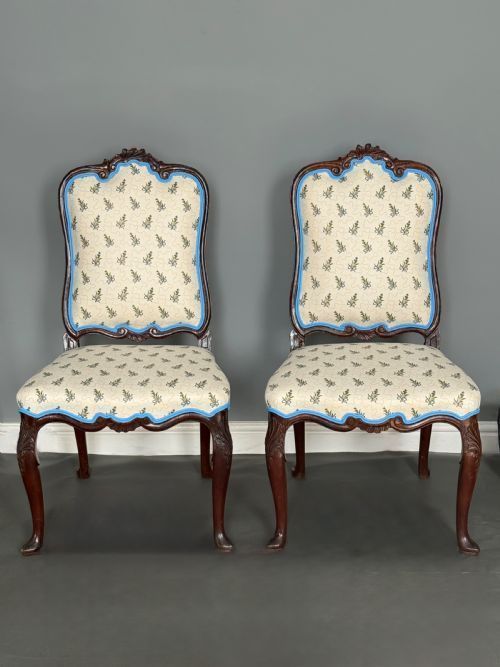
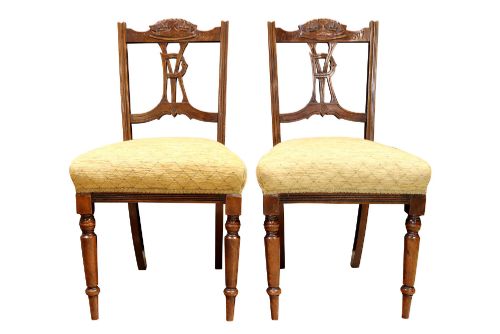
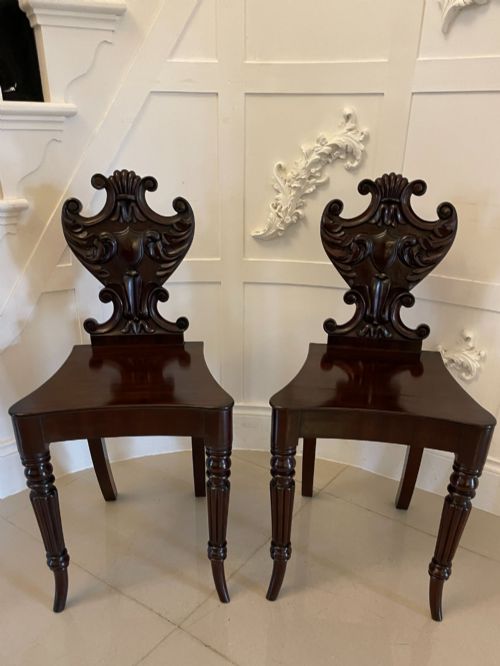
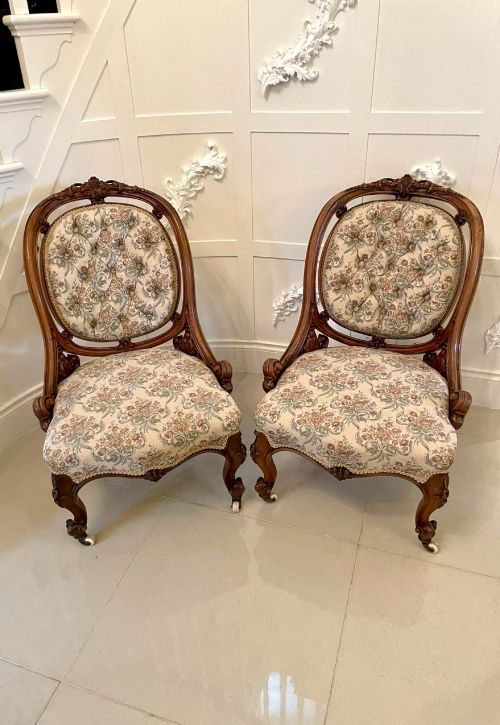
A pair carved side chairs search brings together matching pairs of chairs designed primarily for ornamental use or occasional seating rather than heavy dining. The selections here span dining seats, hall chairs, and reception chairs from various workshops.
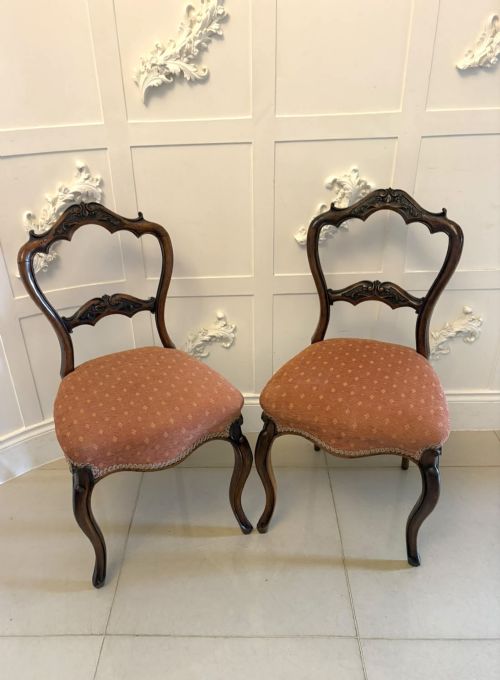
Makers shaped these seating forms across the eighteenth and nineteenth centuries, utilising local timbers and exotic imports. Victorian walnut and mahogany examples alongside earlier oak and rosewood pieces dominate the selection.
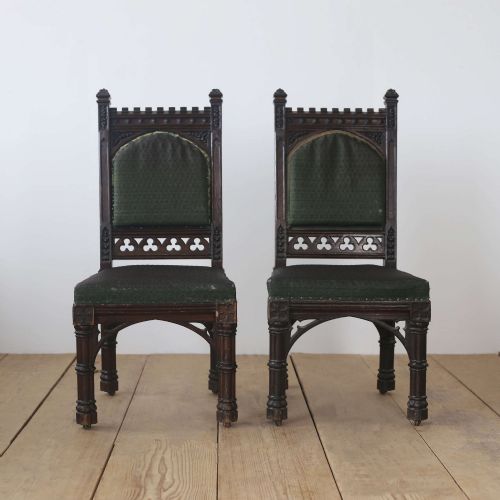
The design idiom shifts from simple George II and Regency proportioning to elaborate Gothic Revival and Dutch Baroque ornamentation. Each pair reflects the domestic interior fashions of its specific decade.
How they were made
Cabinetmakers worked dense hardwoods such as mahogany, walnut, and oak to construct the frame and legs. Turnery techniques like bobbin turning alongside hand chiselling produced the intricate scrollwork and relief carving seen on the backs.
Upholstery methods varied from rigid wooden panels in hall chairs to sprung seats covered in velvet, fabric, or leather. Joinery relied on traditional mortise and tenon joints secured without metal fasteners.
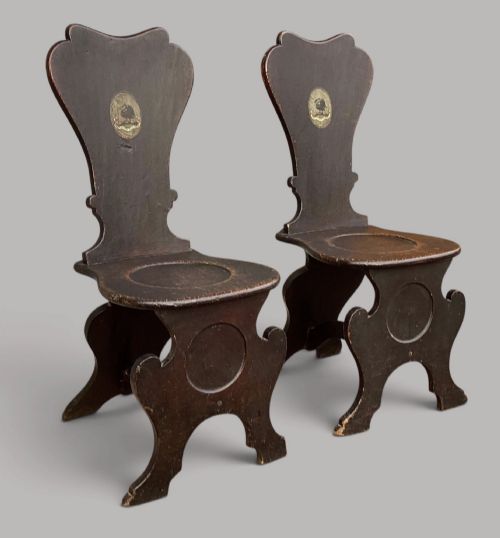
Heraldic clan chairs proudly display family crests so guests knew whose roof they sat under.
What varies in quality
Depth of carving and sharpness of detail separate standard production pieces from master workshop examples. Crisp relief work on walnut or rosewood indicates skilled hand tool execution.
Timber selection and figure consistency dictate the baseline standard of the frame. Sound structural integrity without excessive replacement timber distinguishes better-preserved examples.
Charles Tozer·W.A. Willcocks
The Pair Carved Side Chairs Glossary
- Side chair
- A chair without arms designed for placement against a wall or around a dining table. These pieces formed standard sets in period drawing rooms.
- Hall chair
- A wooden seat often featuring a painted or carved heraldic crest and a solid timber back. These were positioned in entrance halls rather than living spaces.
- Bobbin turning
- A method of lathe-working wood to create a sequence of spherical or cylindrical shapes resembling bobbins. This technique appears frequently on seventeenth and eighteenth century frames.
- Padauk
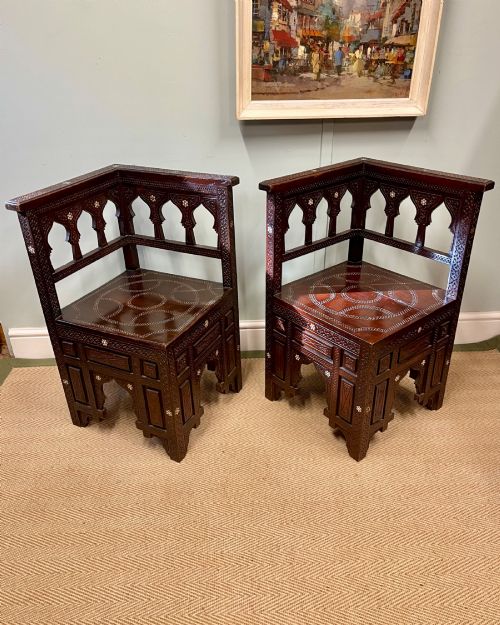
- A heavy tropical hardwood prized for its reddish-brown colour and durability. Cabinetmakers utilised this timber for export items in the nineteenth century.
Pair Carved Side Chairs: Frequently Asked Questions
Where were pair carved side chairs used?
These chairs sat primarily in formal reception rooms, hallways, and bedchambers of period houses. Hall variants stood against entrance walls, while lighter models populated drawing rooms.
Pairs provided balanced symmetry for interior decoration flanking doorways, fireplaces, or consoles. They served for brief seating rather than extended lounging.
How do I date a carved chair?
Dating relies on timber choice, carving style, and construction methods associated with specific decades. Eighteenth-century pieces often feature rich mahogany or walnut with restrained proportions.
Later nineteenth-century examples display heavier revival styles, including Gothic or Renaissance motifs. Tool marks and joinery details help confirm the manufacturing era.
What is a hall chair?
Hall chairs are wooden seats featuring solid timber backs rather than upholstered padding. They often display painted armorials, crests, or deeply carved family emblems.
Cabinetmakers built these items to withstand minimal use in entrance spaces. Their rigid construction emphasised heraldic display over physical comfort.
How should I care for antique wood?
Preserving antique wood requires maintaining stable room humidity away from direct heat sources. Sudden temperature shifts cause timber to split and joints to loosen.
Applying microcrystalline wax occasionally protects the polish without building up residue. Gentle dusting with a soft cloth prevents surface scratching.