

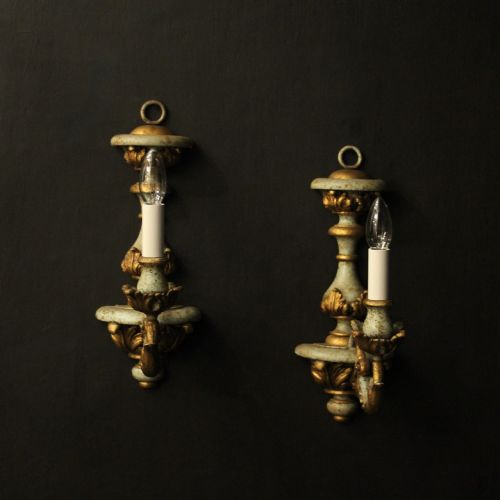
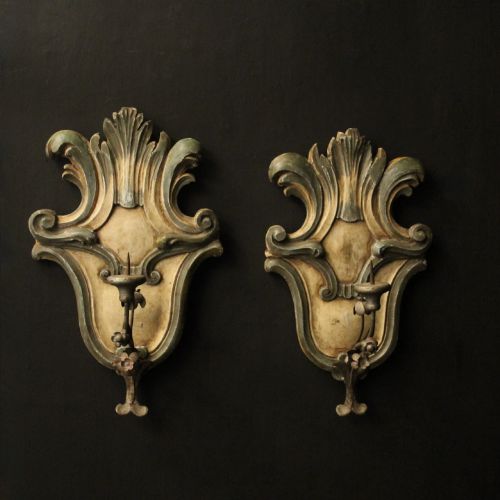
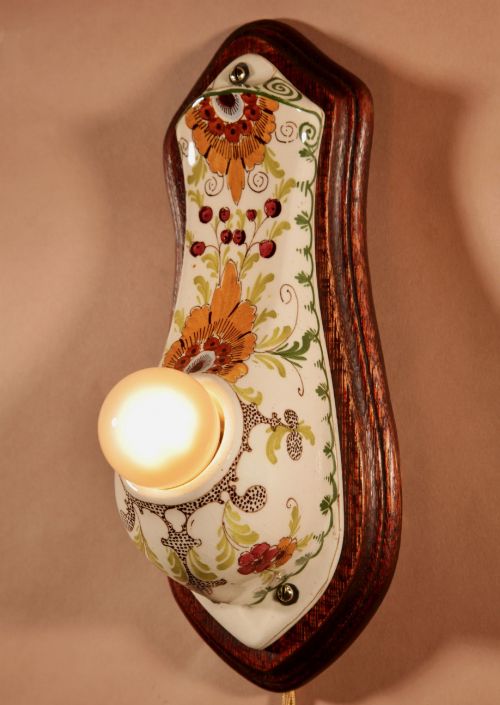


Painted Wooden Sconces
Painted wooden sconces bring warmth and colour to a wall through carved forms, gesso finishes, and hand-applied pigments.
Painted Wooden Sconces
Painted wooden sconces are wall-mounted light fixtures or decorative brackets designed to hold candles or illuminate a room with rich texture. When searching for painted wooden sconces, buyers encounter items ranging from single-arm lights to large multi-branch fixtures.
The selection on this page relies heavily on Italian and French origins, spanning the eighteenth century through to nineteen thirty. Common variations include polychrome finishes, silver and gold gilding, and architectural wall brackets.
Makers utilised carved wood and gesso as foundations for decorative schemes that often reference Italian Baroque, Neoclassical, and French Provincial styles. These pieces function equally well as standalone architectural accents or paired fixtures flanking a mirror.
Materials and construction
Makers constructed these wall lights from carved wood and gesso, applying layers of paint, gold leaf, and silver gilt directly to the wooden substrate. Iron components occasionally appear in arm structures or mounting brackets to support heavier branches.
The polychrome surfaces rely on hand-mixed pigments applied over prepared gesso grounds, which accentuates the underlying wood carving. Gilding techniques involve the careful application of metal leaf to raised details, creating contrast with the painted areas.
Painted Wooden Sconces Retail Price Guide 2026
Typical asking prices for painted wooden sconces among the pieces listed under this phrase on Sellingantiques today, from the lower quarter to the upper quarter. They describe what is for sale here now, not the wider market.
Listings span from the eighteenth century to nineteen thirty, with Italian workshops representing the majority of the carved wood and polychrome inventory.
Assessing quality and craftsmanship
Quality rests in the crispness of the wood carving and the depth of the polychrome surface rather than the mere presence of age. Finer pieces display confident hand-tooling and harmonious pigment layers that age gracefully.
The complexity of the form also distinguishes the range, moving from simple single-arm brackets to elaborate triple-arm fixtures with integrated gilding. Surviving original surface treatments hold greater visual integrity than later overpainting.
The Painted Wooden Sconces Glossary
- Polychrome
- Decorated in multiple colours. This technique defines the painted surfaces found on many continental wall fixtures.
- Gesso
- A plaster-like mixture applied to wood as a base for paint or gilding. It provides a smooth ground for detailed decorative work.
- Giltwood
- Wood that has been covered with thin gold leaf or gold paint. It adds reflective brilliance to carved architectural details.
- Pricket
- A sharp spike on a candleholder designed to secure a candle in place. These appear on older ecclesiastical and domestic wall sconces.
Painted Wooden Sconces: Frequently Asked Questions
Are these sconces wired for electricity?
The inventory includes both original candle-holding brackets and fixtures that have been adapted for electrical wiring over time. Inspect each listing description to determine the current lighting configuration.
Unwired pieces can often be professionally converted by an electrician if electric illumination is preferred over candles.
How should I clean painted wooden sconces?
Dust gently with a soft, dry cloth to prevent accumulation without disturbing delicate gesso or painted surfaces. Avoid water, harsh chemical cleaners, or abrasive cloths that can strip historic finishes.
Preserving the original patina requires minimal intervention and careful handling during routine maintenance.
How do I date an antique sconce?
Dating relies on stylistic clues, tool marks from carving, and the composition of the underlying gesso and paint layers. Eighteenth-century examples often display heavier architectural proportions compared to later nineteenth-century or nineteen thirties revivals.
Comparing construction methods with documented pieces from similar regions helps narrow down the period of manufacture.