



Painted Wooden Bergere
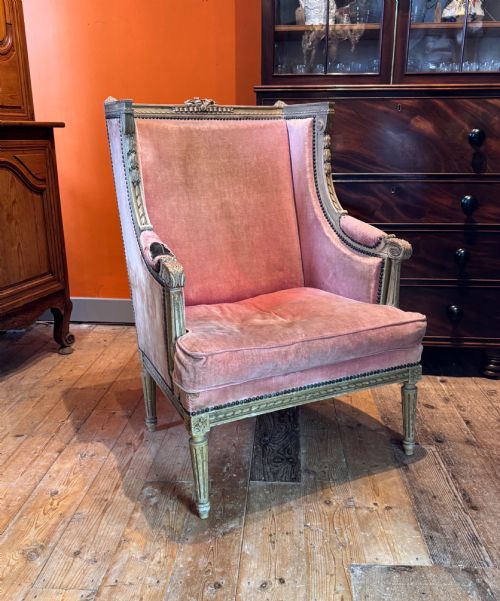
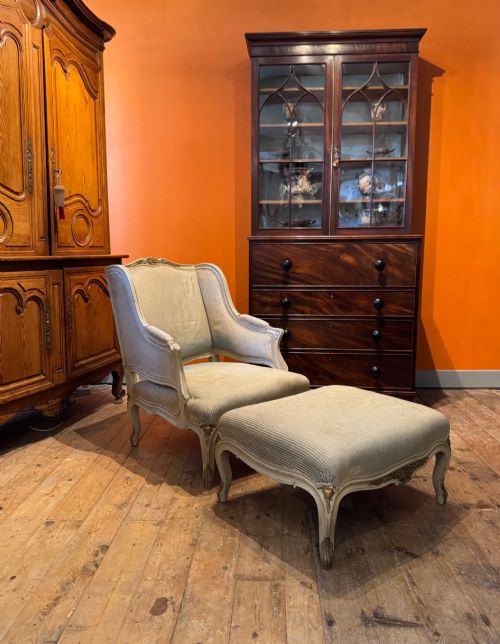
These painted wooden bergere armchairs and settees bring relaxed French elegance and upholstered comfort to a room.
Painted Wooden Bergere
A painted wooden bergere is an enclosed upholstered armchair or settee featuring exposed wooden frames and woven cane sides. When you browse painted wooden bergere listings, you encounter nineteenth century pieces alongside early twentieth century interpretations of Louis XV and Louis XVI styles.
The selections range from single library chairs to matched pairs and larger settees or daybeds. Most examples originate from France, though Scandinavian variants also appear in the current selection.
How they were made
Frames are constructed primarily from beech or beechwood, selected for its suitability to intricate carving and painted finishes. Artisans applied layers of paint directly to the wood, sometimes incorporating simulated satinwood graining and gilt decoration.
Cane work is woven tightly into the wooden channels of the frame to form the distinctive sides and backs. Upholstery materials such as fabric and velvet are then combined with sprung or padded seating to complete the piece.
Painted Wooden Bergere Retail Price Guide 2026
Typical asking prices for painted wooden bergere among the pieces listed under this phrase on Sellingantiques today, from the lower quarter to the upper quarter. They describe what is for sale here now, not the wider market.
Even library chairs require a comfortable spot for a brief afternoon nap.
What varies in quality
Quality rests in the crispness of the frame carving and the retention of original surface paint rather than later overpainting. Pieces that retain their early or original decorative schemes show a softer integration of colour and age.
The integrity of the woven cane panels and the proportion of the wooden structure further distinguish finer examples. French chateau origins and documented period manufacture separate standard commercial workshop output from more distinguished seating.
The Painted Wooden Bergere Glossary
- Bergere
- An enclosed upholstered armchair with a wooden frame and cane or upholstered sides. This French seating form dates back to the early eighteenth century.
- Caning
- A method of weaving peeled rattan or cane strips into an open mesh pattern. It provides a lightweight and flexible support for chair backs and panels.
- Duchesse brisée
- A multi-part chaise longue comprising an armchair and a stool, or two chairs with a stool between them. It allows the sitter to recline fully.
- Gilt
- A thin layer of gold leaf or gold paint applied to a wooden surface. It highlights carved details and adds reflective warmth to the frame.
- Simulated satinwood
- A painted wood finish designed to imitate the golden yellow tone and fine grain of genuine satinwood. Painters use subtle brushwork to replicate exotic timber.
Painted Wooden Bergere: Frequently Asked Questions
What is a painted wooden bergere?
A painted wooden bergere is a traditional French upholstered seat featuring a solid wood frame with enclosed sides. The sides are typically filled with woven cane beneath the upholstery.
These pieces combine formal styling with deep, comfortable seating designed for sitting rather than upright dining.
How do I identify a Louis XV style chair?
Louis XV style chairs display curved cabriole legs, asymmetric floral carvings, and flowing serpentine lines. The frames curve organically without straight structural angles.
This aesthetic prioritises comfort and domestic ease, appearing frequently in nineteenth century revivals.
Where were these chairs used?
These seating pieces originated in French chateaux and salons, furnishing withdrawing rooms and private chambers. They were built for comfortable reading and conversation.
Today, they function as statement armchairs in living rooms, libraries, and bedrooms.
Are painted finishes original?
Many pieces retain their original painted surfaces, which show soft wear and patination over decades of use. Some items feature later decorative paint layers applied during revival periods.
Original paint exhibits a dry, chalky texture integrated closely with the underlying beech wood.