




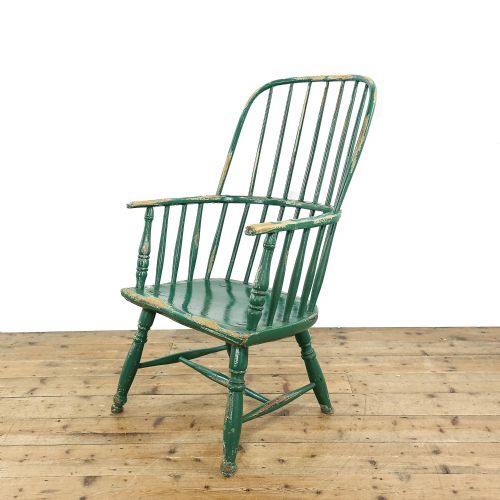


Painted Spindle Chairs
Painted spindle chairs bring vernacular folk traditions straight into the room, offering turned woodwork and surviving surface finishes that collectors prize.
Painted Spindle Chairs
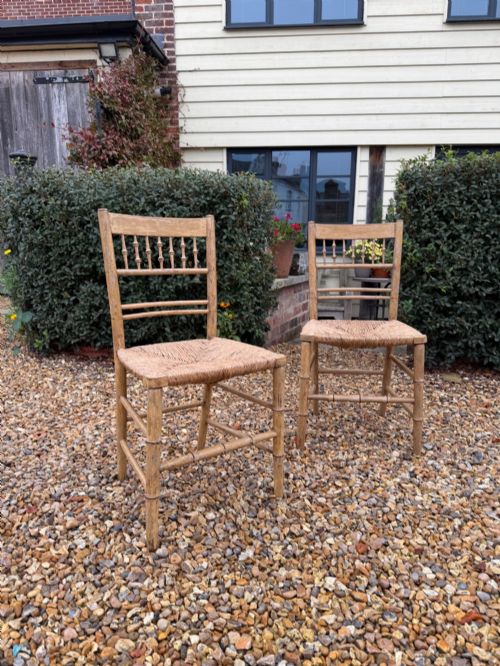
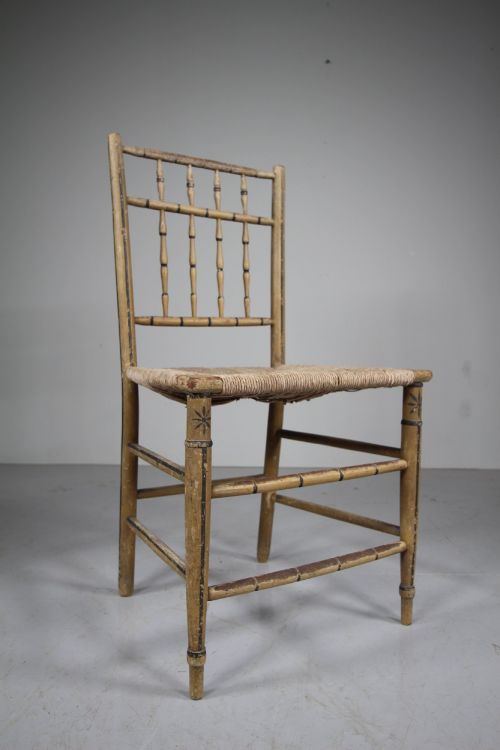
Painted spindle chairs encompass vernacular seating forms built from turned wooden components and finished with decorative colour. The examples on this page span the Georgian, Regency, and Victorian eras, alongside robust country folk art traditions.
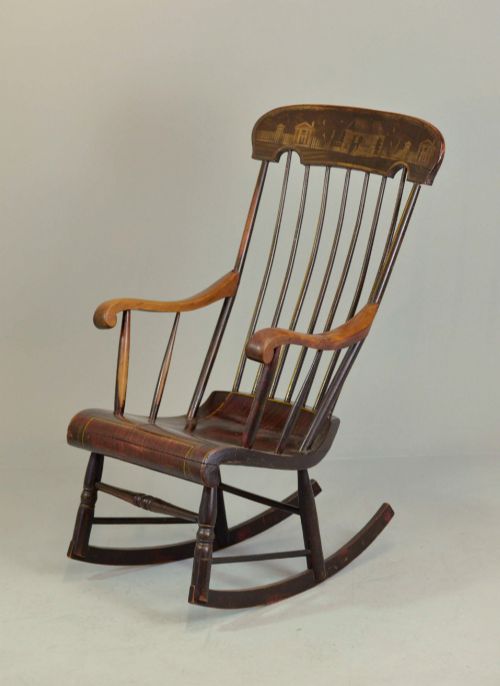
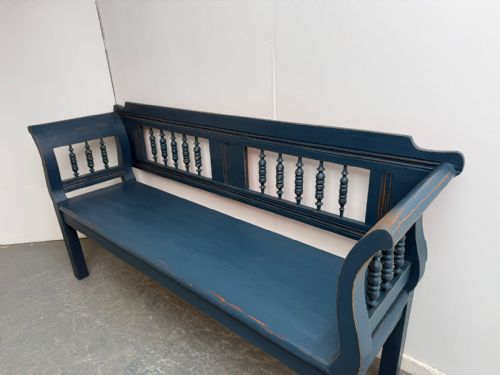
The selection ranges widely across regional forms, including Swedish rocking chairs, Hungarian three-seater benches, and classic Windsor elbow armchairs. Side chairs, desk chairs, and accent armchairs appear frequently in beech, ash, birch, and pine.
Makers ranged from village joiners working within local styles to major firms such as Morris and Co and Liberty of London. Many pieces retain original rush seats, fabric elements, and early painted surfaces developed across British, Scandinavian, and Central European workshops.
How they were made
Construction relies heavily on traditional turning techniques, shaping ash, beech, and birch into slender spindles and structural stretchers. Frame members are frequently joined using pegged mortise and tenon joints designed for everyday domestic durability.
Surfaces are finished with paint, ebonisation, or natural oils applied over pine and hardwood bodies. Seating areas often integrate woven rush inserts or upholstered pads covered in fabric.
Regional vernacular methods dictate the specific turnings, such as bobbin details on Swedish throne armchairs or robust hoops on Windsor frames.
Painted Spindle Chairs Retail Price Guide 2026
Typical asking prices for painted spindle chairs among the pieces listed under this phrase on Sellingantiques today, from the lower quarter to the upper quarter. They describe what is for sale here now, not the wider market.
One cheerful Swedish rocking chair still maintains its original paint through generations of gentle northern motion.
What varies in quality
Quality rests significantly on the survival and integrity of the original paint surface rather than later overpainting. Untouched pigment retains the character and patina built up through generations of domestic use.
Structural harmony separates standard vernacular pieces from masterworks of regional turning. The crispness of the spindle turnings and the tightness of the joinery define the maker's original skill.
Morris and Co·Liberty of London
The Painted Spindle Chairs Glossary
- Spindle
- A slender, turned wooden rod used as a vertical structural and decorative element in backs and legs. These components are shaped on a lathe to create symmetrical profiles.
- Rush
- Dried marsh grass woven into durable seating mats for country chairs. This traditional material provides a textured, flexible base.
- Windsor
- A chair style characterised by a solid wooden seat into which the legs and back spindles are directly socketed. This form developed deep roots in Georgian country furniture.
- Bobbin
- A type of turning that resembles a series of rounded spools strung together along a wooden shaft. This decorative detail appears frequently on 19th-century Scandinavian seating.
- Vernacular
- Everyday objects built by regional craftspeople following local traditions rather than high-style academic designs. These pieces reflect the practical needs and materials of their specific geographic origins.
Painted Spindle Chairs: Frequently Asked Questions
What periods do these chairs come from?
The pieces span the eighteenth, nineteenth, and early twentieth centuries, drawing heavily on Georgian, Regency, and Victorian vernacular traditions.
Craftsmen across Britain, Scandinavia, and Central Europe produced these varied forms using local hardwoods and regional turning styles.
How were painted spindle chairs used?
They served as everyday seating in domestic interiors, ranging from kitchen side chairs to library desk chairs and nursery rocking seats.
Larger items like benches and throne armchairs functioned as principal seating pieces within country homes and vernacular settings.
How do I live with original paint?
Keep these chairs away from direct sunlight and excessive moisture to protect the historic pigment and underlying wood.
Gentle dusting with a dry cloth preserves the fragile surface without disturbing the accumulated patina of decades.
How do I tell regional styles apart?
Swedish and Scandinavian examples often feature pale painted finishes and bobbin turnings, while British country pieces lean towards ash and beech Windsor or ladder-back frames.
Hungarian and other folk traditions display distinct local colour palettes and heavier structural proportions.