

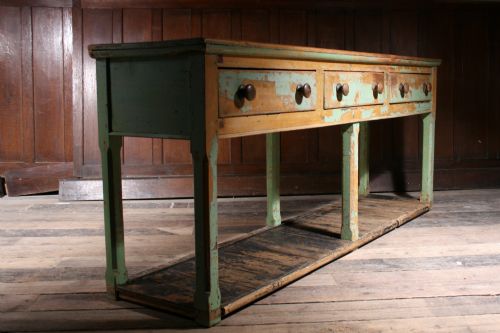
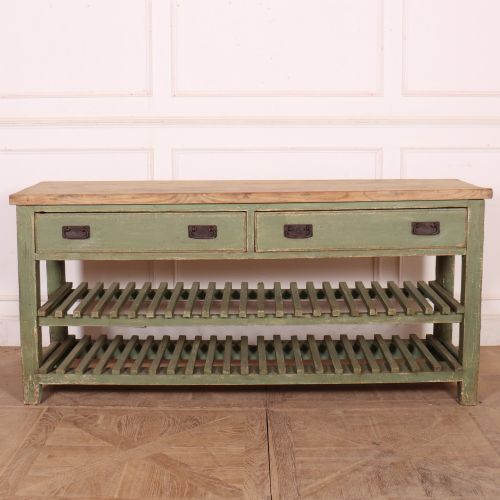
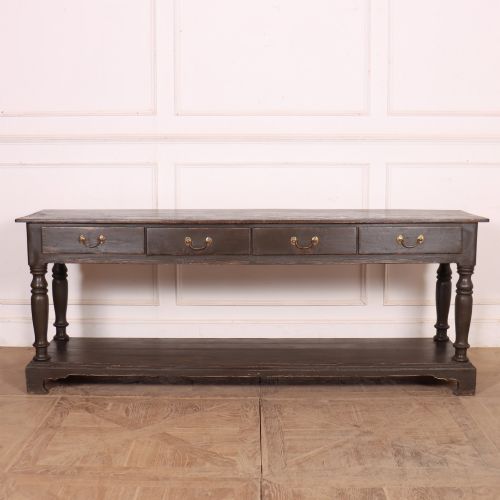
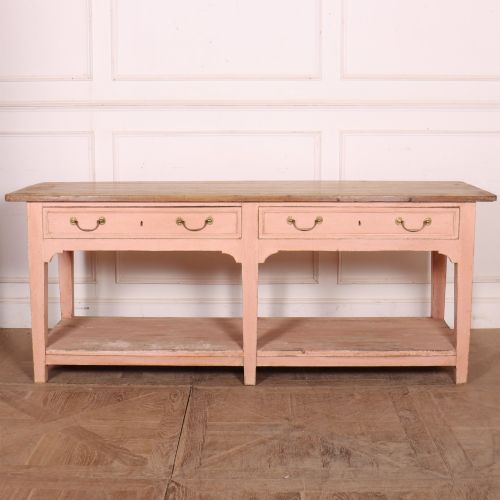
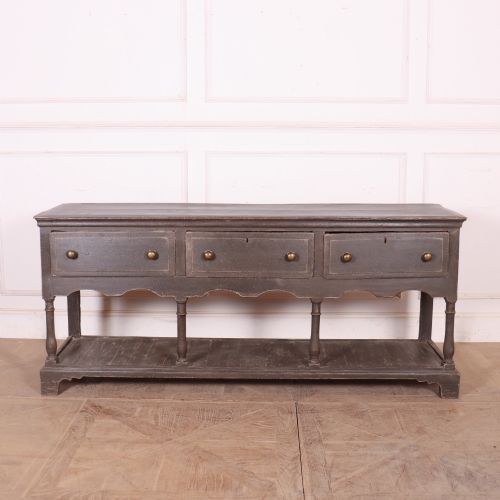


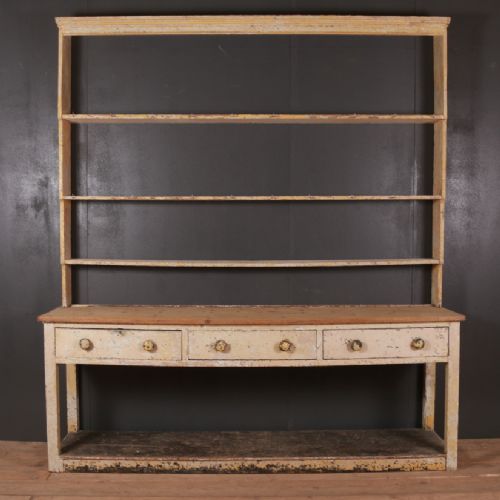
Painted Potboard Base
A painted potboard base offers a utilitarian foundation for storage, bringing rustic charm and grounded presence into a home.
Painted Potboard Base
A painted potboard base provides a substantial lower surface for storage within traditional interiors. These pieces appear as dresser bases, serving tables, and sideboards across the listed inventory.
The most common examples on this page date from the nineteenth century, though eighteenth-century English pieces also emerge. They combine open lower shelves with drawer storage above.
Origins span English and Scottish workshops, reflecting rural utility in country house and farmhouse settings. The forms range from narrow servers to large serving tables.
How they were made
Construction relies primarily on pine and timber, shaped into sturdy frames suitable for domestic service. Metal handles and brass or iron fixings appear on drawers and doors.
Surfaces receive layers of paint, creating the characteristic painted wood finishes recorded in the evidence. The application of paint protects the underlying timber while defining the decorative appearance.
Painted Potboard Base Retail Price Guide 2026
Typical asking prices for painted potboard base among the pieces listed under this phrase on Sellingantiques today, from the lower quarter to the upper quarter. They describe what is for sale here now, not the wider market.
Listings span the eighteenth century through to eighteen-ninety, featuring pine and painted timber.
What varies in quality
Quality differentiates through the proportions of the frame and the integrity of the original timber construction. Larger serving tables and eighteenth-century examples demonstrate greater structural ambition than later nineteenth-century pieces.
The character of the painted surface influences the overall distinction of the base, distinguishing straightforward utilitarian items from those intended for prominent country house rooms.
The Painted Potboard Base Glossary
- Potboard base
- The lower open shelf of a dresser, historically used for storing pots and pans. This foundational tier defines the architectural layout of the furniture.
- Dresser base
- A low cabinet featuring drawers and sometimes cupboards beneath a flat top. It functions independently without the upper plate rack of a full dresser.
- Serving table
- A large rectangular table used for dishing up meals or holding utility items. These pieces often lack the bank of drawers found on standard dresser bases.
- Pine
- A softwood commonly utilised for constructing regional furniture due to its availability and workability. It forms the primary body of many painted rural pieces.
Painted Potboard Base: Frequently Asked Questions
What is a potboard base used for?
A potboard base serves as a sturdy working surface with open shelving underneath for heavy kitchen utensils and crockery.
Historically placed in kitchens or dining spaces, it provides practical storage without upper cabinetry.
How do I date a painted potboard base?
Dating relies on timber selection, construction methods, and stylistic cues characteristic of eighteenth and nineteenth-century joinery.
Earlier examples from the eighteenth century show distinct hand-tool marks and structural proportions compared to later nineteenth-century pieces.
Are these pieces English or Scottish?
The inventory includes items attributed to both English and Scottish regional traditions from the nineteenth century.
Local variations in timber use and proportion help identify the specific geographic origin of each base.
How should I live with a painted potboard base?
These bases integrate into modern kitchens, hallways, or dining rooms as functional sideboards and display surfaces.
The lower potboard accommodates baskets or ceramics, while the top surface holds everyday items.