



Painted Marble Top Chest
A painted marble top chest brings heavy stone and decorative paint together into a striking storage piece that anchors a grand room.
Painted Marble Top Chest
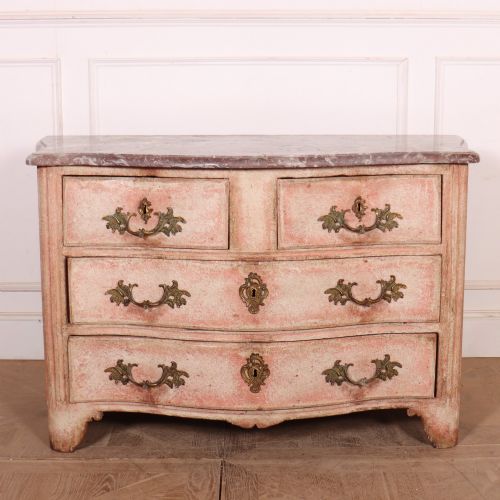
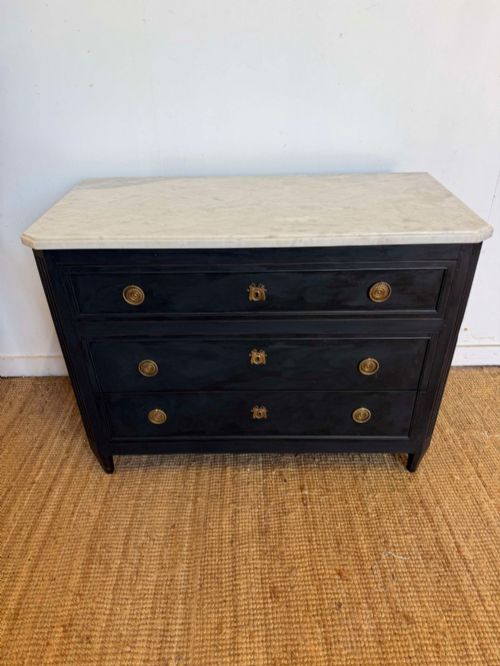
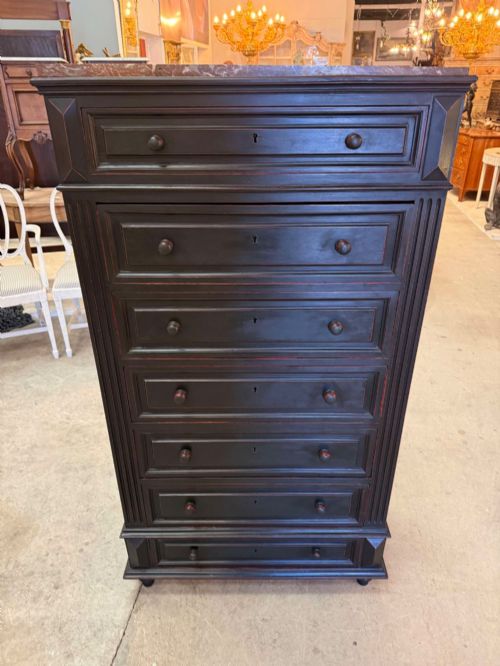
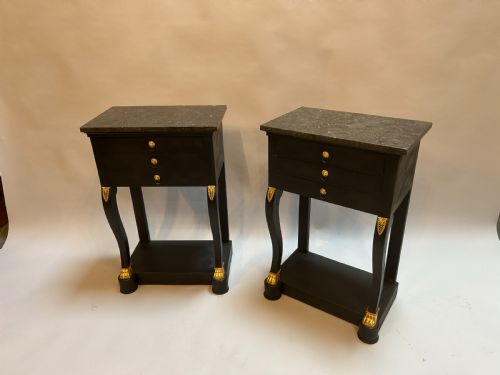
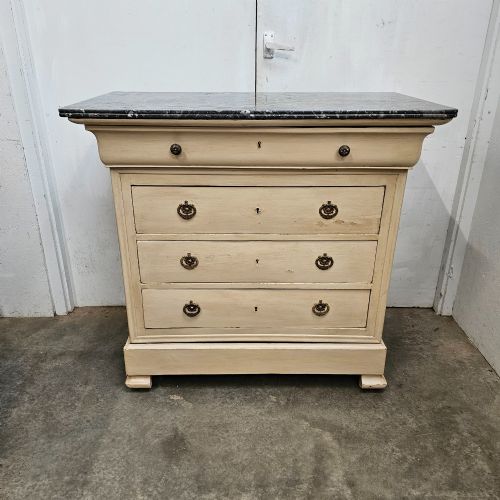
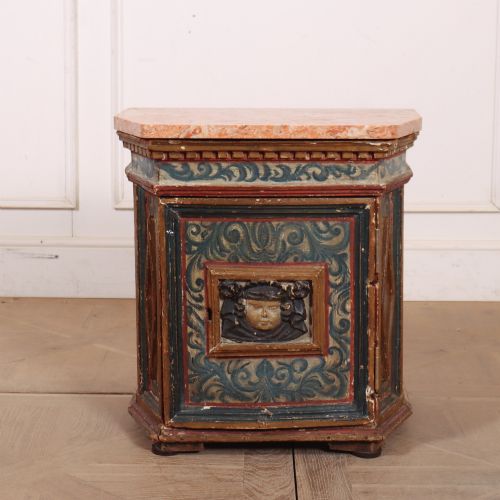
When searching for a painted marble top chest, a buyer encounters substantial storage furniture designed with stone surfaces and decorative painted finishes. These pieces appear frequently as commodes, bedside cabinets, and chests of drawers originating from French and Italian workshops.
The selection ranges from eighteenth-century provincial commodes to nineteenth-century revival styles and early twentieth-century bedside chests. French and Italian designs dominate the offerings, spanning Rococo, Baroque, and Empire aesthetics alongside simpler provincial forms.
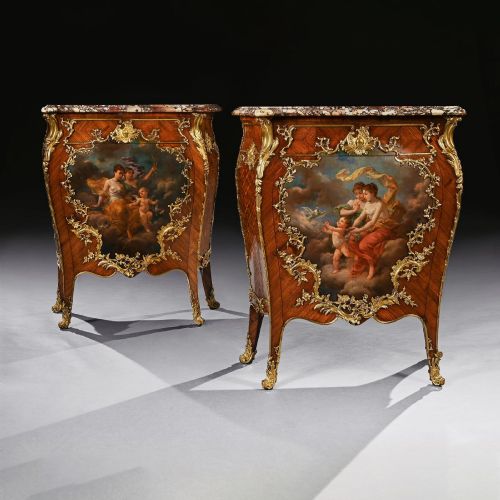
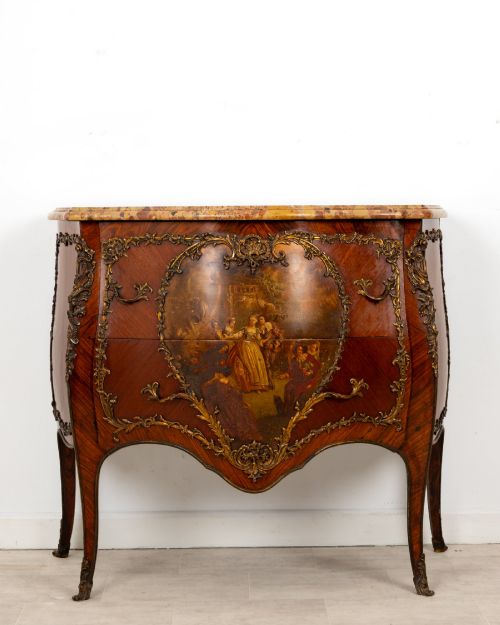
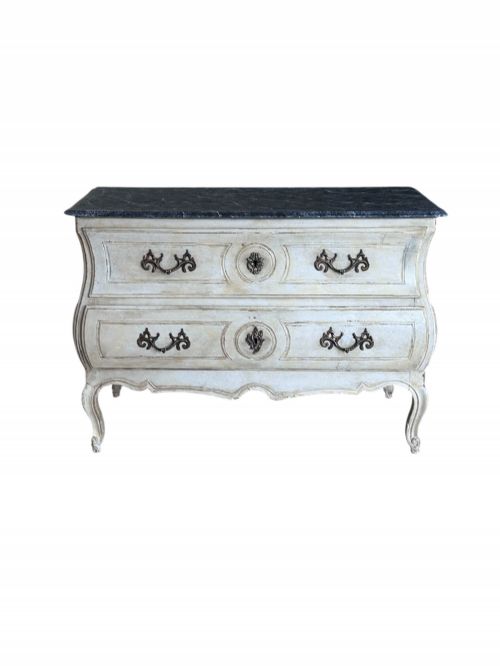
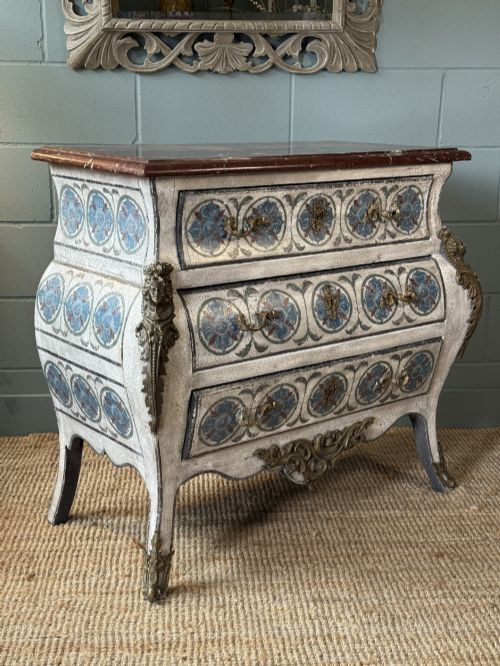
Commodes and bedside tables form the primary types available, offering deep drawer storage beneath smooth marble surfaces. Many feature shaped fronts, including serpentine and bombé contours, which lift standard case furniture into high decorative art.
How they were made
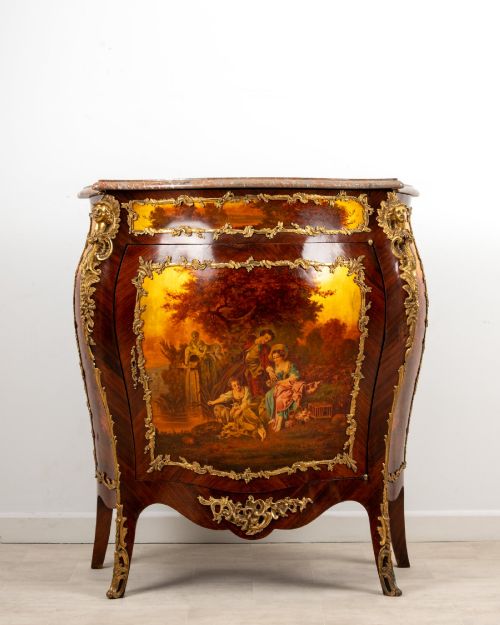
Cabinetmakers built the carcass frames using dense timbers like kingwood and various woods, applying painted finishes and parfois Vernis Martin lacquering directly to the wooden surfaces. Artisans shaped these structures into curved serpentine and bombé profiles requiring precise carpentry.
Heavy marble slabs were cut and fitted to the tops, resting directly upon the wooden cases to provide a cool, durable working and display surface. Gilt bronze, ormolu, and brass mounts were cast and applied to corners, handles, and aprons to accent the painted woodwork.
Painted Marble Top Chest Retail Price Guide 2026
Typical asking prices for painted marble top chest among the pieces listed under this phrase on Sellingantiques today, from the lower quarter to the upper quarter. They describe what is for sale here now, not the wider market.
Listings feature pieces spanning the eighteenth century through to the early twentieth century, utilising marble, painted wood, and ormolu.
What varies in quality
The excellence of a piece rests in the integration of the heavy stone slab with the carved and painted wooden base. Superior examples display harmonious proportions where the weight of the marble complements the sweep of the commode walls.
Craftsmanship shows in the depth and hand of the painted decoration, particularly on Vernis Martin surfaces and floral motifs, alongside the precision of the cast bronze or ormolu mounts. Original stone tops matching the period of the carcass elevate the stature of the furniture.
The Painted Marble Top Chest Glossary
- Commode
- A low chest of drawers or cabinet, typically dating from the eighteenth or nineteenth century. These pieces often feature decorative painted surfaces and heavy stone tops.
- Bombe
- A bulging, outward-curving chest profile popular in Rococo and provincial furniture. This swelling shape requires advanced woodworking skill to construct.
- Ormolu
- Gilded bronze mounts applied to furniture for decoration. These metal details accent the corners and handles of fine cabinets.
- Vernis Martin
- A type of simulated Japanese lacquer developed in France during the eighteenth century. It involves layers of varnish applied to painted wooden furniture.
- Serpentine
- A front contour that curves inward at the centre and outward at the ends. This undulating line is common on fine commodes.
Painted Marble Top Chest: Frequently Asked Questions
What is a painted marble top chest?
It is a storage piece, usually a commode or bedside cabinet, featuring a decorative painted wooden body and a heavy stone top. These pieces function primarily as drawer storage while offering a durable, decorative surface.
Originating largely from French and Italian traditions, they combine practical storage with elaborate visual styles ranging from provincial floral paintwork to ornate gilded mounts.
Where were these chests made?
The pieces originate predominantly from French and Italian workshops, spanning provincial towns and major design centres like Paris. Makers in these regions produced commodes and cabinets for domestic interiors using local timbers and imported stone.
Regional styles dictate the character, from Dutch breakfront forms to Venetian painted surfaces and French provincial commodes.
How do I identify a commode?
A commode is a low chest of drawers, generally standing at waist height, designed with decorative facades and substantial top surfaces. They often feature multiple drawer tiers and shaped aprons.
Unlike standard tall chests, commodes emphasise surface display and decorative presence in a bedchamber or reception room.