


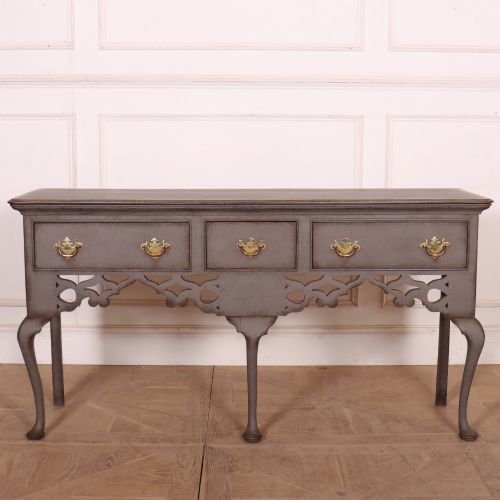
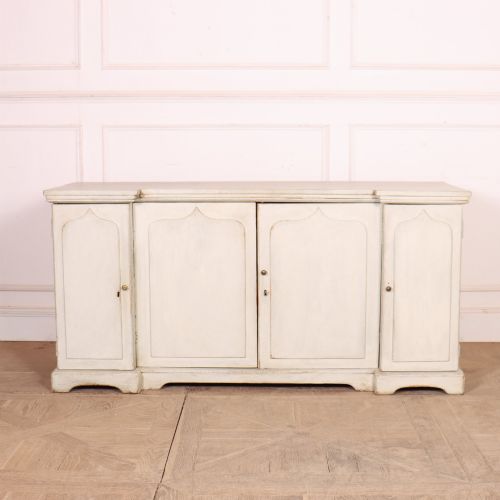
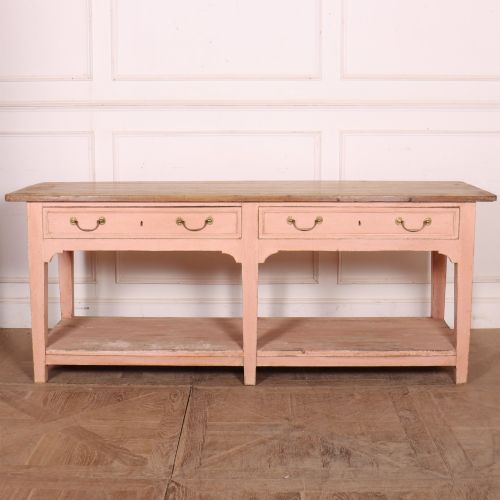
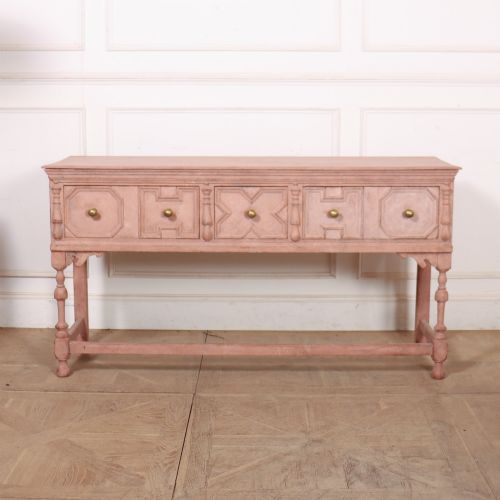
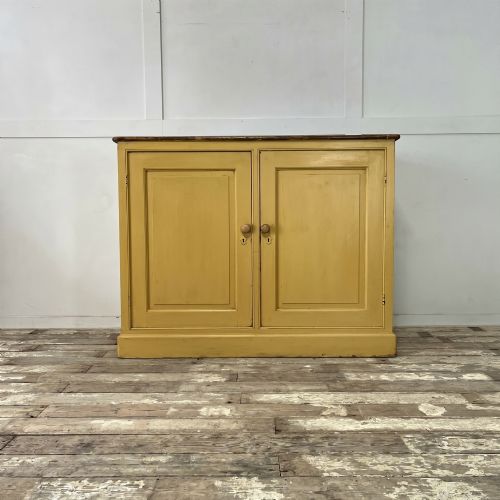
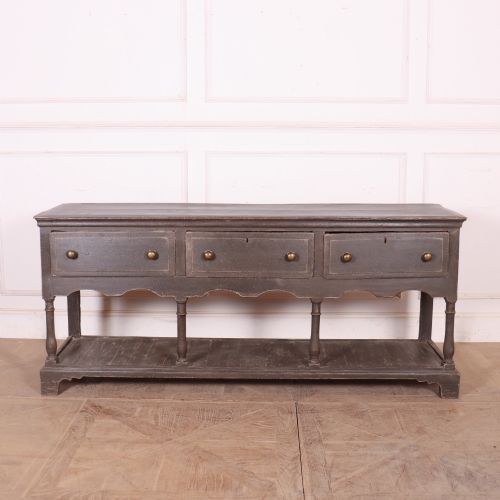
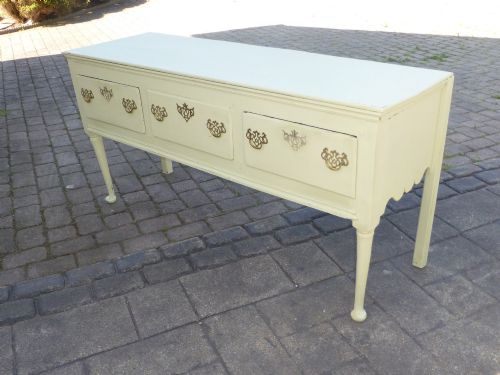
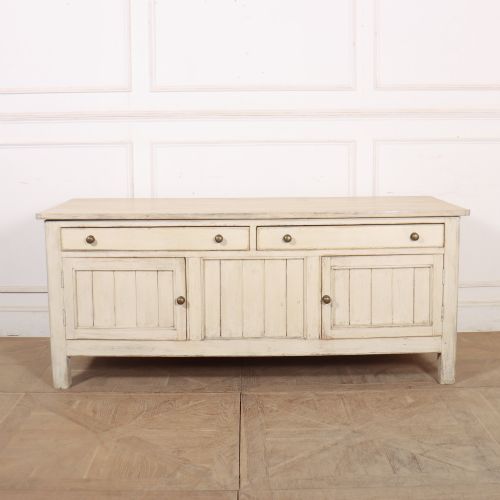


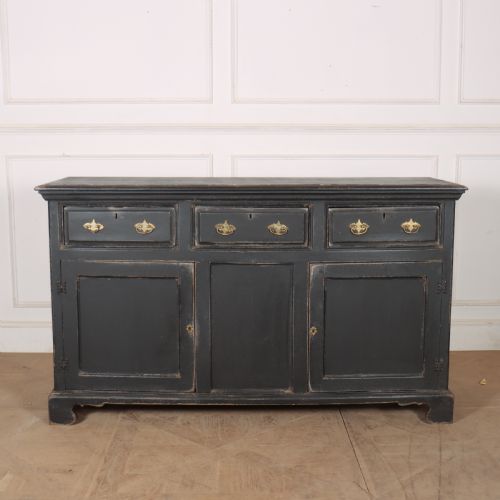
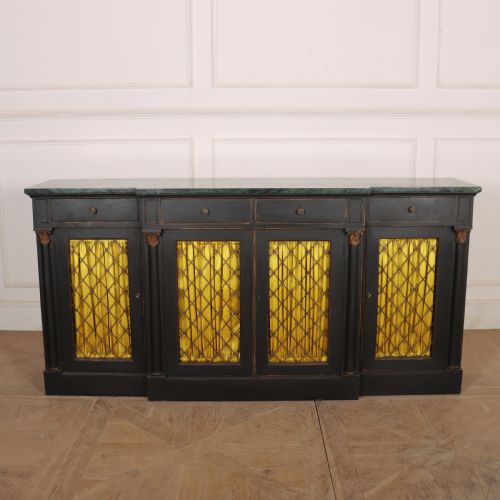
Painted Low Dresser
A painted low dresser brings utilitarian storage and historic colour into a room, offering surface space and drawer capacity without the height of a full plate rack.
Painted Low Dresser
When searching for a painted low dresser, a buyer encounters utilitarian furniture originating from 18th century, 19th century, and early 20th century domestic or institutional settings. These pieces function as low storage units, sideboards, and cabinet bases designed to hold kitchenware, linens, or supplies.
The versions most commonly met on this page include English and Scottish painted dresser bases, potboard bases, and large school or kitchen cupboards constructed from pine and oak. Styles range from Georgian and Victorian country pieces to rustic farmhouse and Scottish country interpretations.
Many items retain original or historic paint surfaces, ranging from muted country tones to clear coats over timber. Their low profile separates them from tall regional dressers, providing a solid surface above rows of drawers or cupboard doors.
How they were made
Construction relies heavily on sturdy timbers such as pine and oak, often paired with iron and brass hardware for hinges, handles, and pulls. Joinery serves structural utility, supporting heavy top boards and deep drawers intended for daily domestic use.
Surface finishes involve layers of paint applied to timber, sometimes recorded as original paint or bare wood prepared for a specific finish. Potboard designs feature lower open shelves beneath the main carcase, combining board construction with raised framing.
Painted Low Dresser Retail Price Guide 2026
Typical asking prices for painted low dresser among the pieces listed under this phrase on Sellingantiques today, from the lower quarter to the upper quarter. They describe what is for sale here now, not the wider market.
Listings span the 18th century, 19th century, and early 20th century, utilising pine, oak, brass, iron, and paint.
What varies in quality
The distinction between ordinary and superior examples lies in the integrity of the timber, the retention of surface paint, and the proportion of the base. Pieces showing an uncompromised structural form and an appealingly weathered painted surface command greater interest.
Hardware originality and the crispness of early joinery separate standard utility pieces from finer regional variants. The depth of the boards and the balance between the drawer tiers and lower potboards determine the visual weight of the base.
The Painted Low Dresser Glossary
- Potboard dresser base
- A low storage unit featuring an open lower shelf beneath the main body, historically used for displaying heavy pots and kitchenware.
- Breakfront
- A piece of furniture where the central section projects forward from the flanking outer sections, creating depth across the front elevation.
- Drapers chest
- A wide cabinet or multi-drawer chest originating from retail or domestic storage, utilised for holding textiles and folded garments.
- Original paint
- A historic surface coating applied to the timber during its period of manufacture or early use, retained without later stripping.
Painted Low Dresser: Frequently Asked Questions
What is a low dresser base?
A low dresser base is a heavy storage unit equipped with drawers and sometimes cupboards, standing at sideboard height without an upper plate rack. It provides a wide top surface and substantial interior capacity for daily use.
These pieces were built in farmhouse, kitchen, and school environments across the 18th and 19th centuries. They function today as sideboards or serving tables in dining rooms and kitchens.
How do I date a painted dresser?
Dating relies on construction methods, timber choice, and stylistic cues from periods such as the Georgian era or the Victorian age. Dovetail joints, backboard construction, and hardware types offer clear chronological indicators.
Paint analysis also assists, as historic mineral pigments and layered brushwork differ visibly from modern chemical applications. Comparing the hardware fixings to known period styles confirms the decade of manufacture.
Are these pieces made of pine or oak?
Both timbers appear frequently in this inventory, often alongside general painted timber and mixed secondary woods. Oak is typical of earlier 18th century regional pieces, while pine dominates 19th century kitchen and school cupboards.
Some examples combine oak frames with pine drawer linings and internals. The choice of timber usually reflects the regional workshop traditions of English and Scottish makers.
How can I use a low dresser at home?
A low dresser serves effectively as a sideboard in a dining room, a media console in a living space, or a storage console in a hallway. Its shallow depth and wide top make it suitable for surface display and concealed organisation.
The deep drawers accommodate table linen, tableware, or household items. Lower potboards or open shelves allow for the placement of baskets, books, or larger decorative objects.