






Painted Gueridon
A painted gueridon brings French or Italian character to a room, offering a compact surface for a lamp or vase.
Painted Gueridon
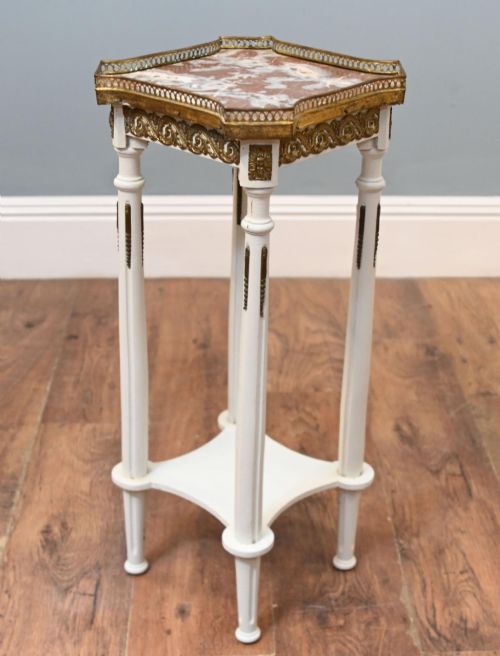
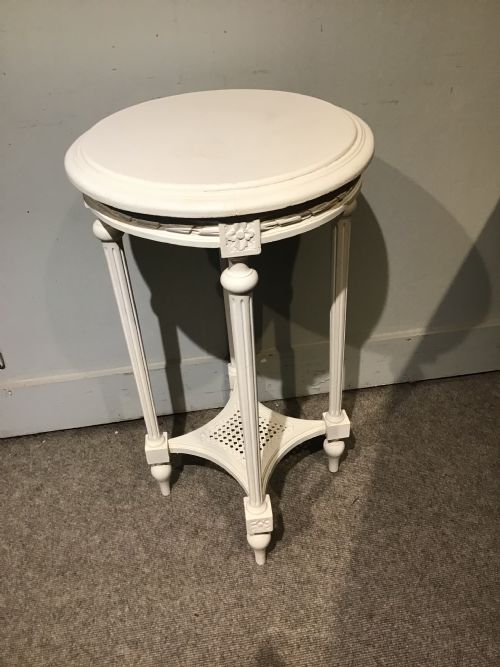
A painted gueridon is a small occasional table or pedestal stand, most often found in French nineteenth-century and early twentieth-century forms. These pieces serve as centre tables, lamp tables, or plant stands, designed to occupy corners or beside seating without dominating a room.
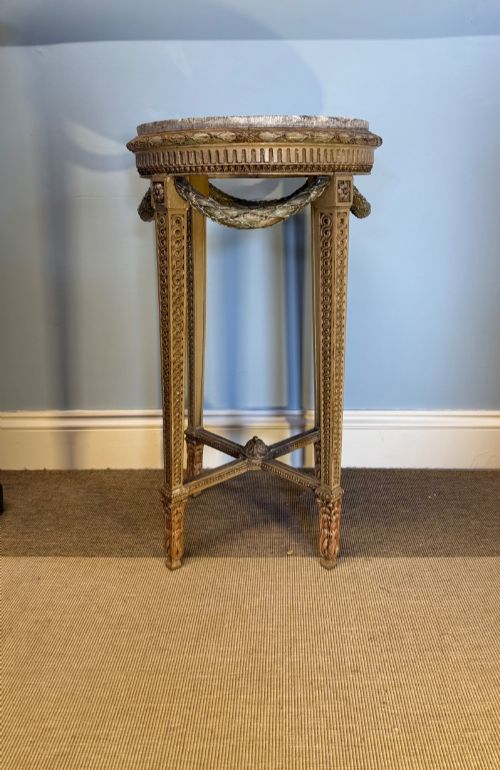
The most common version met here is a round table featuring a marble top, supported by a painted wooden base that often includes parcel-gilding or parcel-silvering. Originating largely from French workshops, they span styles from Louis XVI and Rococo Revival to French Country and Venetian Revival.
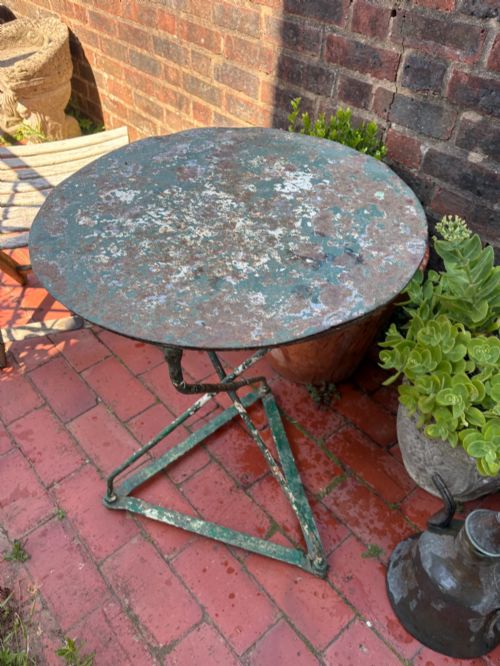
Alongside timber frames, some examples utilise cast iron bases with painted finishes, paired with stone tops. Buyers encounter these tables in various heights, functioning equally well as pedestals for display or as functional bistro tables.
Materials and construction
These tables rely on a combination of carved wood, gesso, and paint, frequently finished with parcel-gilt or parcel-silvered highlights to accentuate the carved details. The woodwork supports heavy inset stone surfaces, predominantly marble, which require stable and robust framing.
Alternative structural materials include cast iron for certain round tables, providing a heavier base for garden or interior use. The application of paint over wood or gesso creates the decorative surface that defines the aesthetic of each piece.
Painted Gueridon Retail Price Guide 2026
Typical asking prices for painted gueridon among the pieces listed under this phrase on Sellingantiques today, from the lower quarter to the upper quarter. They describe what is for sale here now, not the wider market.
Listings feature nineteenth-century French and Venetian pieces, spanning materials from marble and carved wood to cast iron and gesso.
Differences in quality
Quality rests on the crispness of the wood carving and the finesse of the painted or gilded surface work. Superior examples display hand-carved details and layered finishes that age gracefully, rather than flat, uniform factory painting.
The integration of the marble top into the wooden or cast iron frame dictates the structural integrity of the table. A well-fitted stone slab and solid joinery distinguish finer decorative pieces from simpler utility tables.
The Painted Gueridon Glossary
- Gueridon
- A small round table or pedestal stand, typically French in origin and designed for decorative use. These tables often feature three legs or a central column.
- Parcel-gilt
- A decoration technique where only specific raised parts or details of an object are gilded with gold leaf. This creates contrast against the painted background of the wooden frame.
- Torchere
- A tall stand or pedestal originally intended to hold a torch or candle, now used for displaying lamps or plants. They share a similar vertical form with many gueridons.
- Gesso
- A plaster-like mixture applied to wood to create a smooth surface for painting or gilding. It allows for intricate moulded details before the final paint layer is added.
Painted Gueridon: Frequently Asked Questions
What is a gueridon table?
A gueridon is a small decorative table originating in seventeenth-century France, traditionally used to hold lights or display decorative objects. Over time, the form evolved into various occasional tables and plant stands.
Today, these tables function flexibly in interiors as bedside tables, lamp surfaces, or small centrepieces in hallways and reception rooms.
How do I style a painted gueridon?
These tables work well in corners or beside armchairs where space is limited. Their decorative painted finishes allow them to complement both traditional and eclectic modern interiors.
Place a reading lamp, a small vase, or a stack of books on the marble top to make use of the surface while showcasing the decorative base.
Are marble tops original?
Many nineteenth-century French tables were manufactured specifically to house inset marble slabs. The weight of the stone helps anchor the relatively lightweight wooden or cast iron pedestals.
Examining the fit between the stone and the wooden rebate helps determine if the top belongs to the original construction of the base.
How do I date a painted table?
Dating relies on stylistic clues such as the presence of Louis XVI Revival motifs, Rococo curves, or Empire styling. The type of paint, the condition of the underlying gesso, and the method of timber construction also provide period indicators.
Nineteenth-century examples frequently show hand-mixed pigments and traditional joinery methods distinct from twentieth-century reproductions.