


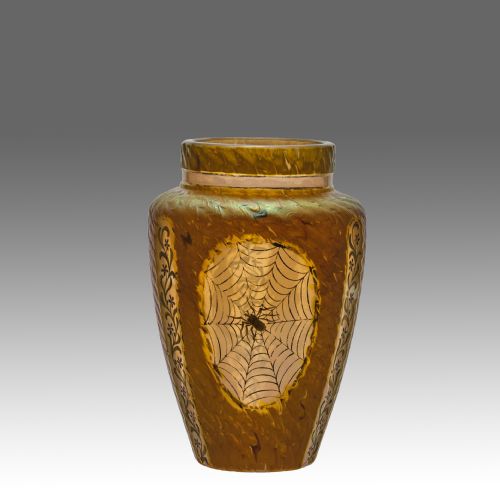


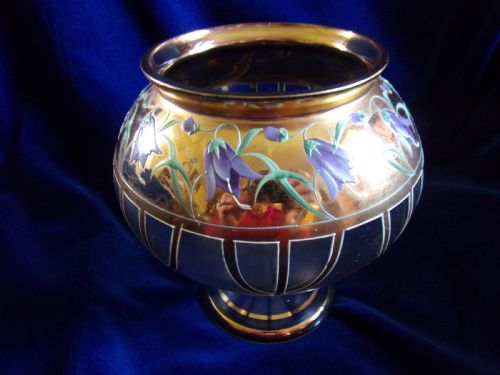


Painted Glass Vessel
A painted glass vessel brings rich colour and hand-rendered detail to a room, offering a tangible link to Victorian and early twentieth-century glasshouses.
Painted Glass Vessel
A painted glass vessel encompasses items such as vases, tankards, ewers, decanters, jars and goblets originating primarily from Victorian and early twentieth-century workshops. The most common form you will encounter on this page is the vase, often decorated with figural scenes, landscapes or botanical motifs.
Pieces span eras from the late eighteenth century through to the Edwardian period, drawing heavily on Victorian, Art Nouveau, Bohemian and Rococo Revival styles. Makers range from large Bohemian houses to named French and Austrian firms producing decorative glassware.
These objects served as mantelpiece ornaments, cabinet pieces or functional tableware, combining translucent or opaque glass bodies with applied pigment, enamel and gilding. Their survival preserves decorative techniques that define nineteenth-century interior taste.
How they were made
Makers shaped vessels using hand-blowing techniques, sometimes layering multiple colours of glass to create cased or overlay effects before applying surface decoration. Glass bodies include cranberry glass, green glass, white opaline and crystal.
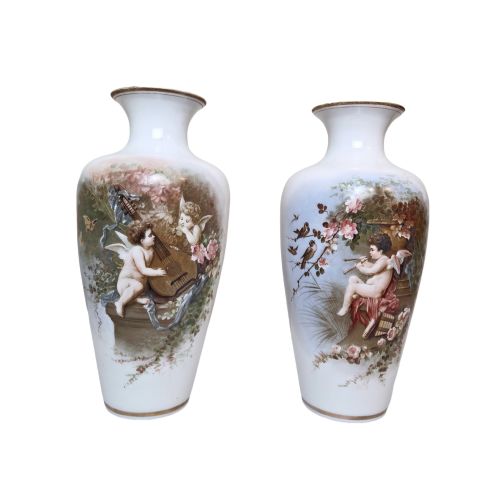
Workers applied designs using enamel, gold leaf, gilding and paint, depicting scenes such as cherubs, landscapes, fox hunting, fish and water plants. Enamelling required firing to bond the pigments permanently to the glass surface.
Painted Glass Vessel Retail Price Guide 2026
Typical asking prices for painted glass vessel among the pieces listed under this phrase on Sellingantiques today, from the lower quarter to the upper quarter. They describe what is for sale here now, not the wider market.
What varies in quality
Quality rests on the crispness of the hand-painted detail and the depth of the glass substrate, whether simple monochrome glass or triple-cased and polychromatic material. Superior pieces display finely rendered figures and landscapes rather than hurried, generic brushwork.
The sophistication of the secondary decoration, such as raised enamel work or heavy gilding, separates standard production items from ambitious exhibition pieces produced by major glasshouses.
Kralik Glass·Legras·Moser·Harrach
The Painted Glass Vessel Glossary
- Cranberry glass
- A rich red glass produced by adding gold chloride to the molten batch. It is frequently seen in Victorian decorative wares.
- Opaline glass
- An opaque, pale glass that ranges from white to pastel shades, often used as a ground for enamel painting.
- Cased glass
- Glass formed of two or more distinct layers of different colours fused together, sometimes cut back to reveal the contrasting layer underneath.
- Enamel
- A glass-like substance melted onto the surface of the vessel to form coloured decorations that endure without fading.
- Gilding
- The application of gold leaf or gold powder to accentuate rims, handles and painted panels.
Painted Glass Vessel: Frequently Asked Questions
Are these pieces safe for holding liquids?
Many of these vessels were made for display rather than utility, meaning historic enamels and gilding can be sensitive to moisture and frequent use.
It is safest to treat them as decorative objects rather than functional decanters, ewers or vases for daily service.
How can I tell Bohemian glass from other types?
Bohemian pieces often feature robust coloured glass bodies, heavy gilding, overlay techniques and distinct regional landscape or hunting scenes.
They frequently date from the nineteenth century and reflect the rich traditions of Central European glassmaking houses.
What is Mary Gregory glass?
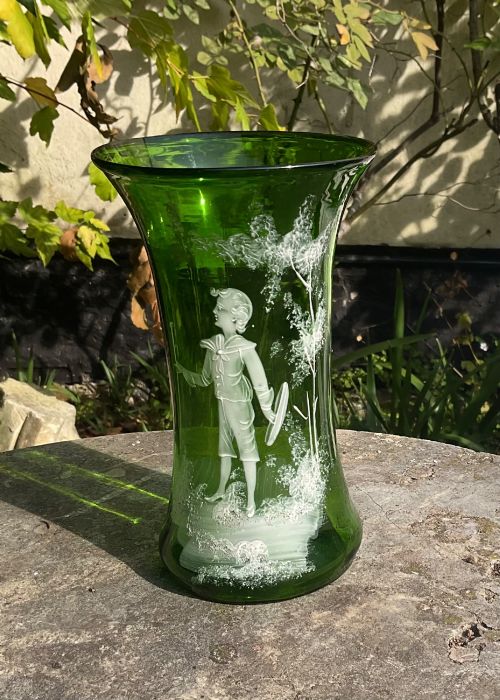
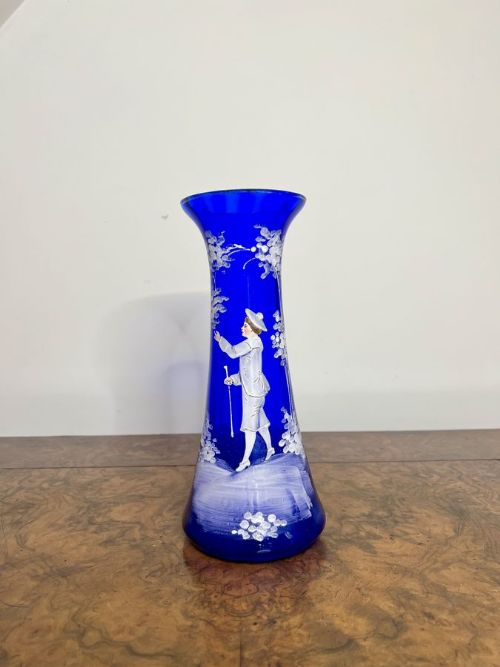
Mary Gregory pieces are characterised by white enamel silhouettes depicting children engaged in outdoor pursuits, framed against coloured glass backgrounds.
While traditionally associated with the Victorian era, the style spans late nineteenth and early twentieth-century production.