




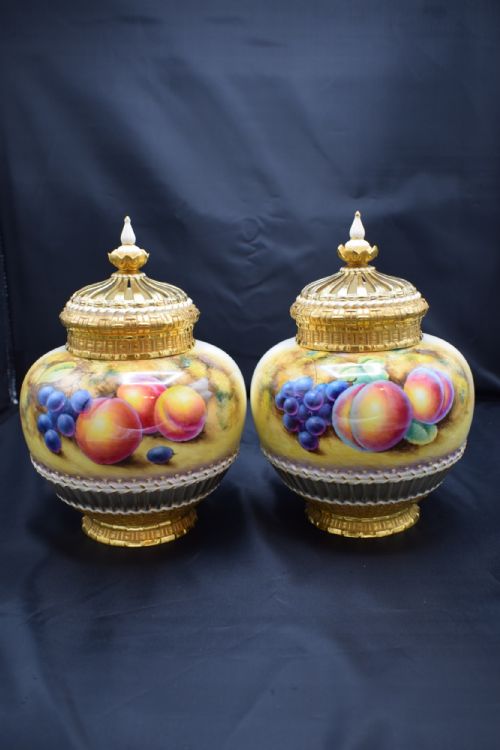


Painted Fruit Jar
These painted fruit jar examples bring hand-decorated still-life subjects into porcelain ginger jars and pot pourri vessels, offering rich colour and traditional form.
Painted Fruit Jar
A painted fruit jar typically takes the form of a porcelain ginger jar, preserve pot, or lidded pot pourri vase decorated with detailed studies of orchard produce. These decorative pieces emerge largely from mid-twentieth century British pottery traditions alongside earlier nineteenth century examples.
The most common form on this page is the lidded pot pourri vase or ginger jar from mid-century production, frequently painted by named artists working within established studios. Collectors encounter these vessels in various shapes, from classical urns to traditional jar profiles finished with hand-applied pigments.
How they were made
Potters shaped fine bone china, porcelain, and glazed earthenware into vessels and covers before applying detailed enamel pigments and gold leaf details. The creation of these pieces involved skilled throwing or moulding followed by multiple firings to fix the painted fruit subjects onto the white ceramic surface.
Makers utilised gilding and rich enamels to frame the central painted panels, often adding pierced covers for pot pourri or snug fitting lids for preserve jars. The combination of fine porcelain bodies and meticulous hand painting defines the technical standard of these decorated vessels.
Painted Fruit Jar Retail Price Guide 2026
Typical asking prices for painted fruit jar among the pieces listed under this phrase on Sellingantiques today, from the lower quarter to the upper quarter. They describe what is for sale here now, not the wider market.
John Smith and Freeman clearly spent decades painting identical apples and pears without ever getting hungry.
What varies in quality
The distinction between standard production and the finest work lies in the delicacy of the brushwork and the complexity of the fruit composition. Pieces painted by recognised artists command greater attention through their precise rendering of texture and light upon the subject.
Quality also rests in the application of gold leaf and the crispness of the porcelain or bone china body. Superior examples display depth in the enamel colours and careful attention to the decorative gilding around the main panel.
Royal Worcester·Plichta Pottery·Coalport·Charlotte Rhead
The Painted Fruit Jar Glossary
- Pot Pourri Vase
- A lidded vessel featuring pierced openings designed to release the fragrance of dried petals and spices held within. These pieces often share the same painted fruit decoration as standard ginger jars.
- Ginger Jar
- A high-shouldered ceramic storage vessel with a domed lid, originally built for spices but later adapted for purely decorative purposes. Many British examples feature hand-painted botanical or fruit subjects.
- Bone China
- A type of porcelain composed of clay, feldspar and bone ash, known for its high strength and milk-white translucency. It serves as the primary canvas for detailed fruit painting.
- Enamel
- A vitreous composition fused to the surface of porcelain through firing, used to create durable coloured designs. Artists apply these pigments by hand to build up rich fruit studies.
Painted Fruit Jar: Frequently Asked Questions
What is a painted fruit jar used for?
These lidded vessels served primarily as decorative items, mantle ornaments, or receptacles for pot pourri mixtures within traditional interiors.
While some historical forms functioned as jam or preserve pots, the painted examples found here were valued mainly for their hand-decorated appearance.
How do I identify the period?
Dating relies heavily on ceramic backstamps, the style of the hand painting, and the specific material body, such as fine bone china or glazed earthenware.
Mid-century pieces often feature distinct artist signatures and factory marks that distinguish them from nineteenth-century productions.
Who painted these ceramics?
Many pieces carry the signature or initials of specialist studio artists who focused on botanical and still-life fruit subjects.
Prominent painters applied their skills within major potteries, creating individual works of art on porcelain surfaces.
How should I display them?
These lidded jars and vases sit well on mantelpieces, sideboards, or within glass cabinets where adequate lighting highlights the enamel colours.
Keep them away from direct sunlight to preserve the vibrancy of the hand-painted fruit and gold leaf details.