



Painted Frame Chairs
These painted frame chairs combine structural woodwork with decorative paint finishes across nineteenth and twentieth century French and Victorian styles.
Painted Frame Chairs
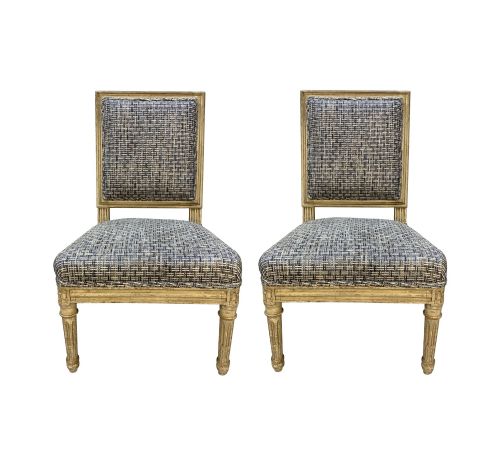
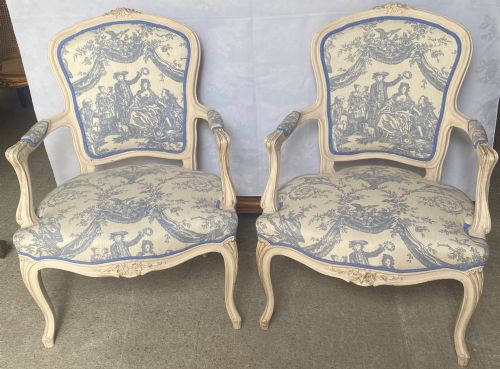
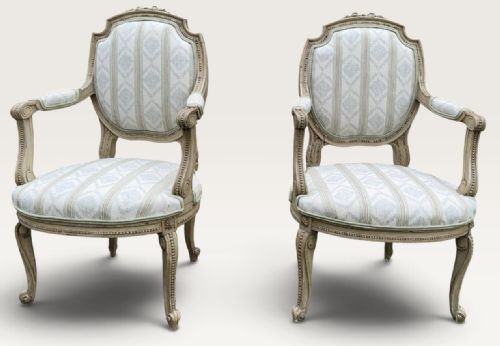
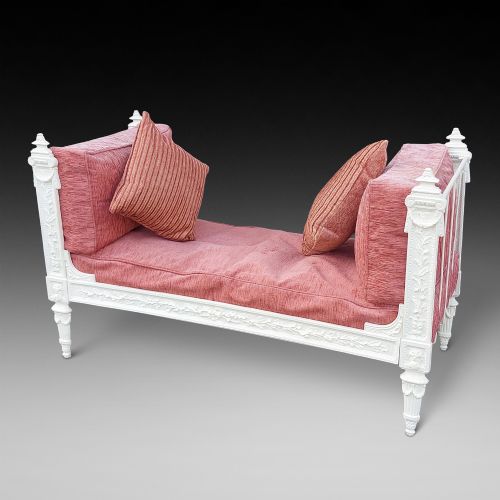
When you search for painted frame chairs, you encounter seating built from wood with applied surface paint finishes rather than exposed natural grain. These pieces span nineteenth century and early twentieth century periods, drawing heavily on French Louis XV, Louis XVI, and Victorian design traditions.
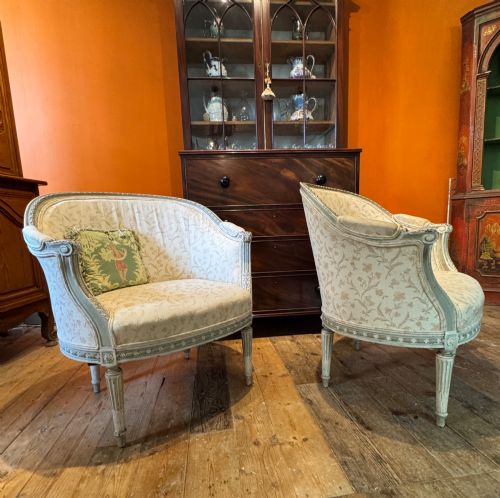
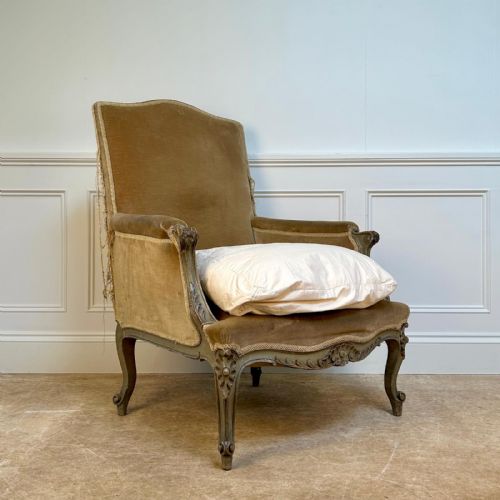
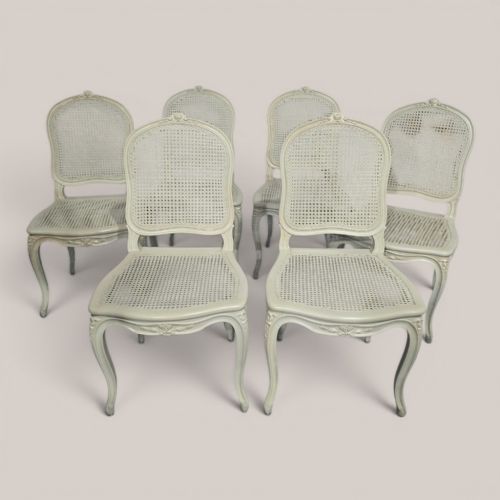
The selections on this page feature forms such as armchairs, bergere tub chairs, dining chairs, and salon chairs. Many appear in pairs or sets, originating from French chateau and salon contexts.
Makers and workshops of the nineteenth century also produced revival pieces, including Savonarola armchairs alongside show frame fauteuils. The overarching grouping centres on wooden seating defined by its painted exterior.
How they were made
Construction relies primarily on beech and general timber framing, shaped to form structural show frames, armrests, and supportive backrests. Beech provides a dense, workable base suitable for detailed carving and subsequent painting.
Surface decoration involves direct application of paint to the wooden frame, sometimes preserving original layers alongside gilt highlights. Upholstery integration incorporates fabric, textile, and rattan cane inserts into the backrests and seats.
Painted Frame Chairs Retail Price Guide 2026
Typical asking prices for painted frame chairs among the pieces listed under this phrase on Sellingantiques today, from the lower quarter to the upper quarter. They describe what is for sale here now, not the wider market.
Listings feature 19th Century, Victorian, and 1930s periods, incorporating materials such as beech, rattan cane, gilt, and painted wood.
What varies in quality
Quality differentiates itself through the integrity of the original paint surface and the preservation of early finishes. Seating that retains untouched, period-applied paint commands greater interest than later overpainting.
Structural refinement shows in the crispness of carved wooden details upon the show frame and the tightness of nineteenth century joinery. The inclusion of intact rattan cane work and balanced proportions further distinguishes superior examples.
White, Allom And Co
The Painted Frame Chairs Glossary
- Bergere
- An enclosed upholstered armchair with wooden sides and a built-in upholstered back. These seats typically feature cane or fabric panels integrated into the painted wooden frame.
- Fauteuil
- An open-armed upholstered armchair originating in France, possessing exposed wooden framework. The arms feature upholstered pads supported by open structural woodwork.
- Show frame
- The exposed wooden structural skeleton of an upholstered chair that remains visible around the cushioned elements. In these pieces, the show frame receives decorative paint or gilt treatment.
- Savonarola
- A folding X-frame armchair design originating during the Renaissance revival period. Constructed with intersecting wooden slats, this form appears in nineteenth century interpretations.
- Gilt
- A thin layer of gold leaf applied to the surface of the wooden frame to enhance decorative details. This technique frequently accompanies painted finishes on nineteenth century salon seating.
Painted Frame Chairs: Frequently Asked Questions
What defines a painted frame chair?
These chairs are defined by wooden structural frames coated in decorative paint finishes rather than polished wood grains. They encompass nineteenth and twentieth century seating styles influenced by French and Victorian designs.
Such pieces range from salon armchairs to dining chairs, utilising beech woodwork combined with fabric or cane inserts.
How do I identify a bergere chair?
A bergere is recognised by its enclosed upholstered sides and solid padded back, distinguishing it from open-armed chairs. The wooden frame surrounds the upholstered or cane panels entirely.
Original painted surfaces on these frames often indicate nineteenth century French provenance.
Are these chairs suitable for daily use?
Many of these pieces function as practical seating for living spaces, studies, and dining rooms. Their construction utilises sturdy timbers like beech to support everyday wear.
Care should be taken to preserve delicate fabric upholstery and original painted frame surfaces during daily use.
How do I distinguish French revival styles?
French revival styles on this page draw upon Louis XV and Louis XVI aesthetics from the nineteenth and early twentieth centuries. These pieces display characteristic curved or straight frame lines and painted wooden surfaces.
Details such as carved show frames and original paint finishes help separate these period interpretations from later reproductions.