




Painted Coat Stand
A painted coat stand brings practical hall storage and period character into an entranceway, offering robust hanging space alongside decorative charm.
Painted Coat Stand
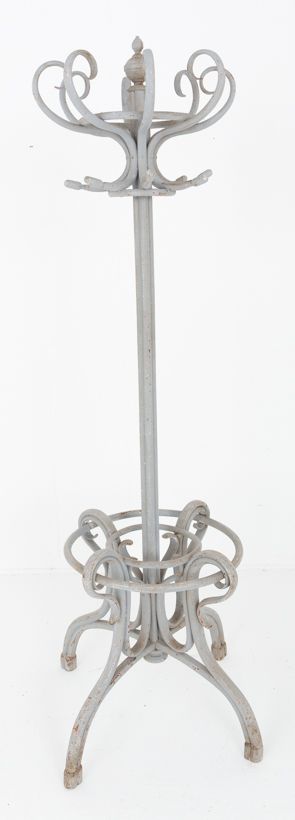
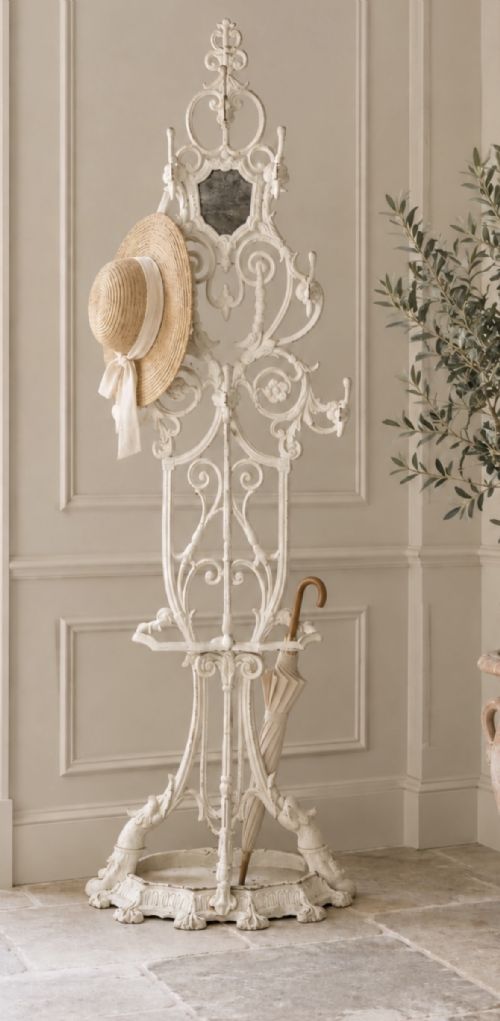
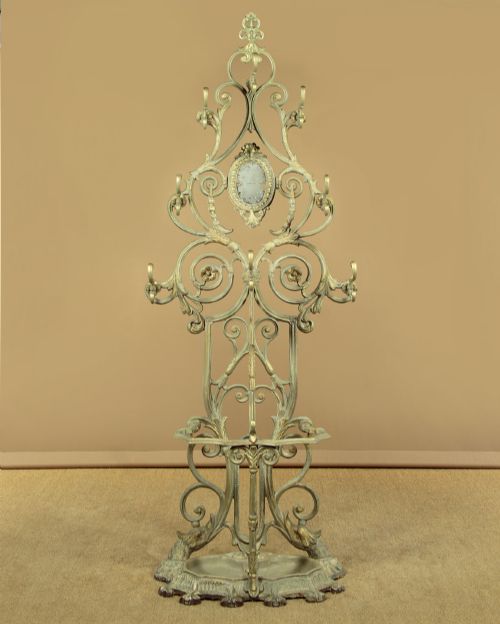
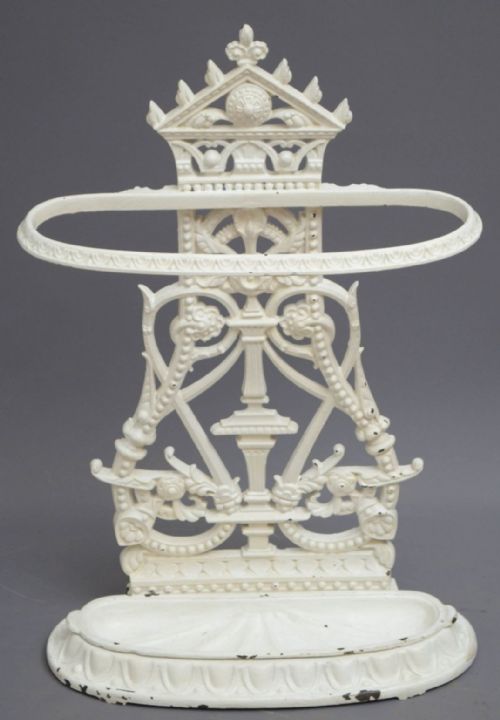
A painted coat stand serves as a functional piece of hallway furniture designed for hanging garments, hats, and accessories while incorporating decorative painted finishes. These items appear across the Victorian, Georgian, and seventeenth-century periods, reflecting domestic needs from various eras.
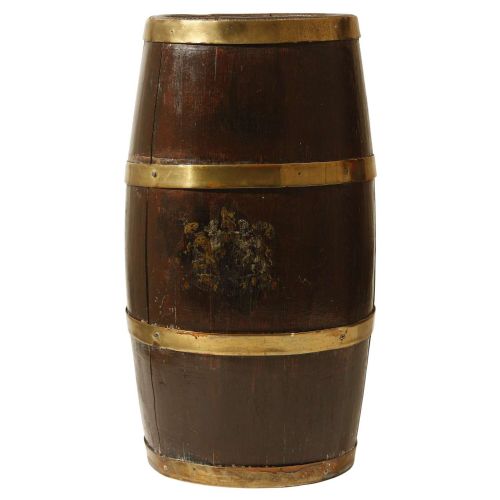
Beyond standard hall furniture, the broader category includes related items like oak barrel umbrella stands featuring painted coats of arms and leather hand-painted fire buckets from the late eighteenth century. Each form provides a specific method for managing hallway clutter with distinct period aesthetics.
Materials and construction methods
Makers utilised durable materials such as cast iron, oak, and mahogany to build these stands, ensuring stability for heavy garments and wet umbrellas. Brass braces and glass details frequently appear as structural or decorative enhancements.
Painted finishes and oil-based pigments were applied to metal and timber surfaces, protecting the core material while adding colour and heraldic details like coats of arms. Leather construction also appears, specifically shaped and hand-painted for vessels like fire buckets.
Painted Coat Stand Retail Price Guide 2026
Typical asking prices for painted coat stand among the pieces listed under this phrase on Sellingantiques today, from the lower quarter to the upper quarter. They describe what is for sale here now, not the wider market.
Some nineteenth-century gentlemen clearly required a painted coat of arms on their umbrella barrel just in case the weather forgot their lineage.
Distinctions in quality
Superior examples demonstrate refined casting in iron components or precise joinery in timber frames, ensuring the stand remains balanced under heavy loads. The crispness of applied paintwork and the preservation of original decorative surfaces differentiate finer pieces from standard domestic items.
The integration of secondary materials, such as well-fitted brass braces or intact glass elements, indicates higher craftsmanship. Pieces retaining their original painted decoration rather than later overpainting hold greater material integrity.
Coats of Wigan·Constantyn Netscher
The Painted Coat Stand Glossary
- Cast iron
- An iron-carbon alloy poured into a mould to create rigid, durable furniture frames with intricate decorative patterns. This material forms the base of many nineteenth-century hall stands.
- Hall stand
- A piece of hallway furniture combining coat hooks, umbrella storage, and frequently a mirror or glove box. These items emerged to organise outdoor apparel in domestic entrances.
- Oak
- A hard, dense timber utilised for its structural strength and prominent grain pattern. It appears in traditional British furniture and coopered items like umbrella barrels.
- Baroque
- An ornate artistic style characterised by dramatic movement and rich detail, influencing the decorative flourish on certain period pieces. It values grandeur and dynamic form.
- Rococo Revival
- A nineteenth-century design movement favouring asymmetrical curves, scrollwork, and natural motifs. This style often manifests in the cast ornamentation of Victorian hall furniture.
Painted Coat Stand: Frequently Asked Questions
How do I maintain a painted coat stand?
Keep the piece away from direct sunlight and damp environments to preserve the integrity of the timber and the applied paint finish. Dust the surface regularly with a soft, dry cloth.
Avoid using harsh chemical cleaning products that might strip or soften historical painted layers. Wax or gentle polish can be applied to wooden sections depending on the specific finish.
Where were these stands typically placed?
These pieces traditionally stood in the entrance hall or vestibule of a home to catch outdoor garments and walking gear immediately upon entry.
Their design allowed households and visitors to deposit hats, coats, and wet umbrellas before entering the main living quarters.
How can I tell a Victorian stand from a Georgian one?
Victorian examples frequently utilise heavy cast iron with elaborate ornamentation and darker painted finishes suited to industrial-era production. Georgian pieces tend to rely more heavily on native timbers like mahogany or oak with simpler, classical lines.
Examining the underlying construction methods and the specific stylistic motifs helps clarify the period of manufacture.
Can these stands support heavy winter coats?
Freestanding hall stands made from cast iron or dense hardwoods possess the structural mass necessary to hold heavy garments without tipping. Properly anchored or well-balanced frames distribute weight effectively across multiple hooks.
Distributing coats evenly around the stand prevents undue strain on a single side.