



Painted Candlesticks
These painted candlesticks bring together porcelain, brass, and coloured wood across Georgian, Victorian, and early twentieth-century periods to illuminate a room with historical character.
Painted Candlesticks
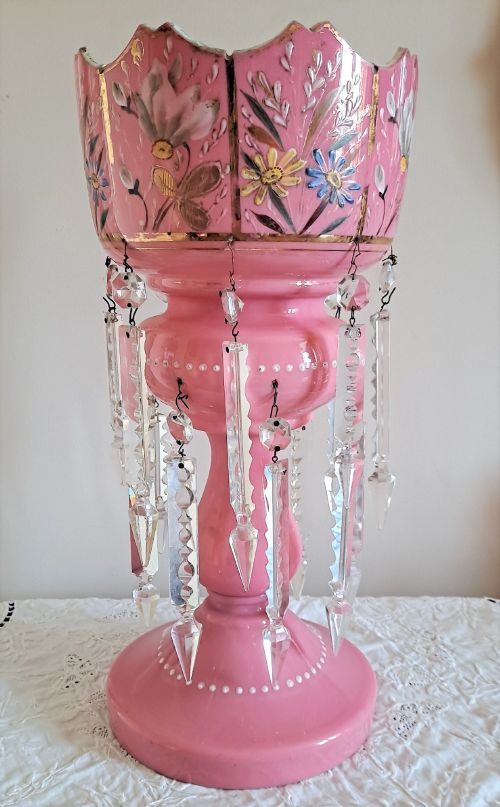
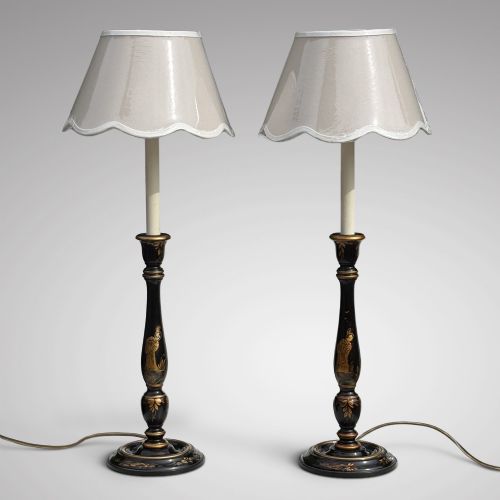
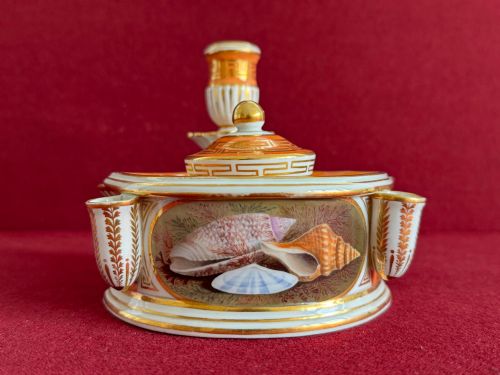
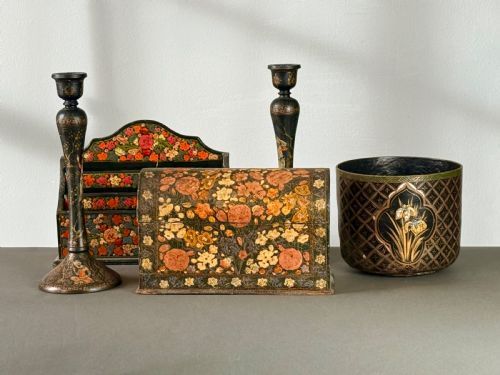
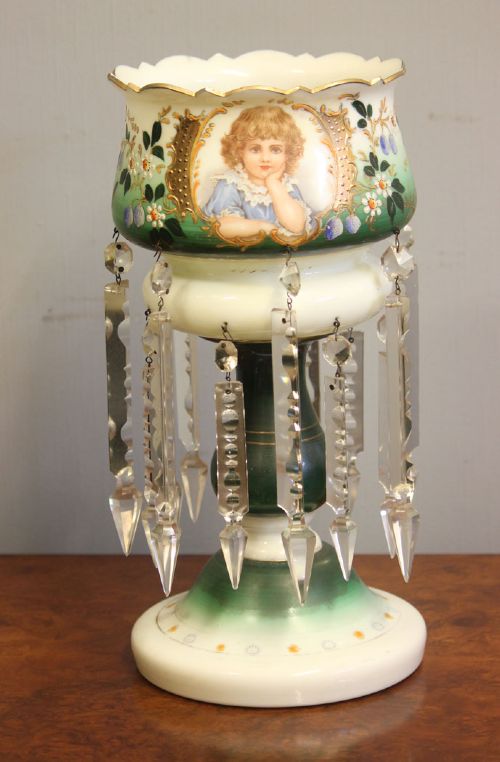
When you search for painted candlesticks, you encounter a diverse array of decorative lighting pieces spanning the Georgian, Victorian, and early twentieth-century eras. The selection comprises functional holders alongside related forms like table lamps, candelabra, and mantel lustres.
Porcelain figures with floral bocage sit alongside turned wood, toleware, and brass columns. English factories such as Derby, Worcester, and Royal Worcester appear frequently, alongside continental German and French pieces.
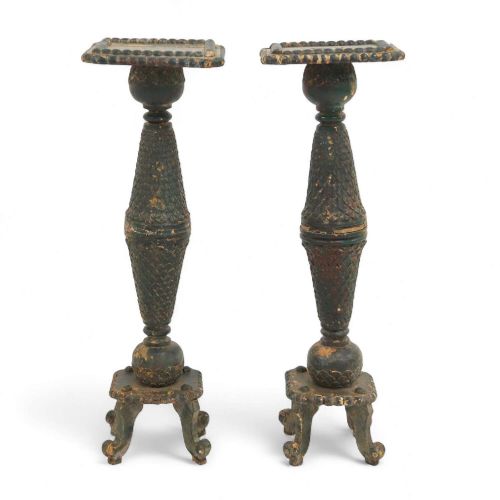
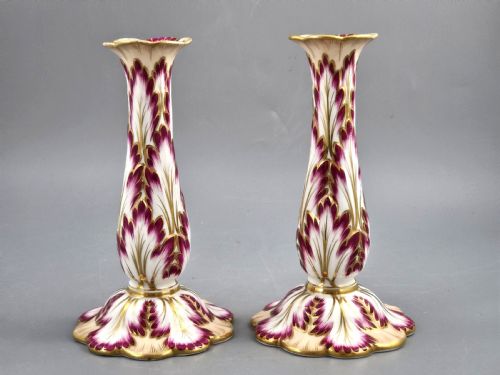
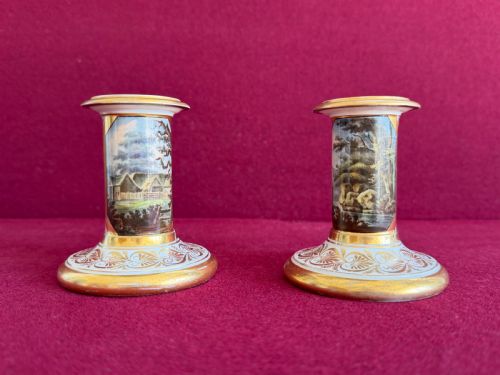
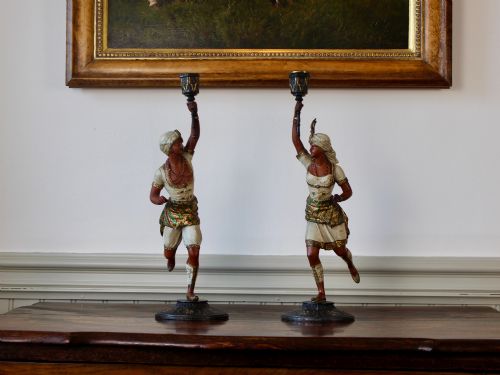
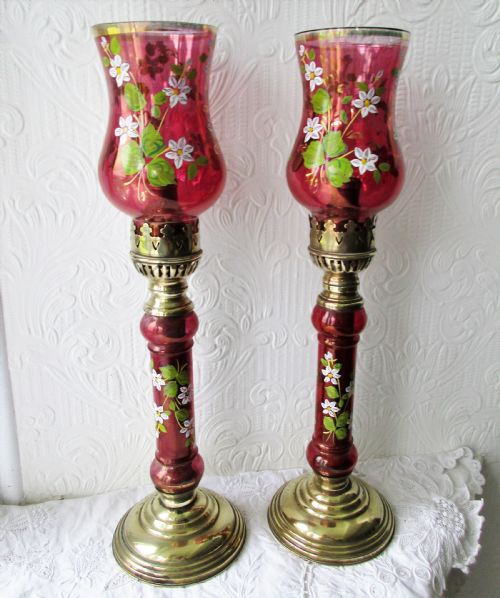
Many items show detailed hand-applied decoration, ranging from floral motifs and gilt highlights to original green paint and lacquered Chinoiserie finishes. Pairs predominate, offering symmetry for a mantelpiece or side table.
How they were made
Porcelain examples begin as moulded clay bodies, often incorporating intricate figural elements and applied floral details known as bocage. Painters then apply enamel colours and gold leaf by hand before a high-temperature kiln firing.
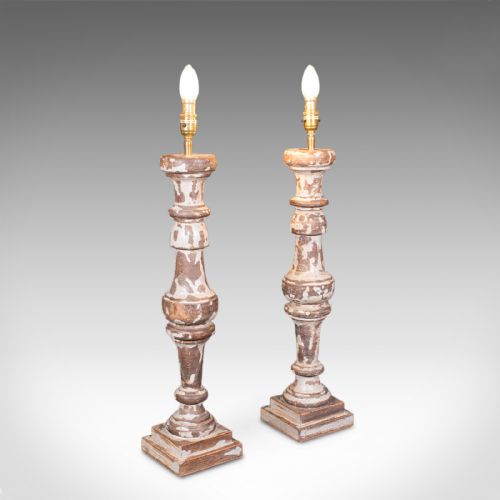
Metal and wooden pieces utilise turned or cast foundations, finished with layers of paint, lacquer, or cold-painted pigments. Brass and ormolu components provide structural support and reflective contrast against painted surfaces.
Painted Candlesticks Retail Price Guide 2026
Typical asking prices for painted candlesticks among the pieces listed under this phrase on Sellingantiques today, from the lower quarter to the upper quarter. They describe what is for sale here now, not the wider market.
Object forms range from traditional single candlesticks and multi-arm candelabra to table lamps, mantel lustres, inkstands, and desk lamps.
What varies in quality
Quality rests in the precision of the hand-painting, the crispness of the moulded details on porcelain figures, and the preservation of original surface finishes. Superior examples retain their factory marks, vibrant enamel colours, and intact gilding without heavy restoration.
Construction methods also separate standard production from finer output, visible in the weight of the brass castings, the stability of wooden bases, and the delicacy of applied porcelain foliage and figures.
Flight and Barr·Barr Flight and Barr·Royal Worcester Hadley·Sitzendorf·Derby
The Painted Candlesticks Glossary
- Bocage
- Applied background foliage made of porcelain, commonly found behind figures on eighteenth and nineteenth-century candlesticks. This leafy scrollwork is modelled by hand before firing.
- Lustre
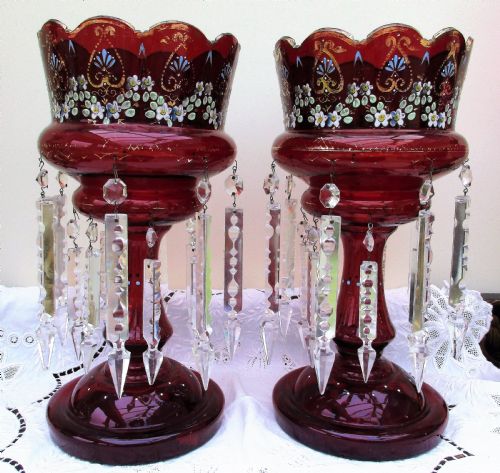
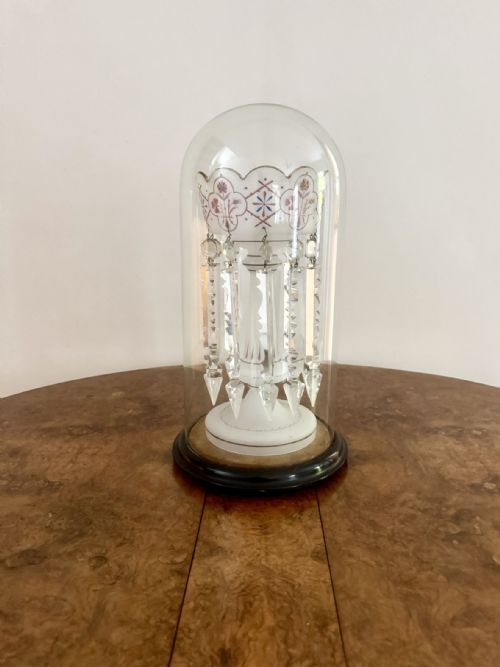
- A decorative tabletop ornament featuring glass pendants suspended from a rim to reflect candlelight. These items often match the palette and style of contemporary candlesticks.
- Toleware
- Painted sheet metal, typically iron or steel, shaped into items like lamp bases and candle holders. Artisans decorate the surface with coloured enamels and gilt highlights.
- Spelter
- A zinc alloy used as a cost-effective alternative to bronze for cast figures. Makers often apply cold-painted finishes directly to the metal surface.
- Ormolu
- Gilt bronze mounts and decorative details applied to furniture and lighting. The technique involves coating base metal with a mercury and gold amalgam.
Painted Candlesticks: Frequently Asked Questions
How do I date an antique painted candlestick?
Dating relies on identifying factory marks on the base, stylistic clues such as Regency or Rococo forms, and the manufacturing materials. Porcelain bodies, glaze characteristics, and pigment types offer further chronological context.
Examining the construction methods, such as the type of screw fixings or the composition of the metal components, helps narrow down the production decade between the Georgian period and the early twentieth century.
Are these candlesticks suitable for everyday use?
While many pieces remain structurally sound, fragile porcelain figures and delicate hand-painted surfaces require careful handling. Using them for display or intermittent lighting preserves their historic finish.
Some items adapted as table lamps integrate modern wiring while retaining their vintage painted bases, offering a practical way to incorporate them into daily lighting schemes.
How should I clean painted and gilded surfaces?
Gentle dusting with a soft, dry brush removes surface particles without disturbing delicate enamels or gold leaf. Avoid liquid cleaners, abrasive cloths, and chemical solvents that can strip original paint.
Professional restoration is advisable for pieces with loose components or fragile applied details to prevent accidental damage during maintenance.