




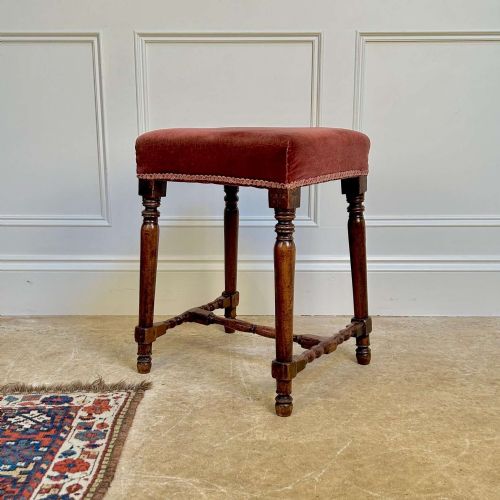


Padded Velvet Stool
A padded velvet stool brings tactile richness and practical seating to any room, combining period timber frames with soft textile tops.
Padded Velvet Stool
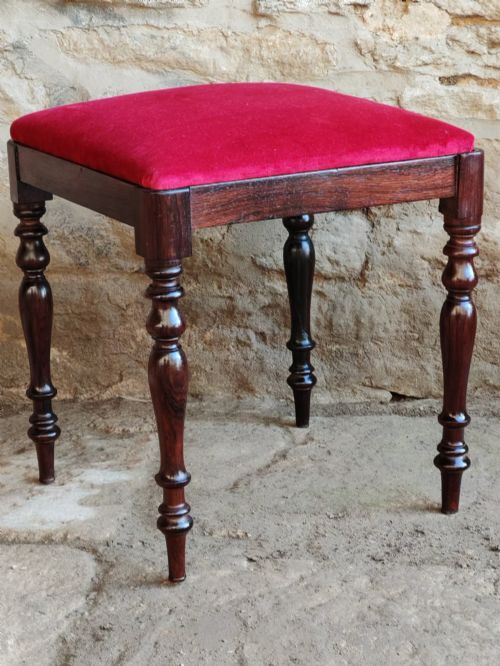
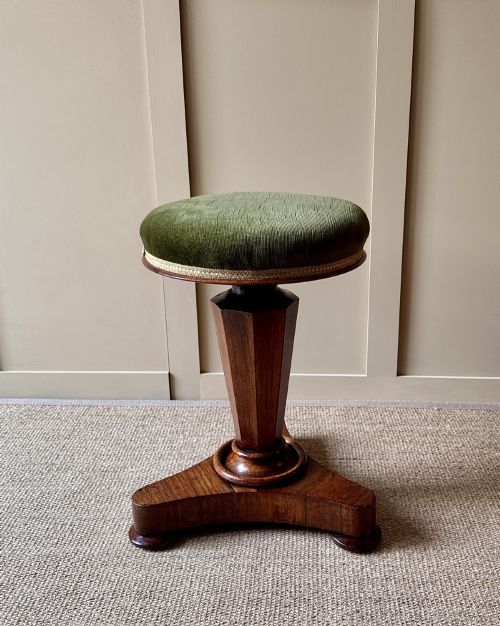
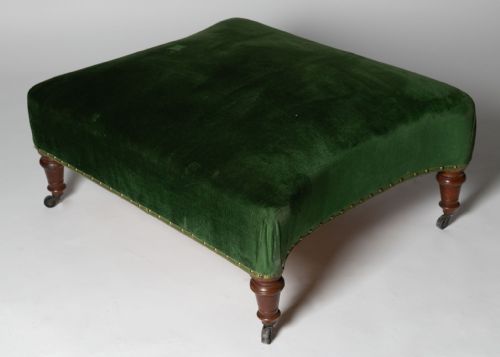
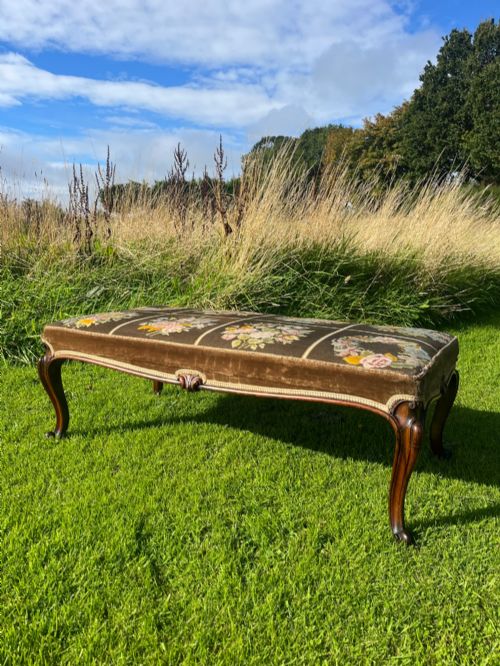
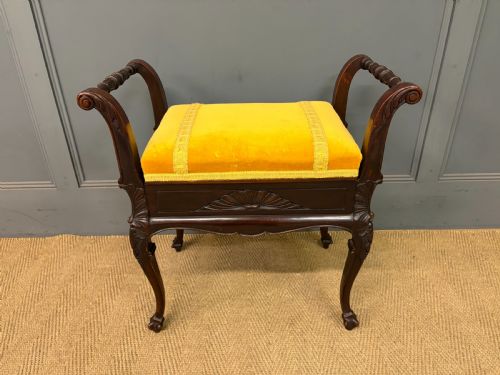
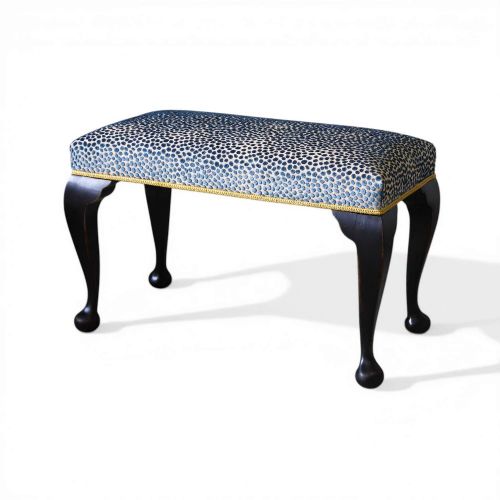
A padded velvet stool encompasses footstools, piano stools, window seats, and larger ottomans spanning the nineteenth century through the Edwardian period and earlier Georgian eras. These pieces serve multiple domestic functions, operating as dressing table seats, adjustable music stools, or low rests for tired feet.
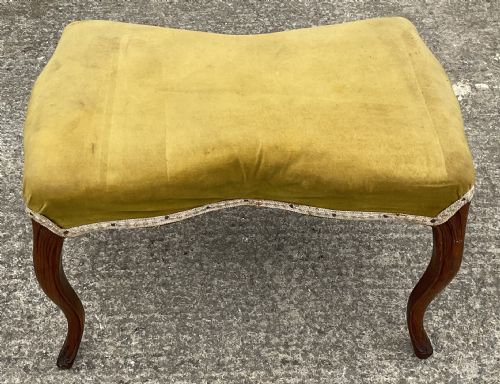
Victorian examples in walnut, mahogany, and rosewood dominate the selection, often displaying carved cabriole legs, giltwood surfaces, or X-frame geometry. Alongside these, Edwardian and Georgian iterations offer inlaid woodwork, ebonised finishes, and proportions suited to period interiors.
Materials and construction
Carpenters and cabinet makers utilised dense hardwoods including mahogany, walnut, rosewood, oak, and beech to construct robust frames, frequently turning or carving the timber into cabriole legs, paw feet, and structural supports. These wooden skeletons receive padding and textile coverings, incorporating velvet alongside needlepoint and patterned fabrics.
Joinery techniques span traditional mortise and tenon joints alongside turned uprights and X-frame bracing, ensuring structural integrity beneath the upholstered top. Metal mechanisms appear in rising piano seats and adjustable gout stools, adding mechanical function to domestic woodwork.
Padded Velvet Stool Retail Price Guide 2026
Typical asking prices for padded velvet stool among the pieces listed under this phrase on Sellingantiques today, from the lower quarter to the upper quarter. They describe what is for sale here now, not the wider market.
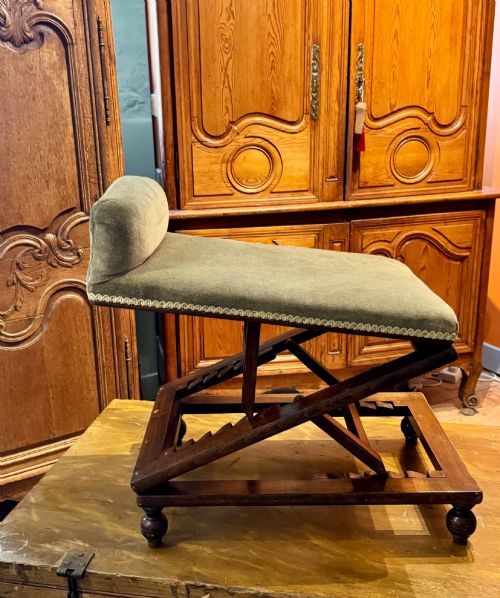
Keep an eccentric gout stool nearby for foot elevation or pretend you possess a Victorian medical complaint.
Assessing craftsmanship
The distinction between standard domestic seating and superior examples lies in the depth of timber carving, the precision of frame joinery, and the selection of cabinet woods such as figured rosewood or carved walnut. Finer pieces demonstrate meticulous hand-carving on cabriole legs, giltwood surfaces, or intricate woodwork in the manner of specific historical revivals.
Upholstery finish and mechanism reliability differentiate standard variants from higher-grade items, particularly in adjustable piano stools and rising seats. The integration of quality textiles like velvet over sturdy internal padding dictates the tactile and visual presence of the finished piece.
James Shoolbred·B. North and Son
The Padded Velvet Stool Glossary
- Cabriole leg
- A furniture leg that curves outward at the knee and tapers inward toward the ankle, ending in a pad, claw, or scroll foot. This form derives from animal limbs and appears frequently on eighteenth and nineteenth-century seating.
- Gout stool
- A specialised footrest featuring an adjustable sloping top designed to elevate and support the foot or leg of someone suffering from gout. These pieces often incorporate mechanical ratchets to alter the angle of the padded surface.
- Ottoman
- A low upholstered seat or bench without a back or arms, sometimes fitted with internal storage or resting on carved wooden feet. They appear in large rosewood and mahogany configurations across nineteenth-century interiors.
- X-frame
- A structural furniture base formed by two intersecting diagonal members shaped like the letter X. This configuration provides sturdy support for stools and benches across various revival styles.
- Giltwood
- Timber that has been coated with a thin layer of gold leaf or gilt finish. This decorative treatment appears on formal Victorian and Georgian window seats and decorative stools.
Padded Velvet Stool: Frequently Asked Questions
Where should I place a piano stool?
A piano stool sits naturally beside a keyboard instrument or acts as an occasional seat in a music room or living space. Adjustable versions allow users to alter the height for comfort during playing.
In rooms without a piano, these pieces function effectively as dressing table seats or low decorative accents beneath a window.
How do I identify a Victorian stool?
Victorian examples typically feature dark hardwoods such as walnut, mahogany, or rosewood, paired with heavy turned legs, cabriole supports, or carved frames. Stylistic details often draw on Gothic Revival or Victorian Rococo Revival vocabulary.
Upholstery schemes frequently utilise velvet, needlepoint, or textured fabric secured over robust internal wooden frames.
What is an ottoman used for?
An ottoman provides a wide, padded surface to rest feet or serve as extra impromptu seating in reception rooms. Larger nineteenth-century iterations command space in drawing rooms as freestanding centre pieces.
Their substantial upholstered tops offer soft tactile contrast to surrounding wooden furniture and timber flooring.
Can I use an antique footstool daily?
Solid hardwood frames built from mahogany, oak, or walnut provide enduring structural strength for everyday domestic use. Regular placement under desk or chair areas suits sturdy nineteenth-century and Edwardian forms well.
Checking the stability of the joints and the condition of the padding ensures the piece remains functional for modern living.