





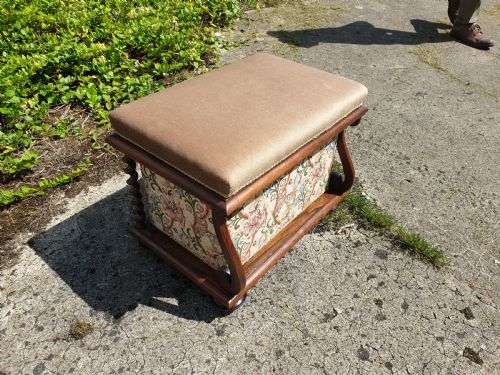

Padded Storage Ottoman
A padded storage ottoman brings period character and concealed storage to a room, offering a seat and a box in one piece.
Padded Storage Ottoman
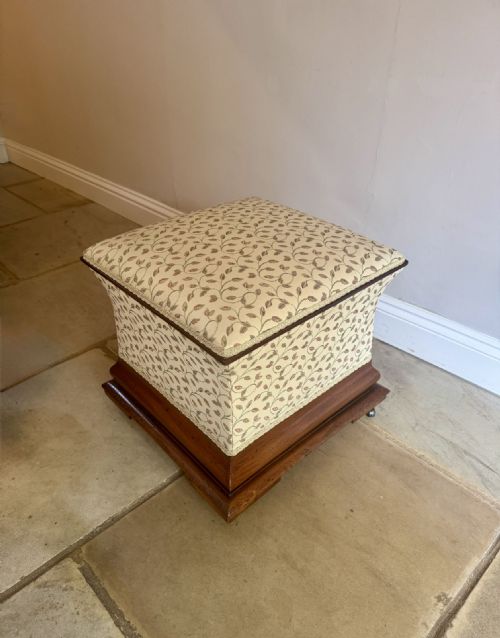
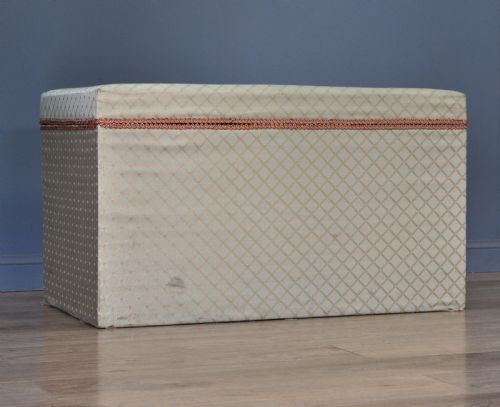
A padded storage ottoman combines a seated surface with an internal compartment, appearing in forms such as box seats, blanket boxes, and daybeds. These pieces date across the Regency, Victorian, and early twentieth-century periods, showing regional English craftsmanship and traditional styling.
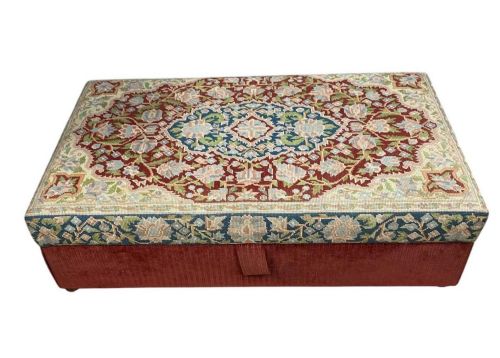
The most common examples encountered on this page are Victorian and nineteenth-century pieces upholstered in leather, fabric, or needlepoint. They range from modest footstools to large mahogany and rosewood blanket boxes with integrated storage spaces.
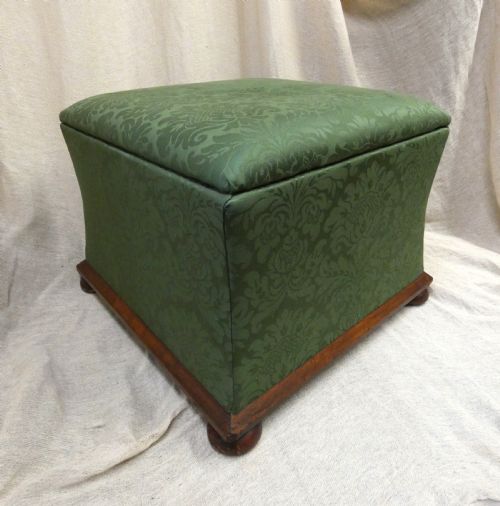
Makers and designers from these eras utilised various forms, including waisted stools, concave blanket boxes, and daybeds with reversible box sections. Each piece serves dual functions for sitting and storing household items.
How they were made
Makers constructed the frames using hardwoods like mahogany, rosewood, walnut, birch, and pine, often incorporating brass details such as lions paw feet. Joinery techniques from the nineteenth century ensured structural stability for pieces intended to bear weight while holding contents.
Upholstery methods involved deep buttoning, needlepoint, gros-point needlework, and Liberty fabric coverings over padded interiors. Leather was frequently hand dyed or fitted tightly to the wooden frames of box seats and footstools.
Padded Storage Ottoman Retail Price Guide 2026
Typical asking prices for padded storage ottoman among the pieces listed under this phrase on Sellingantiques today, from the lower quarter to the upper quarter. They describe what is for sale here now, not the wider market.
What varies in quality
The grade of timber and the complexity of the frame construction distinguish different examples, with richly grained rosewood and figured mahogany sitting above simpler pine chests. Finely carved details, such as lions paw feet or gothic revival mouldings, indicate higher standards of craftsmanship.
The preservation of original upholstery, whether needlepoint, gros-point, or hand dyed leather, alters the character and integrity of a piece. Robust internal box construction and functional hinges mark the distinction between everyday utility and finer cabinet work.
The Padded Storage Ottoman Glossary
- Ottoman
- A padded seat or stool without a back or arms, featuring a hollow interior accessed by lifting the top. It functions as both furniture and storage.
- Blanket Box
- A large wooden chest designed to store textiles, frequently adapted with upholstered lids to serve as seating. These often appear in mahogany or pine.
- Gros-point
- A type of needlework using heavy yarn on canvas to create durable, textured patterns. It frequently covers the tops of nineteenth-century footstools.
- Regency
- A British design period spanning the early nineteenth century, known for classical motifs and dark woods like rosewood and mahogany. Pieces from this era often feature distinctive foot carvings.
- Waisted
- A shape that curves inward towards the middle of the frame, commonly seen in nineteenth-century stool designs. This contour lightens the visual bulk of the piece.
Padded Storage Ottoman: Frequently Asked Questions
What is a padded storage ottoman?
A padded storage ottoman is a combined seating and storage furniture item featuring a hinged or removable upholstered top over a hollow base. These pieces function as footstools, blanket boxes, or daybeds.
Historically constructed from woods like mahogany, rosewood, and pine, they provide hidden space for household items while serving as seats.
How were these ottomans used historically?
These items served various roles in nineteenth-century and early twentieth-century interiors, acting as dressing stools, window seats, and blanket storage. People placed them in bedrooms and living rooms for daily seating and linen keeping.
Reversible box ottomans and daybeds also offered versatile resting spaces within domestic settings.
How do I identify a Victorian ottoman?
Victorian examples often feature dense hardwoods such as mahogany and walnut, alongside deep buttoned upholstery or needlepoint covers. Details like gothic revival styling or turned wooden legs help signal this period.
Construction methods from the mid to late nineteenth century also guide dating.
What materials are used in these pieces?
Frames consist of timbers including mahogany, rosewood, walnut, birch, and pine, sometimes accented with brass fittings. Upholstery materials range from hand dyed leather to velvet, fabric, and wool needlework.
Internal compartments rely on wooden box construction paired with padding for the seat.
How do I care for antique leather upholstery?
Antique leather requires gentle cleaning and conditioning to maintain its flexibility and appearance over time. Avoid harsh chemicals and keep the material away from direct heat sources.
Hand dyed leather finishes benefit from specialist waxes appropriate for period items.