

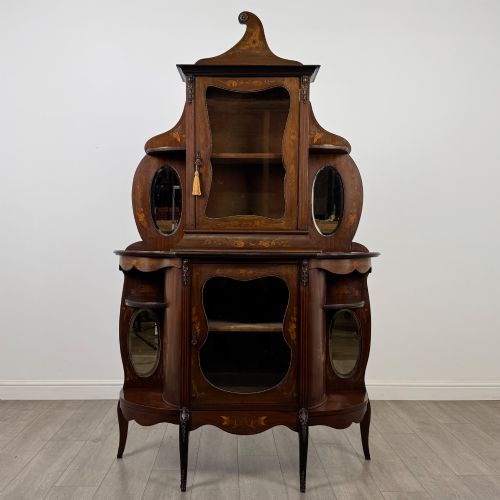


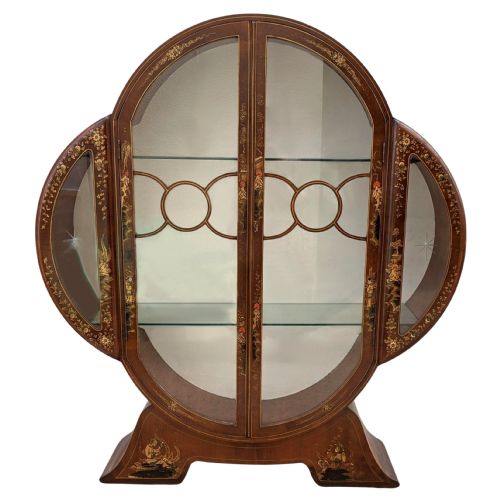


Oval Mahogany Vitrine Cabinet
An oval mahogany vitrine cabinet offers glass-enclosed display for small treasures, combining refined timber frames with visible interior surfaces.
Oval Mahogany Vitrine Cabinet
An oval mahogany vitrine cabinet is designed to showcase small collections, jewellery and curiosities while keeping them protected under glass. These pieces span the nineteenth century, the Edwardian era and the nineteen-thirties, emerging in both English and French workshops.
The most common formats on this page are freestanding display tables, often called bijouterie tables, alongside upright cabinets with glazed panels. They typically utilise rich mahogany timber, frequently enhanced with boxwood or satinwood inlay and mounted with ormolu.
Makers shaped these display pieces in various aesthetics, including late Victorian, Edwardian, Art Deco and French revival styles such as Louis XVI. Buyers encounter everything from simple glazed display stands to intricate marquetry tables lined with velvet or fabric.
Construction and Materials
Cabinetmakers built the structural frames using solid mahogany and mahogany veneers, shaping curved timber to form the characteristic oval outlines. Glass panels were fitted into doors and tabletops to provide all-round visibility for the contents within.
Interiors were typically lined with velvet or fabric to cushion displayed items and provide a contrasting background for precious objects. Artisans embellished exteriors with ormolu mounts, gold leaf and delicate marquetry using boxwood and satinwood inlay.
Oval Mahogany Vitrine Cabinet Retail Price Guide 2026
Typical asking prices for oval mahogany vitrine cabinet among the pieces listed under this phrase on Sellingantiques today, from the lower quarter to the upper quarter. They describe what is for sale here now, not the wider market.
Every velvet lining whispers of forgotten monocles, silver snuffboxes, and the quiet afternoon clink of unseen collectors rearranging their miniature worlds.
Assessing Quality and Execution
The refinement of the timber work and the precision of the marquetry inlay set the standard for these display pieces. Finer examples display meticulous hand-cut stringing and seamlessly curved glass rather than rigid multi-panel framing.
Mounts and interior treatments distinguish superior items, where cast ormolu details and fitted velvet linings retain their original crispness and integrity. The fluidity of the oval form itself demonstrates the joiner's skill in handling curved construction.
The Oval Mahogany Vitrine Cabinet Glossary
- Vitrine
- A glass-fronted cabinet designed for displaying fine objects and curiosities. These pieces rely on transparent panels to let light reach the collection from multiple angles.
- Bijouterie table
- A glass-topped display table intended for jewellery, medals and small ornaments. They often feature hinged lids that lift to grant access to the lined interior.
- Ormolu
- Gilt bronze mounts applied to furniture for decorative enrichment. The technique involves treating bronze with an amalgam of gold to produce a rich metallic finish.
- Marquetry
- Decorative patterns formed by fitting together contrasting veneers of wood. Artisans slice thin sheets of timber such as satinwood and boxwood to create intricate pictorial designs.
- Vernis Martin
- A type of simulated Japanese lacquer developed in France during the eighteenth century. It employs multiple layers of varnish to achieve a translucent, glossy surface.
Oval Mahogany Vitrine Cabinet: Frequently Asked Questions
What were oval mahogany vitrine cabinets used for?
These cabinets served primarily to display precious personal items, fine jewellery, medals and small curiosities in drawing rooms and reception spaces.
The glass panels allowed owners to show off their collections to guests while keeping delicate pieces safe from dust and handling.
How do I tell Edwardian pieces from nineteenth-century ones?
Nineteenth-century pieces often lean towards heavier proportions, richer ormolu mounts and French revival styles.
Edwardian examples tend to feature lighter framing, delicate marquetry inlay and subtle satinwood or boxwood stringing.
Where should I place a bijouterie table?
These tables work well in reception rooms, studies or hallways where natural light can enter the glass top and illuminate the contents.
They function best away from direct heat sources and strong sunlight to protect the interior fabrics and timber finishes.
Are these cabinets purely French or English?
The pieces seen here originate from both French and English workshops, reflecting different regional tastes in furniture design.
French items frequently incorporate ormolu mounts and Louis styles, while English examples often showcase refined inlay work.