
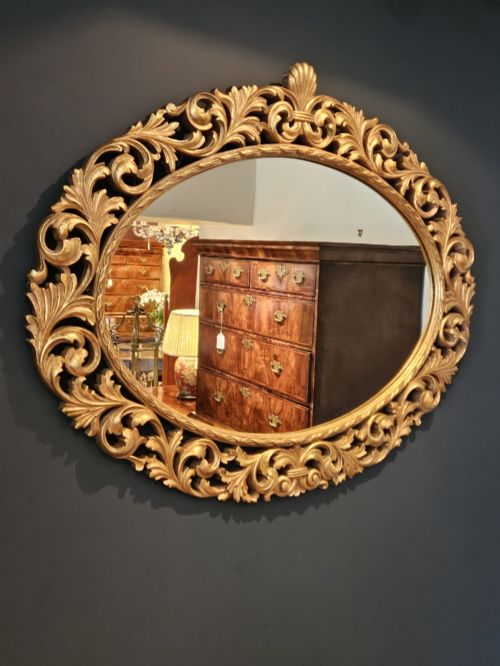


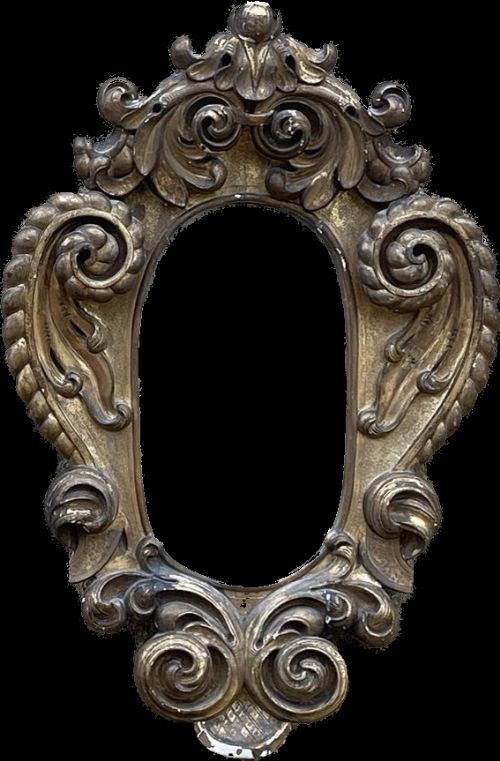


Oval Baroque Mirror
An oval baroque mirror brings dramatic carved movement to a room, offering deep gesso scrolls and gleaming antique glass.
Oval Baroque Mirror
When you search for an oval baroque mirror, you encounter reflective pieces spanning from the late seventeenth century through the nineteenth century, alongside later revivals. The selection includes wall mirrors, table mirrors, and large overmantle pieces designed for halls and reception rooms.
Italian examples dominate the ornate end of the scale, often rendered in giltwood and gesso with deep relief carving. Alongside these, British and continental interpretations appear in carved timber, walnut, and silver gilt finishes.
Forms shift between pure seventeenth and eighteenth-century originals and nineteenth-century revivals such as Carolean, Rococo, and Victorian Gothic styles. The plates themselves range from early mercury glass to later silvered surfaces showing age.
How they were made
Carvers shaped solid timber, wood, and walnut to form the deep structural frames before applying layers of gesso. This fine plaster mixture built up the intricate scrolls and acanthus motifs characteristic of the style.
Gilding involved laying gold leaf or silver leaf over the prepared gesso ground, sometimes utilising specialised finishes like lacca a mecca. Artisans then fitted hand-beveled glass plates, secured from behind with traditional wooden panels.
Listings feature periods spanning from the seventeenth century to the Victorian era, utilising materials such as gesso, giltwood, and silver leaf.
What varies in quality
Depth and sharpness in the wood carving separate masterwork frames from simpler production pieces, with undercut foliage showing superior hand skill. The crispness of the gesso application beneath the leaf dictates how well the ornamentation holds its definition over centuries.
Originality of the glass plate heavily influences the character of the piece, particularly where surviving mercury plates retain their soft, mottled reflection. The intactness of the original gilding and the absence of heavy modern over-painting preserve the historic integrity of the surface.
The Oval Baroque Mirror Glossary
- Giltwood
- Wood that has been coated with gold leaf applied over a prepared gesso base. This finish provides a warm, reflective metallic sheen that mellows gently with age.
- Gesso
- A mixture of plaster of Paris or chalk with glue, used to create a smooth surface for gilding or to build up raised decorative mouldings. It allows carvers to achieve fine, sharp relief details.
- Mercury plate
- An early type of mirror glass backed with a tin and mercury amalgam before the invention of modern chemical silvering. It typically exhibits characteristic cloudiness and dark spots known as foxing.
- Lacca a mecca
- A traditional Italian finishing technique involving layers of metallic leaf covered with a transparent yellow varnish to imitate gold. It creates a rich, deep amber tone on antique frames.
- Foxing
- Small dark spots and speckles that develop in the silvering or backing of antique mirrors over time. This natural oxidation process is valued by collectors as proof of age.
Oval Baroque Mirror: Frequently Asked Questions
How do I hang a heavy antique wall mirror?
Heavy carved frames require professional wall fixings secured directly into masonry or solid timber studs rather than standard plasterboard hooks. The weight of the timber and gesso demands a robust bracket system.
Ensure the hanging wire or integrated metal loops on the reverse match the structural load of the specific piece before mounting it securely at eye level.
Are original mirror plates always clear?
Original mercury and early silvered plates develop natural ageing characteristics, including foxing, minor scratches, and uneven reflection. These traits reflect the handmade manufacturing techniques of the seventeenth and eighteenth centuries.
Far from being defects, these atmospheric qualities confirm the genuine antiquity of the glass and add distinct historical depth to the reflection.
How do I tell an 18th-century frame from a 19th-century revival?
Seventeenth and eighteenth-century frames show hand-carved tool marks, heavy timber shrinkage, and traditional construction methods behind the gesso. The complexity of the under-carving and the composition of the gesso layers differ noticeably from later copies.
Nineteenth-century revival pieces often employ standardised moulding techniques and possess a different weight and timber density typical of later Victorian production.