

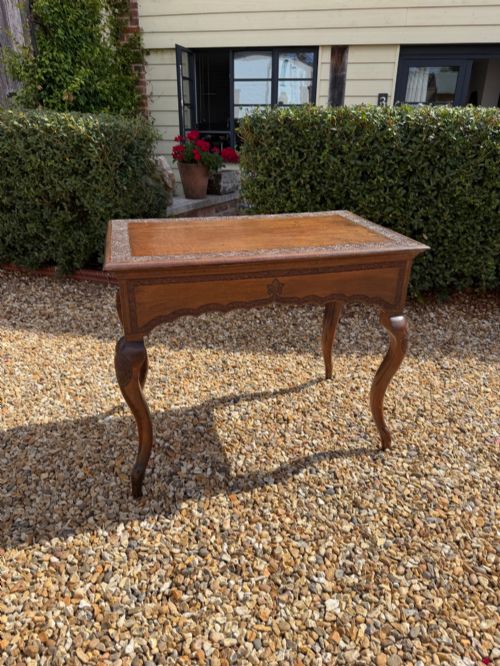
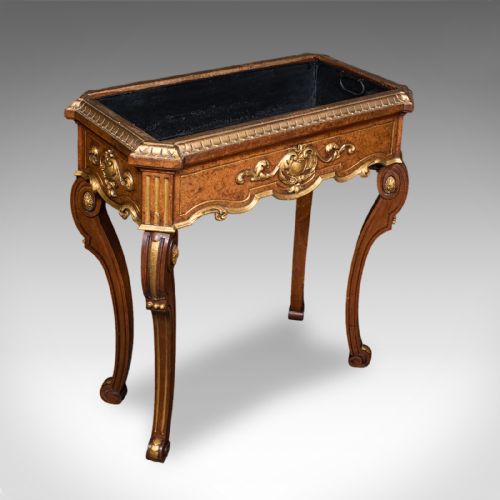
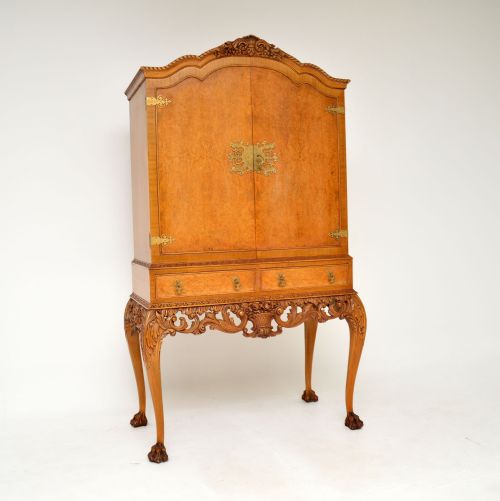
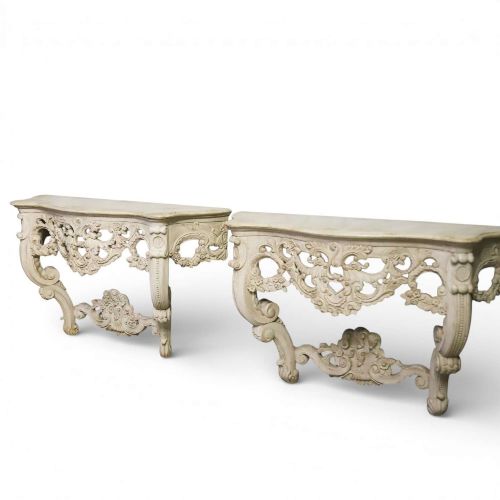



Ornate Wooden Furniture
Ornate wooden furniture brings heavy carving, rich timber and historical regional revival styles directly into a room.
Ornate Wooden Furniture
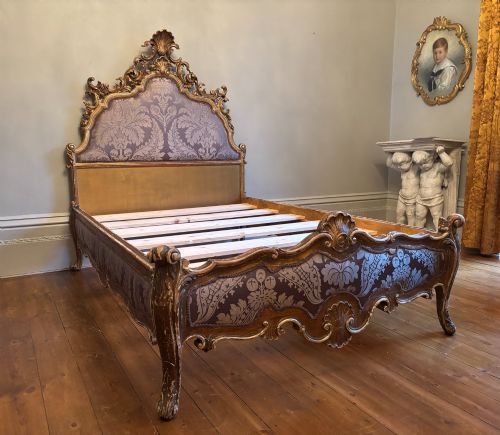
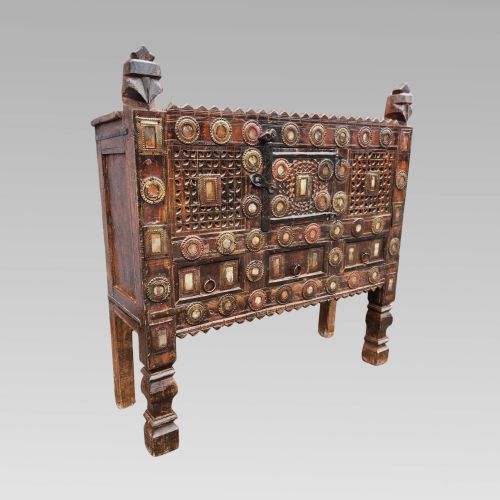
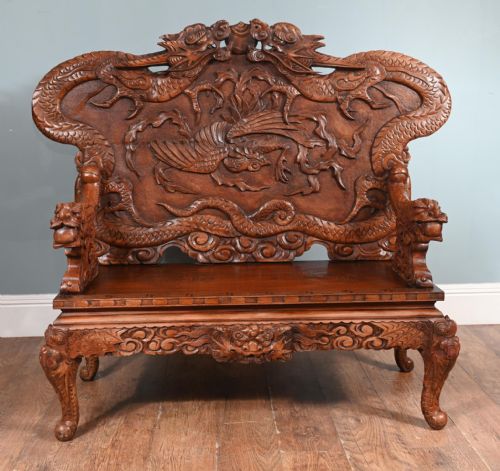
Ornate wooden furniture encompasses heavily detailed seating, storage and tables produced across various international and European workshops. Pieces bearing this description draw heavily on regional revival aesthetics such as French Rococo, Italian styling and Anglo-Indian craftsmanship.
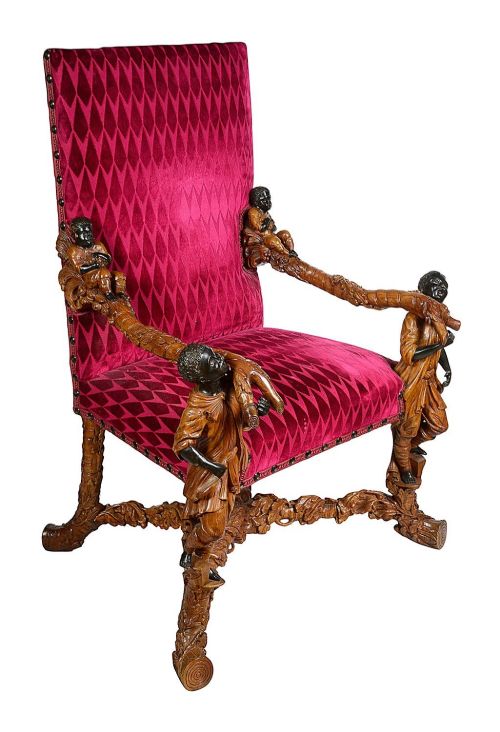
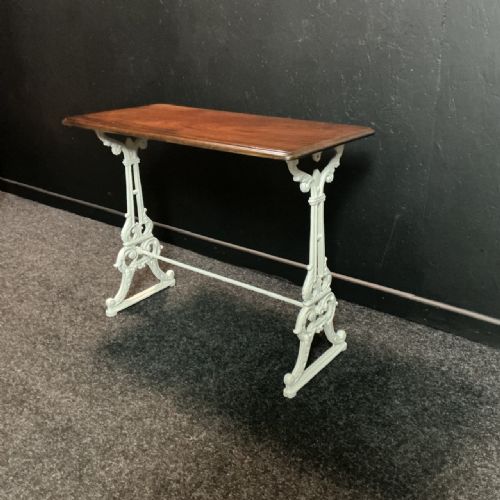
Buyers encountering this selection most frequently meet console tables, hall chairs, cabinets and writing desks originating from the nineteenth century. These forms often display elaborate surface work, deep relief carving and contrasting timber tones.
Originating from periods spanning the eighteenth century through to the early twentieth century, these items reflect diverse stylistic impulses. Pieces range from European walnut and oak creations to intricately carved teak and padauk items from colonial contexts.
Materials and Making
Cabinetmakers and carvers utilised dense hardwoods including walnut, oak, teak, padauk, and rosewood to support deep three-dimensional decoration. These timbers provided the structural stability needed for elaborate pierced work and heavy relief carving.
Surface finishes varied widely according to origin, incorporating clear wax polish on European walnut, painted schemes, and rich lacquer work. Joinery techniques combined traditional mortise and tenon frames with extensive hand-chiseled embellishment.
Ornate Wooden Furniture Retail Price Guide 2026
Typical asking prices for ornate wooden furniture among the pieces listed under this phrase on Sellingantiques today, from the lower quarter to the upper quarter. They describe what is for sale here now, not the wider market.
Design influences span Italian Rococo revival, French provincial, Chinese lacquerwork and Anglo-Indian colonial production.
Assessing Quality
Quality rests upon the crispness of the hand carving and the depth of the relief work rather than mere surface elaboration. Superior examples demonstrate confident execution where every chisel mark contributes to a coherent decorative scheme.
The choice and figuring of the timber dictate the baseline merit of a piece, with well-selected burr elm, figured walnut or dense padauk elevating the overall result. Structural integrity beneath the ornament ensures that the piece functions as intended without relying solely on visual distraction.
The Ornate Wooden Furniture Glossary
- Padauk
- A heavy, durable tropical hardwood displaying a warm reddish hue, frequently encountered in nineteenth-century Anglo-Indian furniture. It accepts fine detail work exceptionally well.
- Console Table
- A wall-mounted or bracket-supported table designed to stand against a vertical surface. These tables often feature elaborate carved legs and ornamental friezes.
- Mazarin Commode
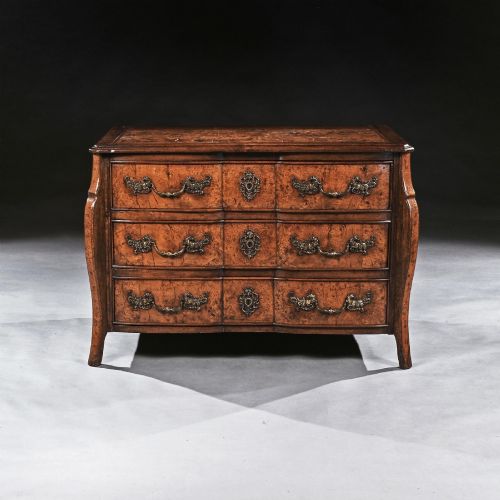
- A distinctively shaped low cabinet or desk featuring central recessed cupboards flanked by banks of drawers. It is associated with high-status eighteenth-century European craftsmanship.
- Savonarola Chair
- A folding armchair constructed from multiple curved wooden slats forming a lattice-like X-form frame. This style dates back to the Italian Renaissance revival.
- Cinnabar Lacquer
- A technique involving multiple layers of vermilion-coloured lacquer applied to a wooden core before being deeply carved. It produces a rich, tactile surface relief.
Ornate Wooden Furniture: Frequently Asked Questions
How do I clean carved wooden furniture?
Dust intricate surfaces gently using a soft natural bristle brush to prevent particle buildup inside deep relief carving. Avoid modern liquid polishes that leave residues in the grain.
Feed the timber periodically with a microcrystalline wax to preserve the natural lustre of the wood without softening historic finishes.
Where should I place a console table?
Position console tables against prominent hallway walls or beneath large mirrors where their decorative bases and carved aprons can be fully appreciated. They offer a strong focal point upon entering a space.
Ensure the surface height and depth align with surrounding architectural proportions so the piece anchors the room effectively.
How can I identify Anglo-Indian furniture?
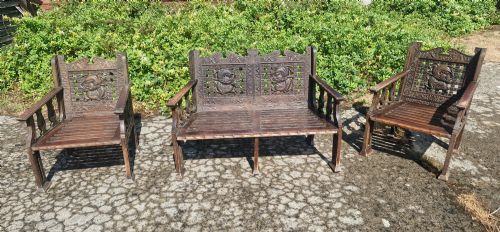
Look for dense tropical timbers such as teak and padauk combined with dense, continuous floral or figurative carving. These works often merge British furniture forms with indigenous craft traditions.
Examine the construction methods and secondary timbers beneath the surface to confirm regional origin and period characteristics.
Are these pieces suitable for daily use?
Many solid hardwood tables, chairs and cabinets remain robust enough for everyday living when handled with reasonable care. Sturdy joints and heavy timbers support practical household functions.
Protect delicate carved edges and projecting decorative elements from heavy knocks by placing items thoughtfully within high-traffic areas.