




Ornate Wood Chest
An ornate wood chest brings heavy historic character to a room, offering rich carvings and brass work that catch the eye immediately.
Ornate Wood Chest
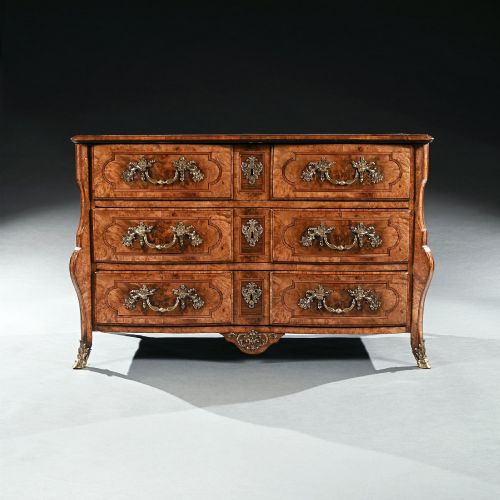
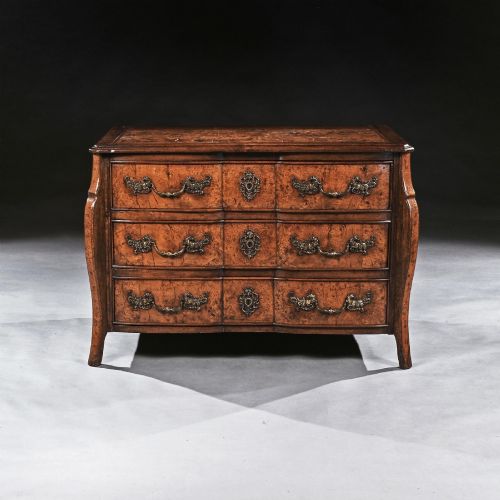
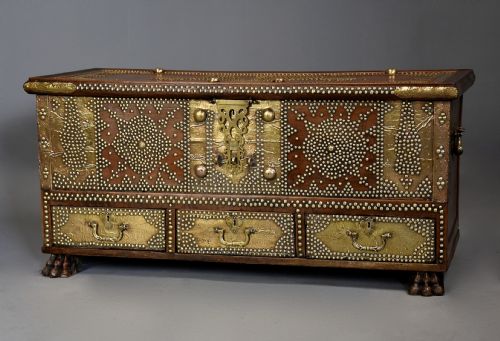
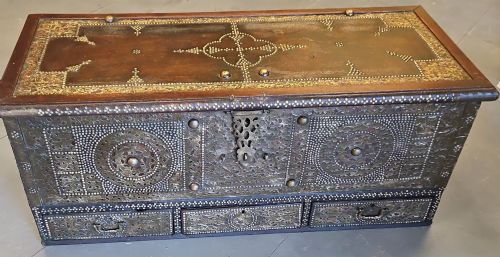
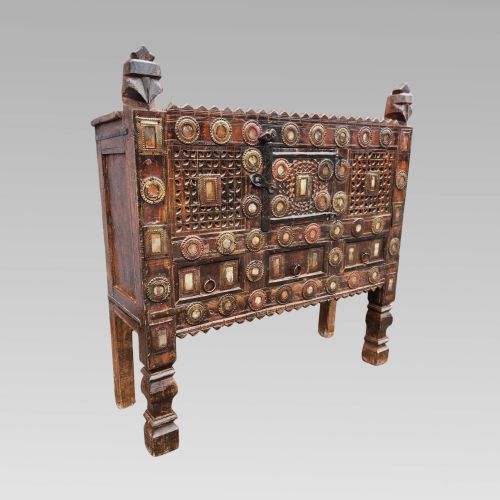
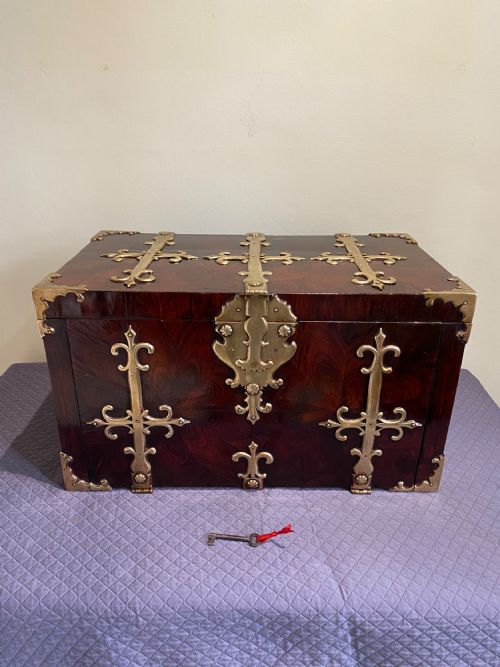
When you search for an ornate wood chest, you are looking at substantial storage pieces and smaller decorative boxes that span multiple centuries and international workshops. The examples on this page range from grand 17th century Italian cassone chests and French commodes to intricate 19th century Anglo-Indian dowry cabinets and Zanzibar traders chests.
Regional styles dictate the appearance significantly, moving from European walnut and burr maple commodes to Indian carved teak and Middle Eastern hardwood caskets. Each piece serves as both a functional container and a focal point of decorative artistry.
Materials and construction methods
Construction relies heavily on dense hardwoods and exotic timbers such as walnut, teak, rosewood, coromandel, and kingwood, often enhanced by burr maple or elm veneers. Artisans employed traditional joinery to build sturdy carcases capable of supporting elaborate surface decoration.
Surface ornamentation defines these objects, utilising applied brass stud work, intricate marquetry, and deep hand-carving executed across different global workshops. Metal mounts, hinges, and gilt bronze elements provide both structural reinforcement and striking visual contrast against the dark timber.
Ornate Wood Chest Retail Price Guide 2026
Typical asking prices for ornate wood chest among the pieces listed under this phrase on Sellingantiques today, from the lower quarter to the upper quarter. They describe what is for sale here now, not the wider market.
Listings feature items spanning the 17th, 18th, and 19th centuries, including Victorian, Regency, and Edwardian periods.
Assessing quality and craftsmanship
Quality rests in the crispness of the hand-carving and the precision of the marquetry inlay, where superior pieces exhibit deep relief and tight joints without awkward gaps. The integrity of the timber, particularly figured veneers and choice hardwoods, dictates the overall presence of the object.
Hardware and secondary elements also separate standard examples from finer works, noting the weight and detail of brass studs, handles, and internal fittings. Original surfaces and patination preserved over centuries elevate an item above heavily restored equivalents.
Thomas Hache of Grenoble
The Ornate Wood Chest Glossary
- Cassone
- A large Italian chest traditionally used for storing bridal trousseau items. These Renaissance and later pieces often feature elaborate carving or gilt decoration.
- Commode
- A low chest of drawers or cabinet developed in France during the 18th century. They frequently showcase fine veneers and decorative mounts.
- Damchiya
- A traditional Indian dowry chest or storage cabinet used in domestic interiors. They are characterised by deep relief carving and sturdy proportions.
- Marquetry
- The art of applying pieces of veneer to a structure to form decorative patterns and pictures. Craftsmen utilise various contrasting woods to achieve pictorial depth.
- Caddy
- A small box or chest originally designed for storing tea leaves securely. Victorian examples often feature internal compartments and fine brass or wood inlays.
Ornate Wood Chest: Frequently Asked Questions
What is an ornate wood chest used for today?
These historic pieces function well as living room coffee tables, bedroom blanket boxes, or statement storage furniture for household items. Smaller variants like tea caddies and jewellery boxes serve to hold precious trinkets on a desk or dressing table.
Their striking carvings and rich timber tones allow them to anchor a room's decor while providing practical enclosed storage. Owners often use them to introduce texture and historical depth into contemporary interiors.
How do I identify the period of a wooden chest?
Dating relies on examining the construction methods, timber choices, and stylistic markers specific to eras such as the 17th, 18th, or 19th century. Regional traits, such as Anglo-Indian carving or French Regence veneers, offer strong clues regarding origin and age.
Secondary woods, interior linings, and the wear patterns on handles and feet further help establish when a piece was made. Comparing the decorative motifs against documented historical styles confirms the timeline.
Where should I place a heavy wooden chest?
Position these substantial pieces against a primary wall in a hallway, bedroom, or living room where their carved details can be appreciated. Ensure the floor can support the weight of dense hardwoods and metal-studded trunks.
Keep them away from direct heat sources and strong sunlight to prevent the timber and veneers from drying out or cracking over time.
How do I care for antique wood and brass?
Dust the timber surfaces regularly with a soft, dry cloth to prevent dirt buildup in the carved recesses and grain. Apply a quality natural wax occasionally to nourish the wood and maintain its historic sheen.
Avoid commercial liquid polishes and keep brass mounts free of harsh chemical cleaners to preserve their natural patination. Gentle maintenance ensures the surface remains stable and protected.