



Ornate Wood Box
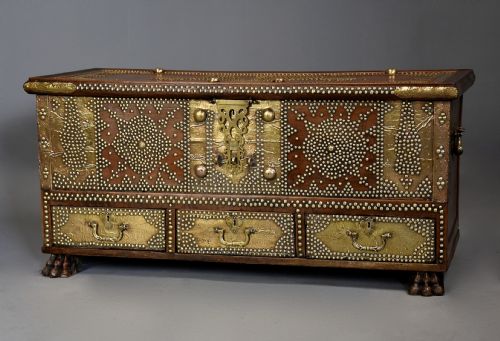
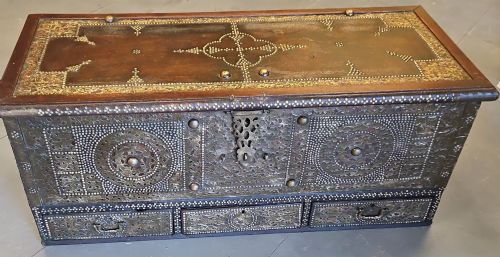
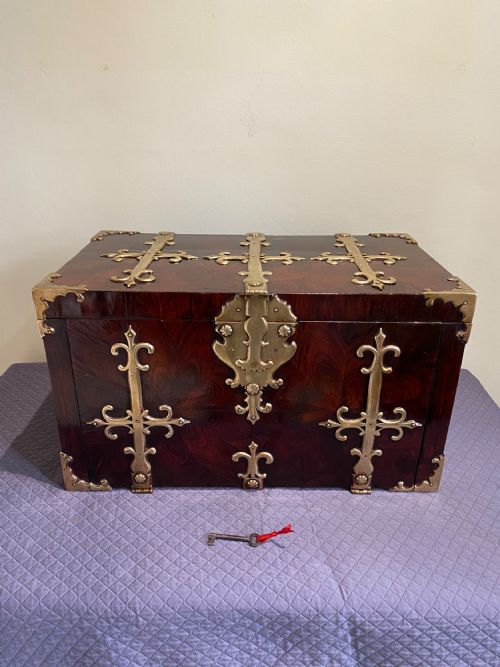
An ornate wood box gathers the decorative ambitions of nineteenth century Zanzibar traders, Victorian tea rooms and seventeenth century Italian workshops.
Ornate Wood Box
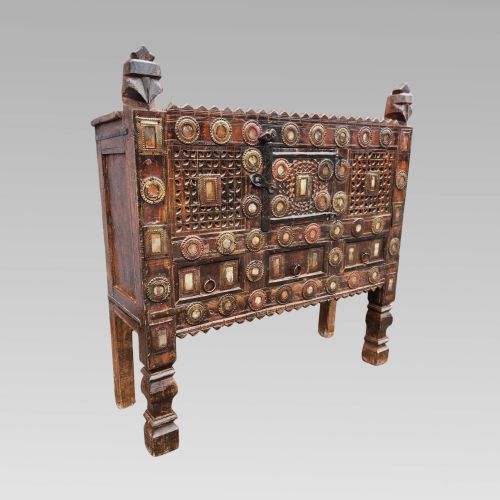
When you search for an ornate wood box, you encounter a varied selection of functional containers ranging from small tabletop tea caddies and jewellery boxes to substantial dowry chests and storage cabinets. These pieces encompass diverse global traditions, including Anglo-Indian, Zanzibar, Italian Gothic, and Iberian Baroque styles.
You are most likely to meet nineteenth century examples on this page, alongside earlier seventeenth century coffers and pieces from the nineteen twenties. The materials span native hardwoods like walnut, oak, and teak alongside exotic rosewood, coromandel, and kingwood.
The forms serve distinct historical purposes, from the intricate brass studwork of traders chests to the refined marquetry inlay of Victorian tea caddies and musical chairs. Each piece reflects the specific domestic or mercantile customs of its origin, bridging utilitarian storage with elaborate ornamentation.
How they were made
The construction relies on dense hardwoods such as teak, oak, walnut, rosewood, and coromandel, selected for their structural stability and rich grain. Carpenters and cabinet makers joined these timbers using traditional joinery appropriate to the scale of the box, whether a small snuff box or a large dowry chest.
Surface ornamentation defines these objects, combining structural carving in wood with applied decorative elements. Artisans utilised brass studs, brass mounts, inlay work in marquetry, giltwood highlights, and lacquered finishes to achieve the characteristic visual richness seen across the periods.
Ornate Wood Box Retail Price Guide 2026
Typical asking prices for ornate wood box among the pieces listed under this phrase on Sellingantiques today, from the lower quarter to the upper quarter. They describe what is for sale here now, not the wider market.
Materials represented include brass, teak, iron, hardwood, walnut, giltwood, and rosewood.
What varies in quality
Quality reveals itself in the precision of the joinery and the depth of the carving, where confident hand-cut details distinguish finer regional works from simpler production. The integration of decorative elements like brass inlay, studwork, and marquetry requires steady alignment that elevates the piece.
The selection of timber significantly influences the tier of the object, with dense exotic woods like coromandel and kingwood commanding greater material merit than standard domestic hardwoods. Preservation of the original surface finish and mounts maintains the integrity of the piece over centuries.
The Ornate Wood Box Glossary
- Marquetry
- Decorative inlay work using patterned wood veneers to create pictorial or geometric designs on the surface of a box. This technique requires meticulous cutting and fitting of contrasting timber pieces.
- Tea caddy
- A small container specifically designed for storing loose tea leaves securely. During the nineteenth century, these were often fitted with internal compartments and locking lids.
- Cassone
- A traditional large Italian chest or coffer used for storing household valuables or wedding dowries. These often featured elaborate carving, gilding, or painted decoration.
- Coromandel
- A dense, heavy exotic wood featuring dark brown coloration with contrasting black stripes, highly prized for luxury nineteenth century boxes. It provides a striking surface for brass mounts.
- Damchiya
- A traditional carved wooden storage cabinet or chest originating from India, often associated with dowry furnishings. They typically display deep relief carving and sturdy proportions.
Ornate Wood Box: Frequently Asked Questions
What is an ornate wood box used for?
These boxes served practical domestic and mercantile purposes, holding valuable jewellery, dry tea leaves, snuff, or domestic documents. Larger variants functioned as dowry chests or storage cabinets for household textiles.
Today, they continue to serve as desktop storage or focal points on side tables, maintaining their original utility while displaying intricate period craftsmanship.
How do I care for antique wood boxes?
Protect the wood and decorative mounts by keeping the box away from direct sunlight and sudden temperature shifts. Dust the carved surfaces gently with a dry, soft cloth rather than using liquid polishes.
Maintain a stable indoor humidity level to prevent the timbers and delicate marquetry inlay from expanding, contracting, or cracking over time.
How can I tell the period of a box?
Examine the timber species, construction methods, and decorative style, comparing them against known historical periods like the Victorian era or seventeenth century. Regional characteristics, such as Anglo-Indian carving or Dutch Colonial influences, offer strong clues to origin and date.
Hardware details, including brass mount styles and lock mechanisms, also help establish the approximate decade of manufacture.
Where were these boxes made?
The pieces originate from diverse workshops across Europe and global trade routes, reflecting distinct regional aesthetics. Examples include British colonial outposts, Italy, Switzerland, the Netherlands, and India.
Local timber availability and prevailing artistic styles of each specific culture shaped the final appearance of every individual box.