



Ornate Victorian Oil Light
An ornate victorian oil light brings the warm glow of the nineteenth century into a modern room with substantial weight and polished metal.
Ornate Victorian Oil Light
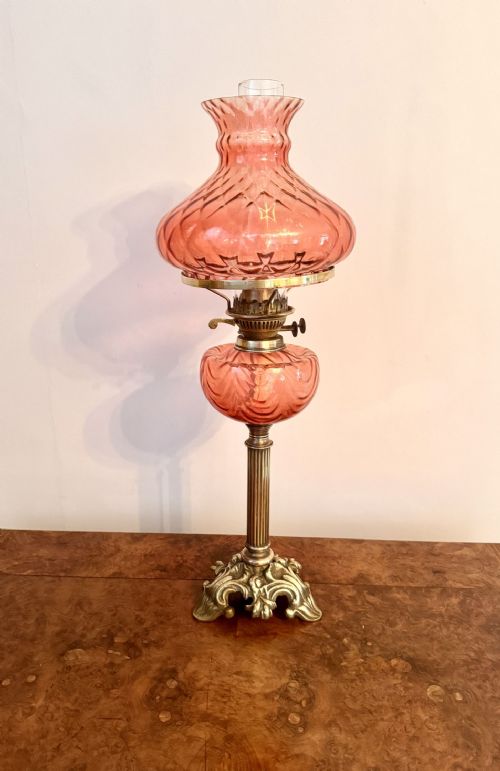
When you search for an ornate victorian oil light, you encounter substantial lighting pieces designed during the nineteenth century, most frequently appearing from the decades between eighteen seventy and eighteen ninety. These items take the form of table lamps, desk lamps, and taller floor or standard lamps meant to illuminate nineteenth-century interiors.
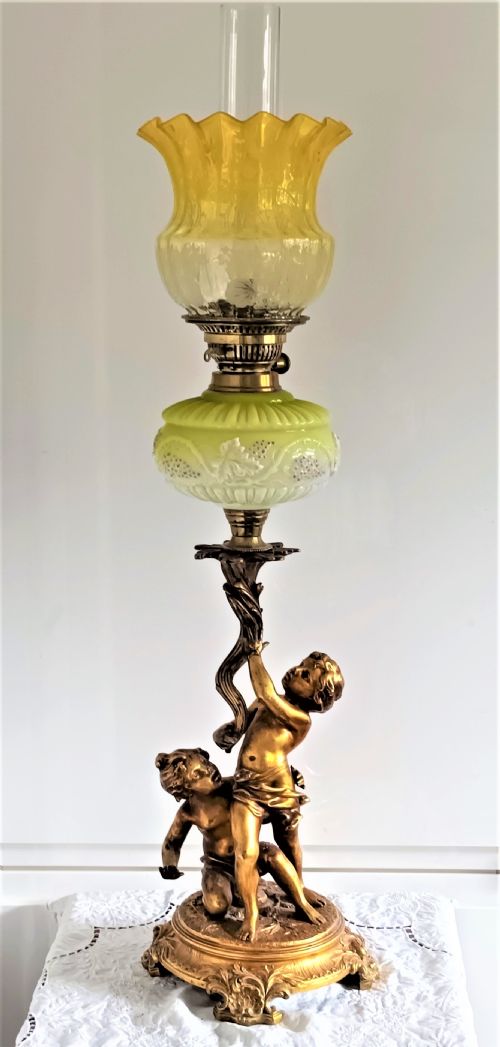
The pieces listed on this page span several distinct aesthetic movements, including traditional Victorian, Victorian Gothic Revival, Art Nouveau, and Napoleon III styles. You will find them constructed primarily as oil lamps, though several examples show later conversions for electrical use while retaining their original burners and reservoirs.
Makers and manufacturers represented in the evidence include Wild and Wessel, Messenger, and Mc Gary, alongside unmarked pieces carrying patent stamps or retailer marks. These domestic lighting instruments combine utilitarian function with elaborate ornamentation suited to principal reception rooms.
How they were made
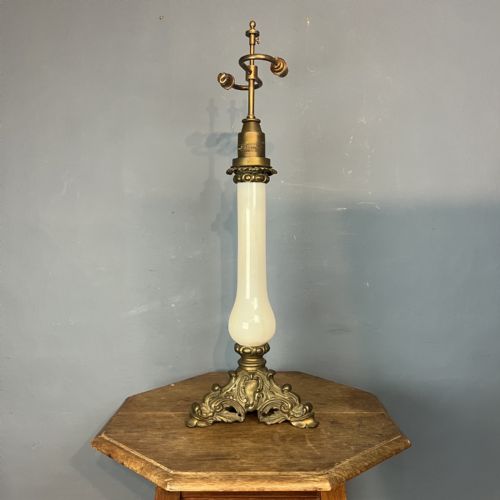
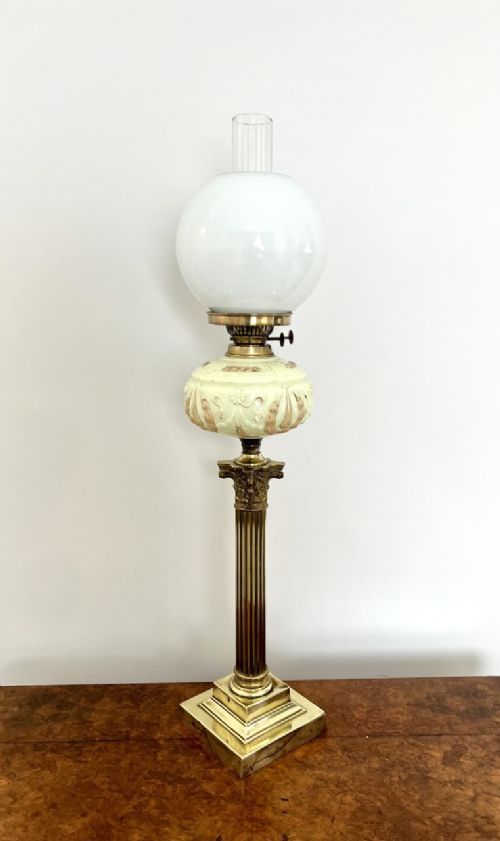
Makers constructed these lamps using durable metals such as brass, gilt brass, and ormolu, often pairing polished metallic components with contrasting ceramic, porcelain, and opaline glass reservoirs. This combination of heavy metal casting and delicate glasswork gave the lamps structural stability while allowing for decorative colour and surface pattern.
Artisans applied gilding and intricate surface detailing to the metal frames, incorporating stylistic elements from Gothic Revival and Art Nouveau vocabulary into the casting and mounts. Burner mechanisms and adjustable standards required precise engineering to allow height regulation and reliable operation of the oil reservoir wick systems.
Ornate Victorian Oil Light Retail Price Guide 2026
Typical asking prices for ornate victorian oil light among the pieces listed under this phrase on Sellingantiques today, from the lower quarter to the upper quarter. They describe what is for sale here now, not the wider market.
Periods represented on this page stretch from eighteen fifty through the late Victorian decade.
What varies in quality
The distinction between standard production and finer examples rests upon the weight of the metal casting, the crispness of the chased or moulded ornamentation, and the integration of distinct materials like hand-painted porcelain or opaline glass. Superior pieces exhibit heavier gauge brass, secure joints in extending standards, and original burner mechanisms stamped by renowned makers.
Design complexity also separates the tiers, with simpler domestic lighting sitting below ambitious standard lamps featuring adjustable mechanisms, multi-tiered porcelain columns, and sophisticated burner systems such as those by Wild and Wessel.
Mc Gary·Wild And Wessel·Messenger
The Ornate Victorian Oil Light Glossary
- Opaline glass
- A pale, translucent glass often milky-white in appearance, used extensively for lamp reservoirs and shades during the nineteenth century. It diffuses light softly and takes colour well.
- Ormolu
- A metallic technique involving the application of finely ground high-carat gold to a bronze or brass base, creating a rich golden finish on decorative mounts and lamp bases.
- Standard lamp
- A tall floor-standing lighting fixture, frequently adjustable in height, designed to illuminate a wider area of a room.
- Wild and Wessel
- A prominent Berlin-based manufacturing firm known for producing advanced burner systems and high-quality metal lamps during the late nineteenth century.
- Gilt brass
- Brass that has been treated with a thin layer of gold or gold-coloured wash to enhance its lustre and protect the underlying metal from tarnishing.
Ornate Victorian Oil Light: Frequently Asked Questions
Can these lamps still use oil?
Most of these pieces survive with their original burner mechanisms intact, though many have undergone conversion to electricity for modern convenience.
Collectors who wish to burn oil must ensure the font and wick assembly remain entirely sound and free from internal cracks or blockages.
How do I identify a standard lamp?
Standard lamps are tall floor-standing models designed to sit directly on the floor rather than on a table or desk.
Many examples in this category feature extending brass columns or adjustable mechanisms to alter the height of the light source.
What is opaline glass?
Opaline glass is a semi-translucent material popular in nineteenth-century lighting for its milky appearance and soft light diffusion.
It frequently appears as the main body or reservoir of the lamp, sometimes paired with gilt brass mounts.
How do I date a Victorian lamp?
Dating relies on stylistic clues, manufacturer stamps, and material combinations spanning the Victorian era from eighteen fifty to eighteen ninety.
Records of specific makers like Wild and Wessel or patent stamps help narrow the production period significantly.