







Ornate Silver Tableware
Ornate silver tableware brings dramatic Victorian and Edwardian craftsmanship to the dining room table through heavily decorated serving pieces and vessels.
Ornate Silver Tableware
When buyers search for ornate silver tableware, they encounter heavily decorated dining accessories spanning the nineteenth and twentieth centuries. The selection centres on serving implements and vessels shaped during the Victorian and Edwardian periods.
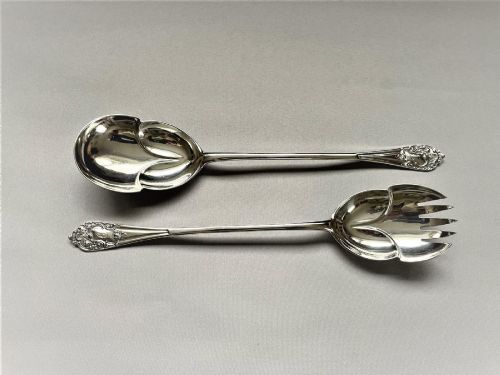
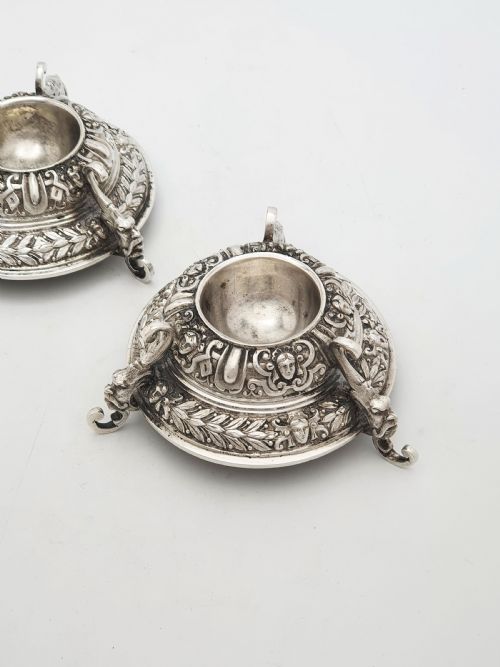
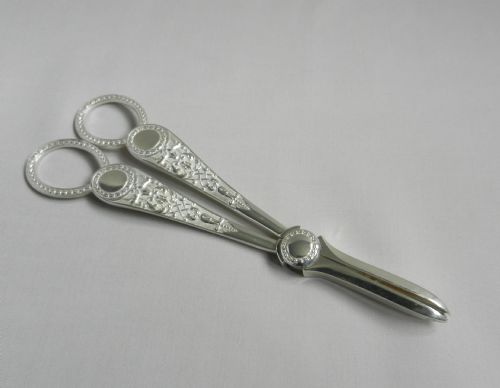
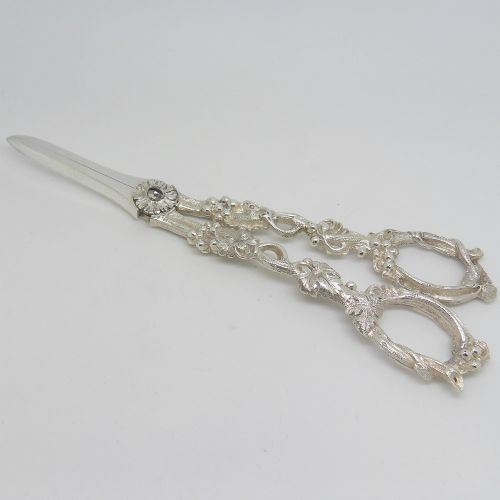
The most common forms on this page include grape shears, biscuit barrels, salt cellars, salad servers, and tea sets. These pieces utilise styles such as Rococo Revival and Victorian Naturalist to create elaborate visual impact.
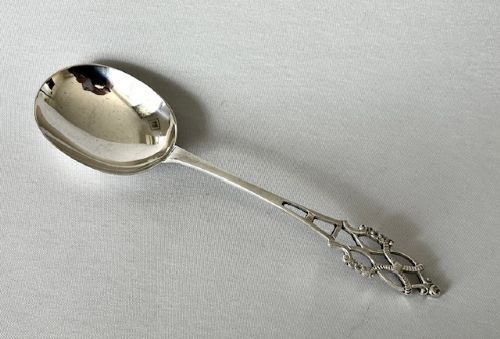
Originating largely from British workshops and international makers, the items combine functional dining use with intense decorative embellishment. Buyers find everything from individual sugar tongs to complete three-piece tea sets designed for formal entertaining.
Materials and production methods
The objects are produced from sterling silver, silver plate, and electroplated nickel silver, often enhanced with silver gilt surfaces. Additional components incorporate bone, stainless steel, and cranberry glass to provide contrasting textures and colours.
Manufacturing techniques involve traditional silversmithing methods such as casting, piercing, and hand engraving. Scrollwork and naturalistic grapevine motifs are applied through meticulous chasing and repousse work to achieve high relief decoration.
Ornate Silver Tableware Retail Price Guide 2026
Typical asking prices for ornate silver tableware among the pieces listed under this phrase on Sellingantiques today, from the lower quarter to the upper quarter. They describe what is for sale here now, not the wider market.
Listings feature items from the 1800s through the Edwardian period, alongside examples produced later than 1960.
Differentiating quality across the range
Quality differences depend on the depth and crispness of the chased decoration, where deep relief scrollwork and sharply defined grape vine motifs denote superior craftsmanship. Thicker gauge metal provides a more substantial weight and physical presence in the hand.
The presence of crisp hallmarks and recognised maker attributions elevates a piece above unmarked alternatives. Furthermore, the integration of secondary materials, such as undamaged cranberry glass inserts or well-preserved bone handles, affects the overall standard of the finished object.
Robert & Belk·Chawner & Co·International Silver Co
The Ornate Silver Tableware Glossary
- Silver plate
- A base metal coated with a thin layer of silver through electroplating or older techniques. This method offered an accessible alternative to solid sterling silver during the nineteenth century.
- Silver gilt
- Silver that has been coated with a thin layer of gold on its surface. This technique protects the underlying metal from tarnishing and provides a rich two-tone appearance.
- Rococo Revival
- A design style popular during the nineteenth century characterised by asymmetrical scrollwork, C-scrolls, and floral ornamentation. It heavily influenced the ornate handles and rims of tableware from the period.
- Grape shears
- Specialised scissors designed specifically for cutting clusters of grapes at the dining table. They frequently feature decorative vine-leaf handles and chased motifs along the blades.
- Biscuit barrel
- A covered container used for serving biscuits or dry pastries during formal tea services. Victorian examples often incorporate ceramic or glass bodies housed within ornate metal frames.
Ornate Silver Tableware: Frequently Asked Questions
What pieces are considered ornate silver tableware?
The category encompasses functional dining implements and vessels carrying heavy decoration, such as tea sets, salad servers, and grape shears.
These items date predominantly from the nineteenth and early twentieth centuries, featuring elaborate Victorian and Edwardian design motifs.
How were silver grape shears used?
Grape shears were used at the dining table to snip individual clusters of grapes from a larger bunch during dessert.
Their ornate handles and decorated blades allowed hosts to perform this task with formal etiquette and visual flair.
What is the difference between silver plate and sterling?
Sterling silver consists of solid precious metal meeting specific purity standards throughout its entire mass.
Silver plate involves a base metal substrate covered with a thin external layer of silver applied through plating processes.
How do I care for antique silver tableware?
Antique silver requires gentle cleaning with specialised silver polishes to remove tarnish without wearing away fine surface detail or gilt layers.
Items containing glass or bone components should be washed by hand rather than immersed entirely or placed in modern dishwashers.